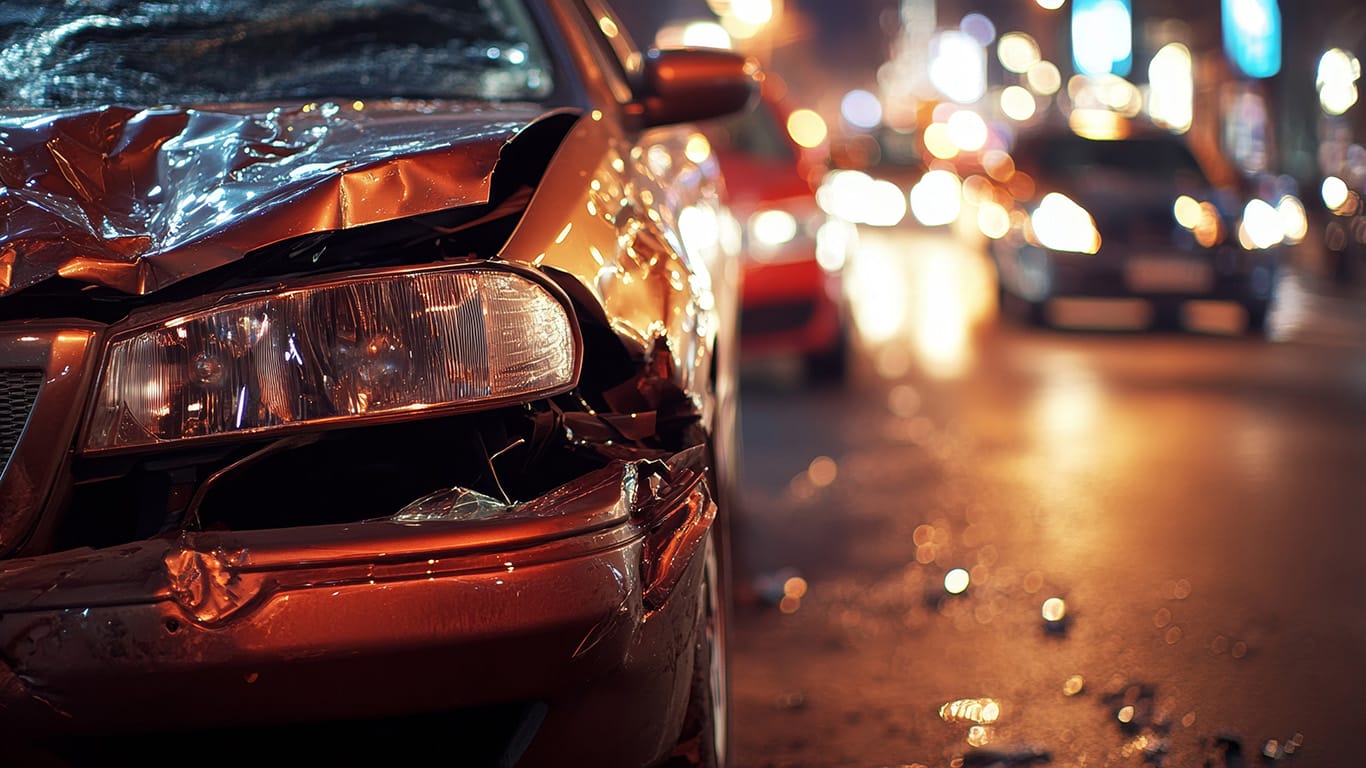
Not every car accident involves two vehicles physically colliding. Sometimes, a driver’s sudden maneuver forces another motorist to swerve, brake abruptly, or leave the roadway to avoid an impact. The resulting crash may involve a guardrail, roadside object, or another obstacle, while the driver responsible continues without stopping. These incidents are commonly called no-contact car accidents.
Determining responsibility can be challenging because the vehicle that triggered the crash may have no visible damage or may disappear before anyone identifies its driver. Without direct contact, insurance companies may question how the accident occurred. Understanding the necessary steps afterward can help injured motorists protect their safety, preserve evidence, and establish the circumstances surrounding the collision.
1. Secure the Scene Without Creating Additional Danger
The first priority after a no-contact accident is preventing further harm. If the vehicle remains operational and can be moved safely, relocate it away from active traffic. Turn on the hazard lights and avoid standing near moving vehicles.
Check yourself and any passengers for injuries. Call 911 if someone requires emergency assistance or the accident presents an immediate danger. Never attempt to pursue the driver who caused the incident.
A Lafayette car accident lawyer can later evaluate whether another driver’s actions contributed to the collision and explain potential options for pursuing compensation. However, immediate decisions must focus on safety rather than establishing fault.
If the vehicle cannot be moved, remain in a safe location and follow emergency responders’ instructions.
2. Report the Crash Even When the Other Driver Disappears
Drivers sometimes hesitate to contact law enforcement when their vehicle is the only one damaged. However, the absence of physical contact does not eliminate reporting obligations.
Under Louisiana Revised Statutes § 32:398, drivers involved in crashes resulting in injury, death, or property damage exceeding $500 must immediately notify the appropriate law enforcement agency.
When officers arrive, explain the events accurately. Describe the other vehicle’s movements, direction of travel, and any identifying characteristics. Clarify that no physical contact occurred.
Avoid presenting assumptions as established facts. If the other driver disappeared before you could identify the vehicle, explain that limitation.
An official crash report provides documentation that may support subsequent investigations and insurance claims.
3. Identify Witnesses Who Observed the Other Vehicle
Independent witnesses can be particularly valuable after a no-contact collision. Unlike accidents involving direct impacts, these incidents may leave limited physical evidence connecting another driver to the crash.
Witnesses may have observed an unsafe lane change, sudden turn, or other dangerous maneuver that forced the affected motorist to react.
Ask anyone who witnessed the incident for their name and contact information. Record where they were positioned and what they observed.
Louisiana Revised Statutes § 22:1295 establishes an additional requirement for certain uninsured motorist claims involving no physical contact. The injured person must prove through an independent and disinterested witness that another unidentified, uninsured, or underinsured driver’s actions caused the injury.
This requirement makes identifying independent witnesses particularly significant.
4. Photograph the Roadway and Surrounding Conditions
Physical evidence can help explain why a vehicle lost control or left the roadway. Once conditions are safe, photograph the damaged vehicle and surrounding area before the scene changes.
Important details to document include:
- Tire marks indicating braking or evasive movements
- Damage to guardrails, barriers, or roadside objects
- Debris and displaced vehicle components
- Lane markings and roadway configurations
- Traffic signs and nearby intersections
- Visibility obstructions
- The vehicle’s final resting position
Capture wide photographs showing the overall environment and close-up images documenting specific damage.
Record the approximate time, location, weather, and lighting conditions. These details may help investigators determine whether the driver’s response was consistent with the reported circumstances.
5. Search for Video Evidence Before It Disappears
Video footage may provide valuable evidence of another vehicle’s involvement, particularly when the responsible driver leaves without stopping.
Dashboard cameras can capture sudden movements, surrounding traffic, and the direction another vehicle traveled. Nearby businesses, residences, and transportation facilities may also have surveillance equipment facing the roadway.
Identify possible camera locations and record their addresses. Some systems automatically overwrite recordings, making timely preservation requests essential.
Keep available dashboard-camera footage in its original format. Avoid editing or compressing recordings because changes may affect their reliability during an investigation.
When third parties control relevant footage, legal assistance may help with preservation requests.
6. Obtain Medical Care and Monitor Developing Symptoms
Even without direct vehicle-to-vehicle contact, sudden braking or striking a fixed object can cause significant injuries.
Whiplash, concussions, back injuries, and other trauma may result from abrupt changes in speed or direction. Some symptoms become more noticeable after the initial stress of the accident subsides.
Seek prompt medical evaluation when injuries are suspected. Severe headaches, confusion, breathing difficulties, weakness, or worsening pain require urgent attention.
During appointments, describe the collision mechanism, including evasive movements and any secondary impact. This information helps healthcare professionals evaluate potential injuries.
Preserve medical records, prescriptions, treatment instructions, and related expenses. Documenting symptoms and recovery limitations can also establish how the accident affected daily activities and employment.
7. Notify Your Insurance Company Without Speculating About Fault
Report the accident to your insurer according to the policy’s notification requirements. Explain what happened and whether the other driver has been identified.
Coverage depends on the policy, available evidence, and applicable Louisiana law.
Collision coverage may address vehicle damage, while uninsured motorist coverage may apply to qualifying injuries involving unidentified drivers. Louisiana’s independent-witness requirement creates an additional consideration for certain no-contact claims.
Distinguish confirmed details from uncertain recollections when speaking with insurance representatives. Avoid guessing about another driver’s speed, intentions, or identity.
Keep copies of claim correspondence, photographs, repair estimates, and documents submitted during the investigation.
8. Evaluate Liability Before Accepting a Settlement
A no-contact collision does not automatically establish that the absent driver bears responsibility for every resulting loss.
Investigators may examine whether another motorist violated traffic laws, whether the affected driver’s response was reasonable, and whether roadway conditions contributed.
Louisiana Civil Code Article 2323 also governs comparative fault. Under the version effective January 1, 2026, an injured person’s recovery is reduced when their share of negligence is below 51%, while negligence of 51% or more bars recovery.
Before accepting a settlement, consider documented injuries, repair costs, lost income, and potential future expenses.
Protecting Your Rights When No Vehicles Collide
No-contact car accidents create unusual evidentiary challenges because the responsible driver may leave no physical trace of involvement. Establishing what happened often depends on witnesses, video recordings, roadway evidence, and consistent documentation.
Prompt reporting, medical attention, and evidence preservation provide a stronger foundation for evaluating responsibility. Although the absence of direct contact can complicate an insurance claim, it does not necessarily prevent an injured motorist from pursuing compensation when another driver’s negligence caused the collision.