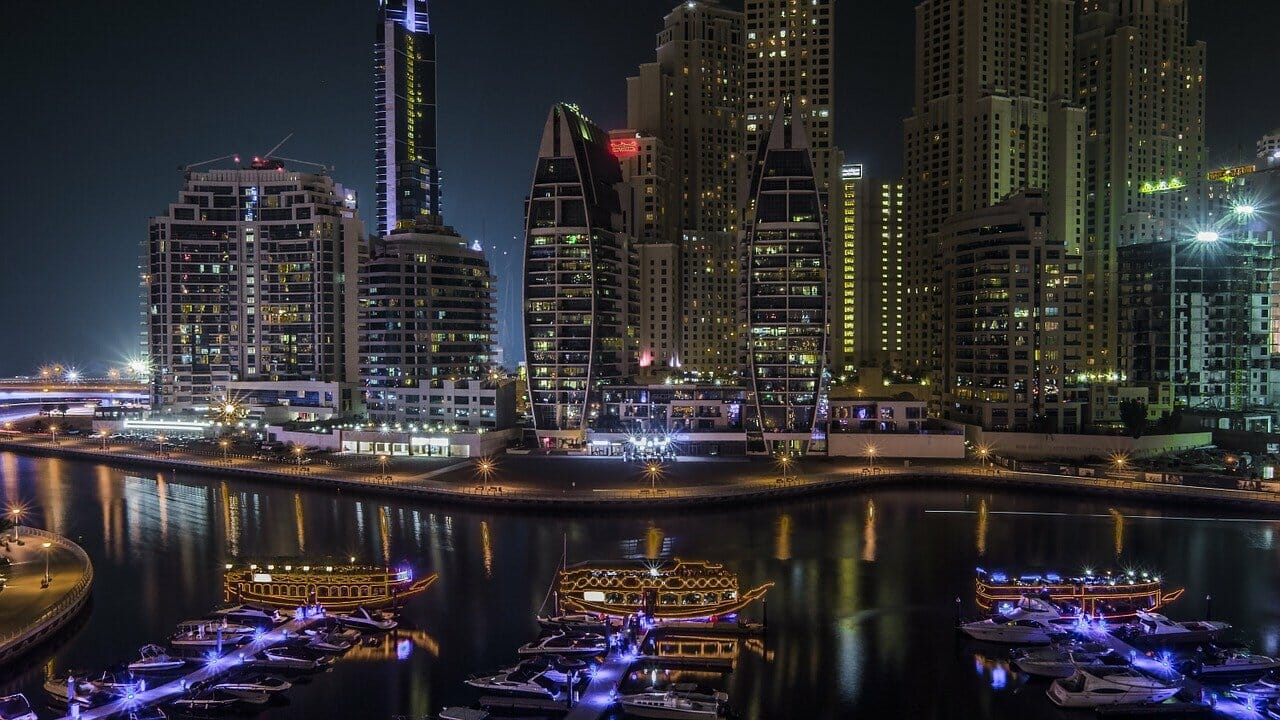
The UAE has become an important centre for retail trading in the Middle East. Here is how the regulatory system works, what local traders tend to look for, and how one international broker built its way to the Dubai International Financial Centre.
Online trading in the UAE has expanded as the country has developed as an international financial centre, and a growing number of global brokers now hold licences there. For traders, that means more choice. It also makes it more important to understand how the market is regulated.
Is forex trading legal in the UAE?
Yes. Trading forex and CFDs is legal in the UAE when it is carried out through a firm licensed by the appropriate regulator. The country has three main financial regulators, and which one applies depends on where a firm is based.
- The Capital Market Authority (CMA) regulates the onshore UAE market. It was known as the Securities and Commodities Authority until 1 January 2026, when two federal decree-laws reconstituted it with a broader mandate.
- The Dubai Financial Services Authority (DFSA) regulates firms in the Dubai International Financial Centre (DIFC), a financial free zone with its own common-law legal framework.
- The Financial Services Regulatory Authority (FSRA) regulates firms in Abu Dhabi Global Market (ADGM), the capital’s financial free zone.
Each regulator keeps a public register of authorised firms, which is the simplest way for traders to confirm that a broker is licensed.
What DFSA regulation means for traders
The DIFC has become a popular base for international brokers serving the Gulf. Firms there are supervised by the DFSA, which sets rules on capital, conduct and how client money is held.
Since December 2021, DFSA-regulated firms have applied minimum margin requirements to retail clients’ CFD positions. These are broadly in line with limits used in Europe and the UK, with lower leverage on more volatile assets such as shares and cryptocurrencies than on major currency pairs. The aim, as in other markets, is to limit how quickly retail traders can lose money on leveraged products.
How ThinkMarkets built its way to Dubai
ThinkMarkets, a broker founded in 2010 with headquarters in London and Melbourne, illustrates how international firms tend to arrive in the region. Rather than enter every market at once, it added local licences one at a time, adapting its offering to each market before moving on to the next.
- Australia, 2012: authorised by the Australian Securities and Investments Commission (ASIC), with CFD trading for Australian clients following in 2013. TF Global Markets (Aust) Pty Ltd holds Australian Financial Services Licence 424700.
- United Kingdom, 2015: its subsidiary TF Global Markets (UK) Limited was authorised by the Financial Conduct Authority (firm reference number 629628). This is the same company whose branch now operates in the DIFC.
- South Africa, 2019: began serving clients in April 2019 through TF Global Markets (South Africa) (Pty) Ltd, an authorised financial services provider with the Financial Sector Conduct Authority (FSP 49835), with offices in Bryanston, Johannesburg. In 2022 it was also licensed as an over-the-counter derivatives provider.
- European Union, 2022: it began offering CFDs to EU clients through TF Global Markets (Europe) Ltd under the supervision of the Cyprus Securities and Exchange Commission (CySEC), licence number 215/13, from offices in Limassol. A CySEC licence can be passported across the EU.
- New Zealand, 2023: launched services in April 2023 through TF Global Markets (NZ) Limited, a registered Financial Service Provider (FSP623289) holding a derivatives issuer licence from the Financial Markets Authority.
Each step followed a similar pattern: secure the licence, then tailor products, currencies and support to local traders. By the time it reached Dubai, the company had worked with regulators in five markets across three continents.
Its presence in the Arabic-speaking world began well before it held a local licence. The company launched an Arabic-language website in 2016 to serve traders across the Middle East and North Africa. On 15 September 2023 the DFSA authorised a DIFC branch of its UK company, TF Global Markets (UK) Limited, trading as ThinkMarkets DIFC under DFSA reference F004173, to provide financial services to retail clients. The branch is registered with the DIFC under registration number 7113 and is based in the centre’s Gate District. ThinkMarkets announced the licence in early 2024, describing the UAE and the wider Middle East and North Africa region as a high-growth market.
The branch’s product range broadly mirrors that of the UK company, and its clients trade on the ThinkMarkets Trading Platform, the company’s in-house app for mobile, web and desktop.
The pattern is common across the industry. Brokers tend to secure licences in established financial centres first, then use that experience to apply for licences in newer hubs such as Dubai.
What Gulf traders look for
Regulation is only part of the picture. Brokers serving the region commonly adapt their offering in four ways.
Swap-free accounts. Many traders in the Gulf prefer accounts that comply with Islamic finance principles, which prohibit earning or paying interest. Standard CFD accounts charge or pay a small overnight fee, known as a swap, on positions held past the daily cut-off. Swap-free accounts, sometimes called Islamic trading accounts, remove that charge. Brokers typically cover their costs in other ways, such as a fixed administration fee or adjusted spreads, so it is worth reading how a specific swap-free account is priced. ThinkMarkets, for example, explains how its swap-free trading in the UAE works on its regional website.
Local currency funding. Depositing and withdrawing in UAE dirhams, Saudi riyals or Qatari riyals avoids repeated currency conversion. ThinkMarkets offers funding in these currencies for clients in the region.
Familiar payment methods. Regional traders expect the same convenience they get from other apps. In 2024 ThinkMarkets added Apple Pay and Google Pay for clients in the Middle East and North Africa.
Arabic-speaking support. Native-language support, including on messaging apps such as WhatsApp, is widely expected in the Gulf. ThinkMarkets provides Arabic-speaking relationship managers and WhatsApp support for clients in the region.
How to check a broker in the UAE
Before opening an account, traders can take a few simple steps:
- Identify the legal entity. The client agreement names the company that will hold the account.
- Check the right register. Firms in the DIFC appear on the DFSA public register, firms in ADGM on the FSRA register, and onshore firms on the CMA register.
- Confirm the services. The register shows whether a firm is permitted to deal with retail clients.
- Ask about account types. If a swap-free account matters to you, ask how it is priced and which instruments it covers.
- Check where you will be onboarded. International brokers often serve clients in different Gulf countries through different group entities, so confirm which one applies to you.
A growing market
The UAE’s regulatory framework has matured quickly, from the creation of the DIFC in 2004 to the reshaping of onshore regulation in 2026. For traders, the result is a market with a growing choice of locally regulated brokers and account types designed around regional needs. For international firms, a DIFC licence has become a practical way to serve a fast-developing trading region.
Frequently asked questions
Is ThinkMarkets licensed in the UAE? ThinkMarkets DIFC, a branch of TF Global Markets (UK) Limited, was authorised by the DFSA on 15 September 2023 under reference F004173 and is registered with the DIFC under number 7113. Its authorisation covers carrying on financial services with or for retail clients.
Which regulator supervises firms in the DIFC? The Dubai Financial Services Authority (DFSA). It keeps a public register where traders can check a firm’s name, reference number and permitted activities.
Is forex and CFD trading legal in the UAE? Yes, when it is carried out through a firm licensed by the appropriate regulator. Which regulator applies depends on where the firm is based.
Does ThinkMarkets offer swap-free trading in the UAE? ThinkMarkets publishes details of how its swap-free trading works for clients in the UAE on its regional website. As with any swap-free account, it is worth reading how the account is priced.
How can I check whether a broker is licensed in the UAE? Identify the legal entity named in the client agreement, then search for it on the relevant public register. The DFSA, FSRA and CMA each publish one.