The best LED turn signal bulb for a truck or SUV is an amber bulb in the exact size your vehicle takes, paired with a plan for hyperflash. That plan can be a bulb with a built-in resistor, a load resistor, or an LED flasher. Four bulbs cover most drivers: the Diode Dynamics XP80, the SEALIGHT SLJ3 (in plain amber or switchback), the Sylvania ZEVO, and the GTR Lighting Armor for trucks with CK sockets.
Arizona drivers have one more reason to care. A tired halogen turn signal that looks fine in the garage can be hard to see at 2 p.m. on the Loop 101, with the sun glaring off every tail lamp lens in traffic. A bright, quick LED flash is easier for the driver behind you to catch.
Why Switch Your Truck’s Turn Signals to LED?
An LED turns on almost instantly. A halogen bulb has to heat its filament first, so each flash ramps up instead of snapping on. That small difference makes an LED signal easier to notice, especially in bright daylight.
LEDs also last much longer and draw far less power. That low draw is the source of the one real headache with them, which we’ll get to in the hyperflash section. It’s also a cheap upgrade. The bulbs below run from about $24 to $100 a pair.
Find Your Bulb Size Before Anything Else
The wrong size is the most common reason an LED upgrade fails, and many truck bulbs look alike. On pickups and SUVs, you’ll mostly run into four families:
- 3156 and 3157, the most common rear signal bulbs on American trucks
- 7440 and 7443, a wedge style found on many Toyota, Honda, and Nissan models
- 1156 and 1157, an older metal-base design still used on some trucks
- 4157, a heavier-duty version of the 3157 that GM has used on Silverado and Sierra pickups
In each pair, the first number is a single-function bulb and the second is dual-function. That second bulb has two brightness levels, so it can work as a parking light and a turn signal, or a tail light and a brake light. 7443 and 7440 LED bulbs look almost identical, but a 7443 can stand in for a 7440 and a 7440 can’t replace a 7443. Put a 7440 in a dual-function socket, and you lose one of the two functions.
There’s one more wrinkle for some trucks. Certain 3157 and 7443 sockets are wired in a style called CK (you’ll also see SCK or SRCK), where the contacts sit in different positions. Standard LED bulbs can misbehave in those sockets or blow a fuse. Front turn signals on some Silverado, Colorado, Ram 1500, and Toyota models use them, so check before you buy.
To confirm your size, check the owner’s manual, read the number printed on the old bulb, or use a parts store’s bulb finder. The two socket styles look the same, so if you’re unsure, buy a CK-compatible LED. Those are built to work with either wiring. An “NA” at the end of a part number means natural amber glass.
The Best LED Turn Signal Bulbs for Trucks and SUVs
All four come in the common 3157 size. Check each maker’s site for other sizes, like 7443. All specs are from the maker or retailer listings.
Diode Dynamics XP80: Best Overall
The XP80 costs the most of the four, and it’s the best built. Each bulb puts out 510 lumens from sixteen LEDs. Twelve of those fire sideways and four face forward, which suits a tail lamp, since the reflector inside has to catch light from every angle to spread it across the lens.
It has an aluminum body that pulls heat away from the LEDs and a constant-current driver that keeps the output steady as your truck’s voltage moves around. A pair costs about $100 and carries a three-year warranty. The listing makes no mention of built-in hyperflash protection, so plan on a resistor or an LED flasher.
SEALIGHT SLJ3: Best Value, with a Switchback Option
At $39.99 for a pair, the SLJ3 costs well under half as much as the XP80. SEALIGHT lists 3,200 lumens and 30 watts for the pair, with a deep 2700K amber. There’s a resistor built into each bulb, and the company says that fixes hyperflash on 99% of vehicles. That’s the maker’s figure, so test yours with the hazards before you put the lens back on.
The same bulb comes in a switchback version for the same price. It runs white at 6500K as a running light and switches to amber when you signal. Both versions are rated IP68 and come with a one-year warranty.
Sylvania ZEVO: Easiest to Find in a Store
If a bulb burns out on a Saturday and you need one today, this is the one you’re most likely to find on the shelf at chains like O’Reilly. The amber 3157 sells for about $24 a pair, it’s made in Italy, and it carries a limited lifetime warranty.
Two things to know before you buy one. It draws just 1.5 watts on high and 0.4 on low, so expect hyperflash unless your truck already has an LED-friendly flasher. And the listing warns that it won’t work in CK sockets.
GTR Lighting Armor: Best for Trucks with CK Sockets
This is the pick if you’re not sure which socket your truck has, or you know it’s CK. The listing says the Armor works in CK, SACK, and standard sockets. It’s rated at 600 effective lumens per bulb and comes in amber, red, white, and a white/amber switchback. The amber version was selling for about $70 a pair at the time of writing, with a two-year warranty. A matching resistor pair is sold separately.
How Do You Stop LED Turn Signals From Hyperflashing?
Hyperflash is when your signal blinks about twice as fast as it should after you switch to LEDs. Nothing is broken. As lighting maker J.W. Speaker explains, the flasher relay was designed for halogen bulbs, which draw a lot more current. When it sees the small draw of an LED, it decides a bulb has burned out and speeds up the flash to warn you. That’s the same warning you’d get with a dead bulb.
There are three ways to fix it. The simplest is a bulb with a resistor built in, like the SEALIGHT. Many sellers call these CANbus or error-free bulbs, and on newer trucks they’re usually all you need.
The second option is a separate load resistor wired in next to each bulb. It adds back the current the relay expects to see. The catch is heat. Load resistors get hot enough that J.W. Speaker recommends mounting them away from anything heat-sensitive. In a Phoenix July, with a tail lamp already baking in the sun, screw the resistor to bare metal and keep it clear of plastic housings and wiring.
The third fix is an LED flasher relay. It isn’t load-dependent, so it flashes at the right speed no matter what the bulbs draw, and it makes no extra heat. It’s the cleanest option on older trucks with a plug-in flasher. Many newer trucks build the flasher function into a body control module, though, and on those, resistor bulbs or load resistors are the practical choice.
Amber, Red, or Switchback: What’s Legal on a Truck?
Your turn signals have to show amber or red. Federal regulators are clear about this. In a formal interpretation of the lighting standard, NHTSA said any other color on a turn signal makes it noncompliant, and that replacement parts are held to the same rule as factory equipment. Front signals are amber. Rear signals can be red or amber, depending on how the truck was built.
If your truck has red rear signals, amber is worth a thought where the housing allows it. An NHTSA study from 2009 looked at the rear signal color of vehicles that were struck from behind. Amber rear signals were 5.3% effective at reducing two-vehicle rear-end crashes when the struck vehicle was turning, merging, changing lanes, or parking.
Avoid any “turn signal” bulb that shines white or blue when it flashes, however good it looks in the photos. Switchbacks are fine because they only show white as a running light and switch to amber when you signal. Just check the lens first. A switchback behind an amber lens turns its white into a muddy yellow, and an amber LED behind a red lens will look dim and orange. Match the bulb color to the lens.
What Arizona Drivers Should Know About Sun, Heat, and Dust
Arizona is hard on lighting in a few specific ways. Midday glare can wash out a weak signal, which is the best argument for going LED in the first place. Heat is the other one. A tail lamp on a dark truck parked in the sun gets far hotter than the air around it, and cheap bulbs without a real heat sink tend to dim or fail early. That’s also why it pays to mount any load resistors on metal.
Monsoon season brings its own problem. When a dust storm rolls in and you pull off the road, ADOT’s Pull Aside, Stay Alive guidance says to turn off all of your lights, including the hazard flashers. Drivers coming up behind you in the dust may follow your lights as a guide and run straight into your parked truck. A set of bright new LEDs only makes that beacon easier to follow.
The same storms can push water and fine dust into a cracked lamp housing. AZ Big Media’s guide to how monsoon storms can damage your car suggests making sure your lights are clean and bright before storm season. While the lens is off for a bulb change, it only takes a minute to look over the lamp’s seal too.
Swapping the Bulbs Yourself
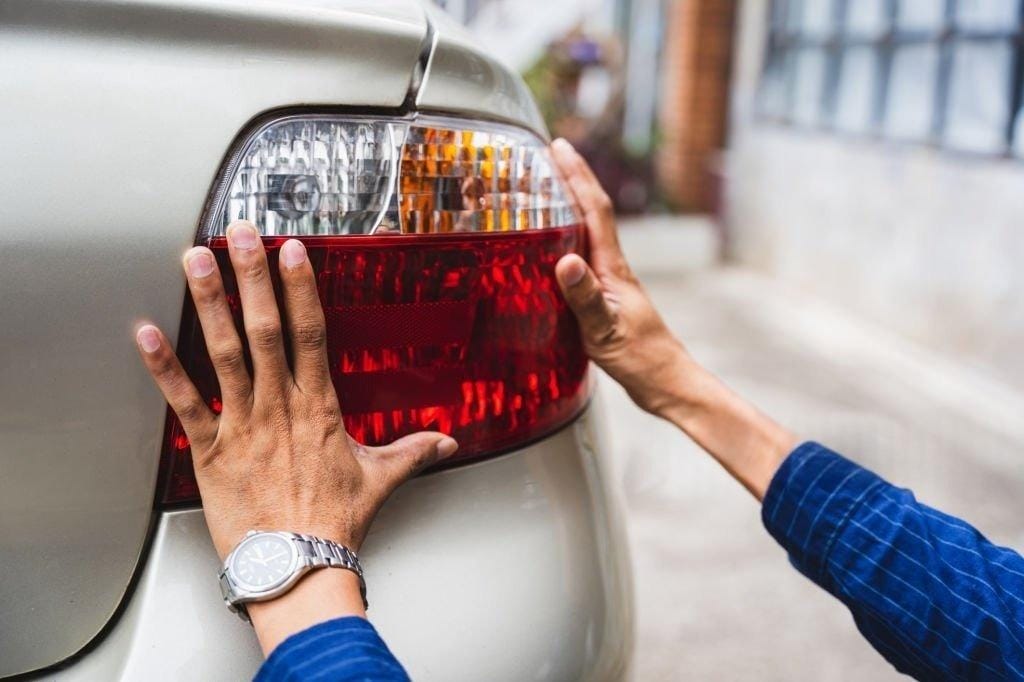
On most pickups, changing the rear signal bulbs is a short job with basic hand tools. The tail lamp usually comes off with two or three screws, or on some trucks from inside the tailgate opening. The socket then twists out a quarter turn. Front signals vary more by model, so check a video for your exact truck before you start pulling trim.
Wedge bulbs like the 3157 and 7443 push straight into the socket. If an LED doesn’t light, pull it out, flip it 180 degrees, and try again, because some are polarity-sensitive. Then test everything before you button it up: parking lights, both turn signals, brake lights on combination bulbs, and the hazards. Hazards are the quickest way to catch hyperflash.
Getting It Right the First Time
Confirm the size and socket type before anything else, stick with amber, and decide how you’ll handle hyperflash before the bulbs arrive. Get those three things right, and any of the bulbs above will be a solid upgrade. After the install, have someone run the signals on a bright afternoon while you stand a few car lengths behind the truck, so you see them the way other drivers will.