For nearly four decades, David Hilker has been searching for music that history left behind.
Thanks to his Phoenix-based Fervor Records, he has spent years tracking down forgotten recordings, restoring aging master tapes and helping overlooked artists find new audiences. Some found success on a regional level before fading from public view. Others never received the recognition they deserved. Together, their stories fill shelves of tape vaults and archives that stretch back more than a century.
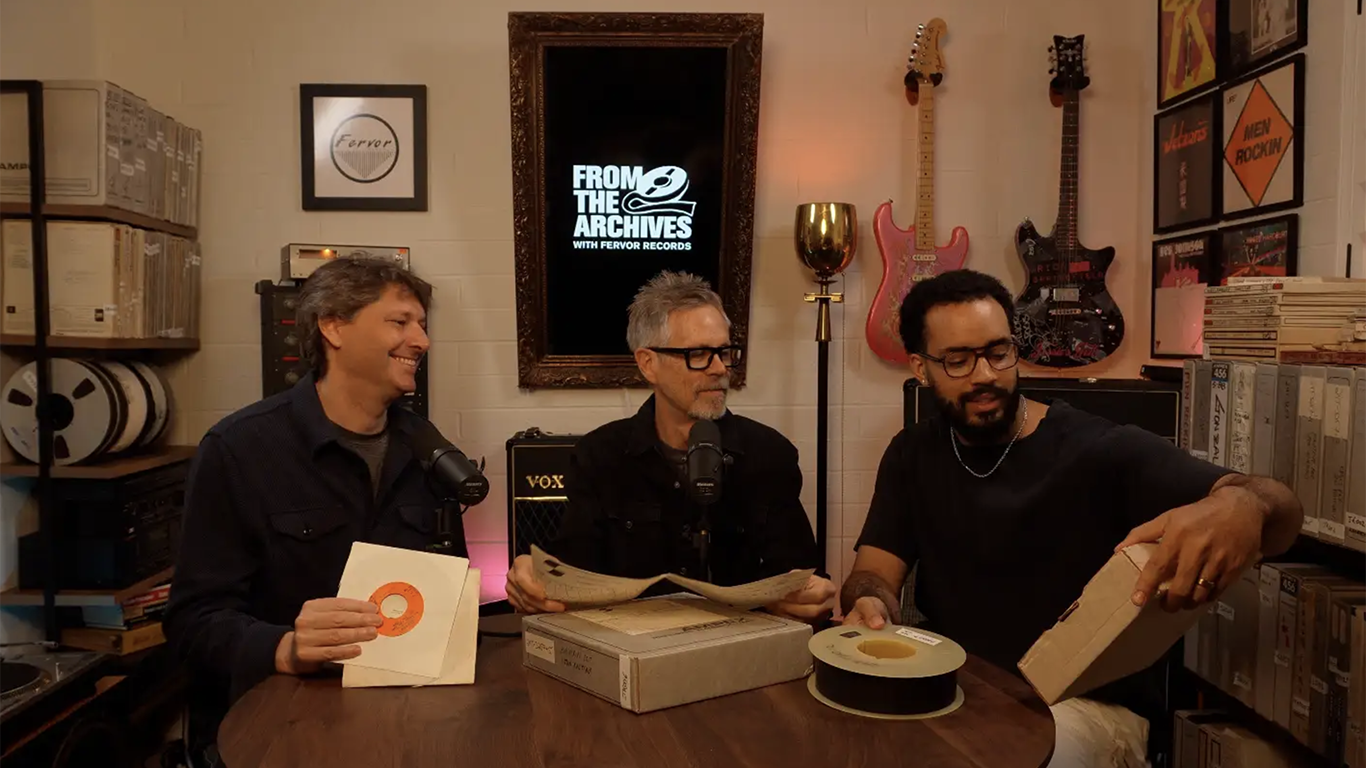
Now, Hilker and Fervor Records COO Jeff Freundlich are bringing the music to the masses through their seven-episode video podcast, “From the Archives,” which premieres Tuesday, Nov. 3, on the label’s YouTube channel.
“A couple years ago, we produced a documentary on one of our artists,” Hilker said.
“We have music dating back to the 1920s, and we have tape vaults full of these tapes, and we have a bazillion stories. While we couldn’t produce a documentary on every artist, it just came to my mind that we should have a weekly podcast so we can tell these stories.”
The first season covers rare soul recordings made between the 1960s and 1980s in cities including Chicago, Boston, New York City, Phoenix and Shreveport, Louisiana. Rather than spotlighting only the household names associated with the genre, the series digs deeper into the local players who helped define a sound.
“To me, it’s fascinating how different areas contributed to a sound,” Hilker said. “There were people who certainly got a lot of credit for it. They’re the famous ones, but there were also many people involved in that scene who made that music what it was.”
Those are exactly the kinds of stories that have long fueled Fervor’s mission to acquire archived songs and license them for television, film and advertising. In turn, they generate royalties for unappreciated artists and songwriters.
“We deal with non-hit songs,” Hilker said. “These are a lot of people that had regional success or were very impactful on a regional level, or maybe their music just got completely overlooked. But it’s great stuff.”
MORE NEWS: Honeywell is building new $500 million manufacturing facility in Tempe
DEEPER DIVE: 10 Arizona restaurants make Yelp’s Top 100 Mexican food spots
From musicians to music entrepreneurs
For Hilker, the path to building an independent music empire began with a leap of faith. He left high school to pursue music, spending years on the road performing with his bands before turning to the industry’s business side. What began as a musician’s dream gradually evolved into a career as a producer, publisher, studio owner and entrepreneur.
In 1989, Hilker and Freundlich launched Fervor Records and Mount Pilot Music Publishing. The ventures marked the beginning of a steady expansion that would continue for decades. Wild Whirled Recording followed in 1991, 2 the Groove Productions in 1997, and with Freundlich, Whirled Music Publishing in 2002.
Throughout that growth, Hilker remained committed to the independent spirit that first inspired him. That approach helped establish Fervor’s reputation as a distinctive force in music publishing and licensing.
As for New York City-raised Freundlich, he graduated from Pennsylvania’s Lehigh University. Freundlich spent the early part of his career in the corporate sector, working for companies ranging from EMI Records to the technology startup Net2Phone and the consulting firm Accenture. Yet music remained a constant interest and eventually became the focus of his professional life.
After relocating to Phoenix, Freundlich crossed paths with Hilker at Wild Whirled Recording. The meeting sparked a partnership that led to the creation of Whirled Music Publishing in 2002.
Since then, Freundlich has overseen much of the company’s operational and strategic development, helping to expand its reach across film, television, advertising and digital media. With Hilker, he has spent years growing the company’s catalog and creating new opportunities for artists and rights holders, demonstrating that independent music companies can compete on a global stage without sacrificing their entrepreneurial roots.
Preserving the stories behind the songs
For Hilker, the work becomes especially meaningful when artists discover that music they recorded decades earlier is still connecting with listeners. Fervor has represented and licensed music by Arizona artists including Hans Olson, Chuck Hall, Jimmy Spellman and Bruce Canolf.
“It’s really rewarding to see a guy in their 80s who did a song when he was a teenager, and now it’s on a hit TV show,” he said. “It gives a lot of meaning back to them because something that they did still resonates generations later.”
Fervor has placed its clients’ songs in “Tulsa Kings,” “911 Nashville,” “American Hostage,” “R.J. Decker,” “Chicago Fire,” “Carrie” and “Stranger Things: Tales from ’85.”
Through the podcast, Hilker works to preserve stories before they disappear.
As the musicians, producers and label executives connected to these recordings age, Hilker wants to document firsthand accounts that might otherwise be lost.
“All of our staff is younger, and part of it is, how do we make sure that this knowledge transfers?” he said. “Many are deceased now, but their legacy lives on through their music.”
To underscore its commitment to the project, Fervor recently built a dedicated podcast studio at its Sunnyslope headquarters.
“We just wanted to be committed to it,” Hilker said. “What we do is very niche. But if you’re into music or history, hopefully it resonates.”
The final episode of each season will focus on the preservation process itself, pulling back the curtain on how Fervor restores deteriorating recordings and prepares them for modern audiences.
“We’re very passionate about what we do,” Hilker said. “There’s going to be some good stories coming out of it.”