For RJ Payestewa-Daugherty, art is innate. He remembers attending powwows as a child at Haskell Indian Nations University in Lawrence, Kansas. Mesmerized, he went home and sketched what he saw from memory.
“It was like capturing a photo of it,” said Payestewa-Daugherty, a member of the Omaha, Hopi and Cherokee Tribes.
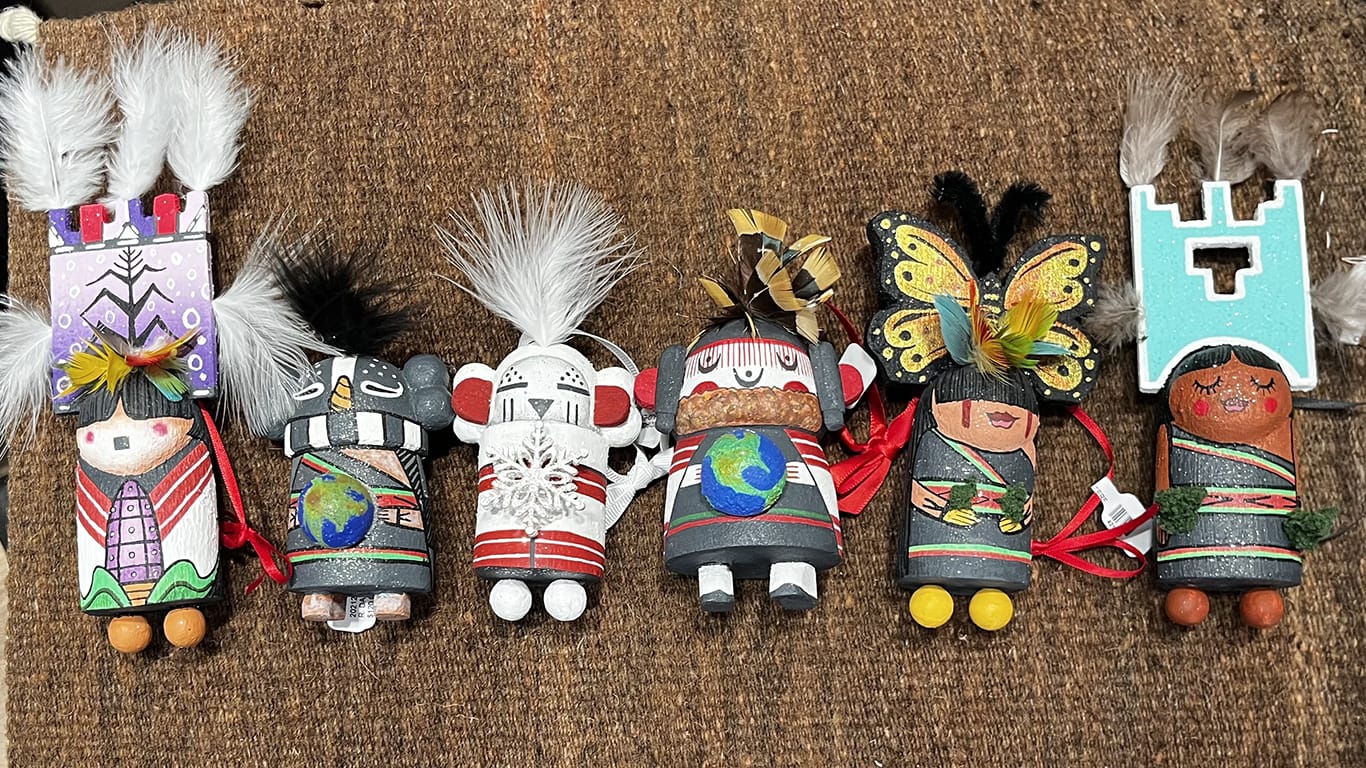
He’s still fascinated by art and is now making kachina ornaments. He will appear with 100 of his ornaments at the Heard Museum Ornament Marketplace at 2301 N. Central Ave., Phoenix, from 10 a.m. to 4 p.m. Friday, Nov. 27, to Sunday, Nov. 29. Admission is free; museum entry is separate.
This year’s Ornament Marketplace features 21 Christmas trees, 20 of which were decorated by artists. Museum members receive early access at 9 a.m. Friday.
DEEPER DIVE: The 100 Best Doctors in Arizona for 2027
“The ornaments are so unique and pretty rare, really,” said Laura Cardinal, the marketplace manager.
Navajo artist Geraldine Arviso created the signature piece, a sterling silver dragonfly, which goes on general sale at 10 a.m. Friday, Nov. 27, in-store and online. It is available in a limited edition of 40, each signed and numbered by Arviso.
“This is something you just can’t get in a department store,” Cardinal said. “They’re so unique.”
The event’s sense of community extends beyond shoppers. According to Cardinal, participating artists often save ornaments for an end-of-season exchange, creating a celebration that feels less like a sales event and more like a gathering of friends and colleagues.
“It’s like a little family reunion,” Cardinal said.
Payestewa-Daugherty, who works in the marketplace as an associate buyer, has made kachina ornaments from leftover cottonwood root for several years. He initially made them as gifts, with the kachina holding a thoughtful present.
“I have a great time doing that,” he said. ‘I’m Native. Every ornament that I make is based on Hopi or Pueblo culture.”
He continues to gift his pieces, something he “loves” doing.
“Each one I gift, I try to relate it to that person or that person’s interest,” he said. “The very first miniature doll that I made went to one of our volunteers who has a citrus grove. Every year, she provides all the citrus for a lot of our big events. I wanted to thank her, so I made a little kachina doll holding an orange.
“Going into the ornament market, I have these little figurines holding something small, like a gift, wreath, or a Christmas tree. I’m just grateful. I’ve had a lot of success with something that was just a small idea. Now I look forward to making these ornaments.
“Gifting somebody is like you’re giving a part of yourself to them and you’re honoring them.”
Payestewa-Daugherty said he looks forward to each sale.
“When I paint their feet, paint their ears — if they have ears — whatever they’re holding, every stage of it, I just. Get more excited because I can see the end result,” he said.
“It never ends with the way I think. I’m always very pleasantly surprised with how well they come out. I’m a big critic of my own work. It’s one of my issues, but at the end, I’m satisfied with my work.”