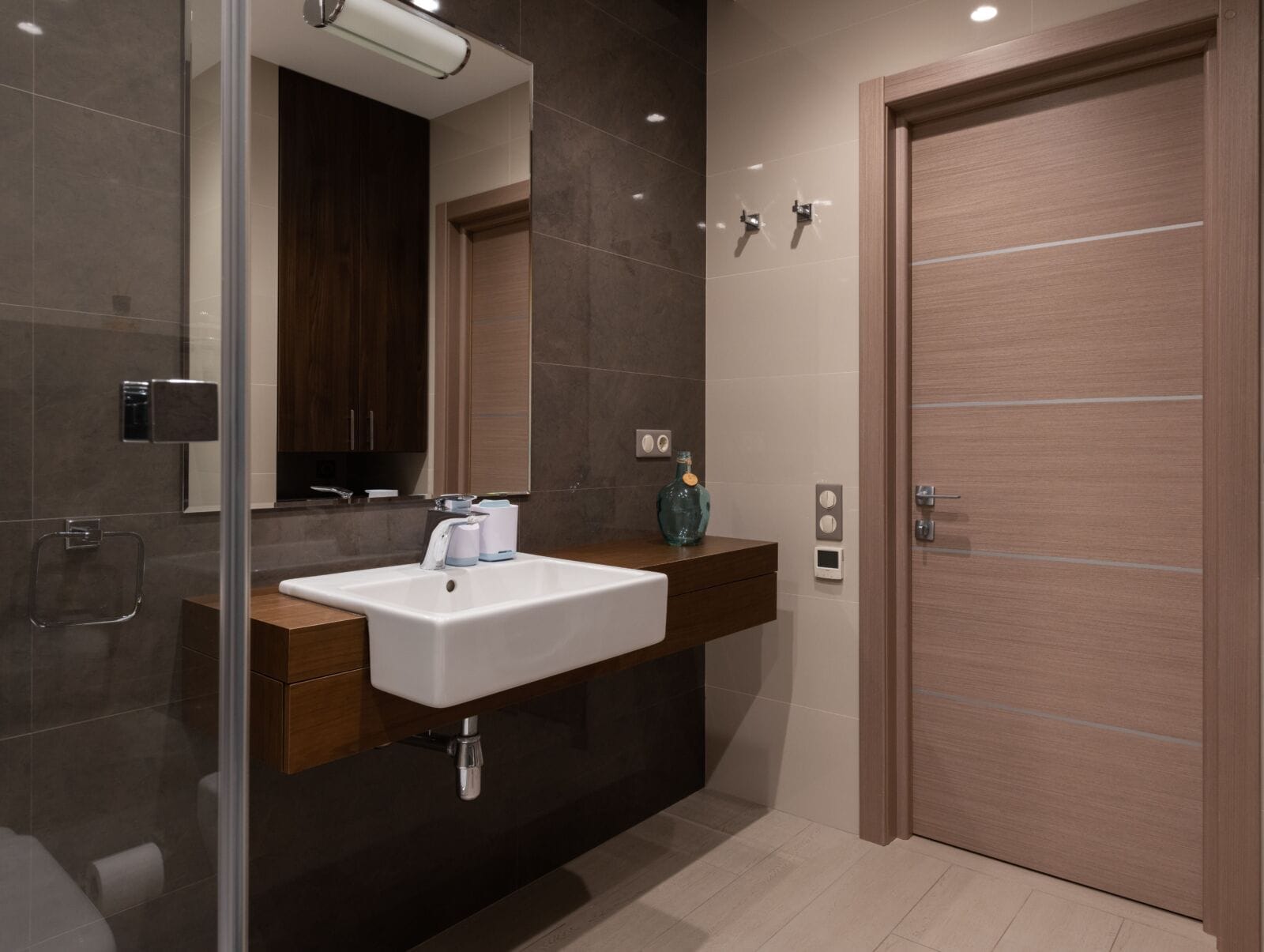
A bathroom door handle is something that you use every day, and thus both its design and function are important. It needs to blend in with the style of your bathroom and provide you with the privacy you desire.
However, as there are a variety of shapes, finishes, and locks, it can take a little more than you think to pick the right one.
When looks aren’t the only factor, finding the proper handle can be complicated. Even if a design is visually appealing, it might not be secure enough or might not fit your door correctly. Comfort is also a factor if you’re using the handle multiple times a day.
Evaluate the usability, fit, and overall compatibility of each option with your bathroom’s aesthetic and door hardware to help you narrow down your choices. In this guide, you will explore the main points to consider, from privacy and style to fit and comfort.
1. Consider Privacy Lock Features
Photo licensed from Pexels.com.
Privacy is an important factor when choosing a bathroom door handle. A standard passage handle keeps the door closed but does not lock it, while a privacy handle lets you secure the door when using the bathroom.
Most privacy handles use a push-button lock on the inside. Press the button to lock the door, then turn the inside lever to unlock it when you leave. Some designs also have an emergency release on the outside, which allows someone to open the door with a suitable tool if help is needed.
When comparing a bathroom door handle, it helps to know how the three main handle types differ:
- Privacy handles: Include a lock and are commonly used for bathrooms and bedrooms.
- Passage handles: Have no lock and suit hallways and closets.
- Dummy handles: Stay fixed in place and do not operate a latch.
For bathroom doors, a privacy handle is generally the suitable option because it provides a way to secure the room.
2. Match Handle Style with Bathroom Design
Once you have considered the lock type, think about how the handle will look with your bathroom design. Its shape and finish should work with other details, such as taps, shower fittings, and cabinet pulls. Matching these elements can help keep the room’s overall look balanced.
Door handles come in several shapes, including slim, flat, round, square, and curved levers. Flat designs suit bathrooms with simple lines, while curved handles have a softer look. Round and square shapes offer other options for different interior styles.
Door handle finishes also vary, with options such as:
- Matte black: Has a dark, non-glossy appearance.
- Brushed nickel: Has a soft metallic finish with a muted look.
- Chrome: Has a bright, reflective surface.
- Brushed champagne gold: Has a warm gold-toned appearance.
Consider the metal finishes already used in your bathroom before making a choice. You can match the handle to your taps and shower fittings or combine different finishes if they work well together.
With 12 lever designs featuring different shapes, consider which one works best with your door and other bathroom hardware.
3. Check Door Size and Hardware Fit
Photo licensed from Pexels.com.
Once you have narrowed down the design, make sure that the handle will fit your door. There are three key measurements you need to know before purchasing any replacement hardware: door thickness, bore hole size, and backset.
Standard interior doors are typically 1 3/8″ to 1 3/4″ thick. Many privacy handles have a 2 1/8 inch bore hole, or round hole, where the handle and lock assembly fit. Compare these measurements with your door before placing an order.
Next, check the backset, which is the distance from the door’s edge to the center of the handle hole. Common sizes are 2 3/8 inches and 2 3/4 inches, while some handles have adjustable latches that fit both.
Door direction matters too. Reversible handles can be fitted on both left-hand and right-hand doors. If your door is older or has custom measurements, check its size carefully rather than assuming it follows standard dimensions.
4. Consider Comfort and Ease of Use
Beyond appearance and fit, daily comfort is another factor to consider. Think about how easily different people in your home can grip and operate the handle.
Lever handles are often easier to operate than round knobs because they require less gripping and twisting. However, lever shapes and sizes can differ, so consider how each design feels in your hand. A very short or narrow lever may feel less comfortable for some users.
Children, older family members, and people with limited hand movement may find simple levers easier to operate. The latch should move smoothly, and the inside lock button should be easy to press and release.
5. Review Installation and Overall Value
Photo licensed from Pexels.com.
Installation needs can vary between handle designs, so check the fitting instructions before buying. Review the product details to see whether the package includes the latch, strike plate, screws, and other parts needed for fitting.
Some designs also have hidden screws behind the rosette, which is the round or square plate around the handle. Once installed, the screws remain out of sight.
If you are replacing handles on several bathroom doors, compare single sets with 2-pack and 6-pack options. Check how many handles each pack contains and whether the quantity suits the number of doors you plan to update.
To compare overall value, consider the price alongside the parts and features included. Look at the handle design, lock type, and installation parts before making a decision.
Bottom Line
Choosing a bathroom door handle involves more than its shape or finish. Start with privacy and emergency access, then consider how the design suits your bathroom and how comfortable it feels to use. Door measurements and installation needs also matter when comparing options.
Check the included parts and pack sizes before buying, especially when updating several doors. By considering these details together, you can select a handle that fits your door, provides the privacy you need, and suits your everyday use.