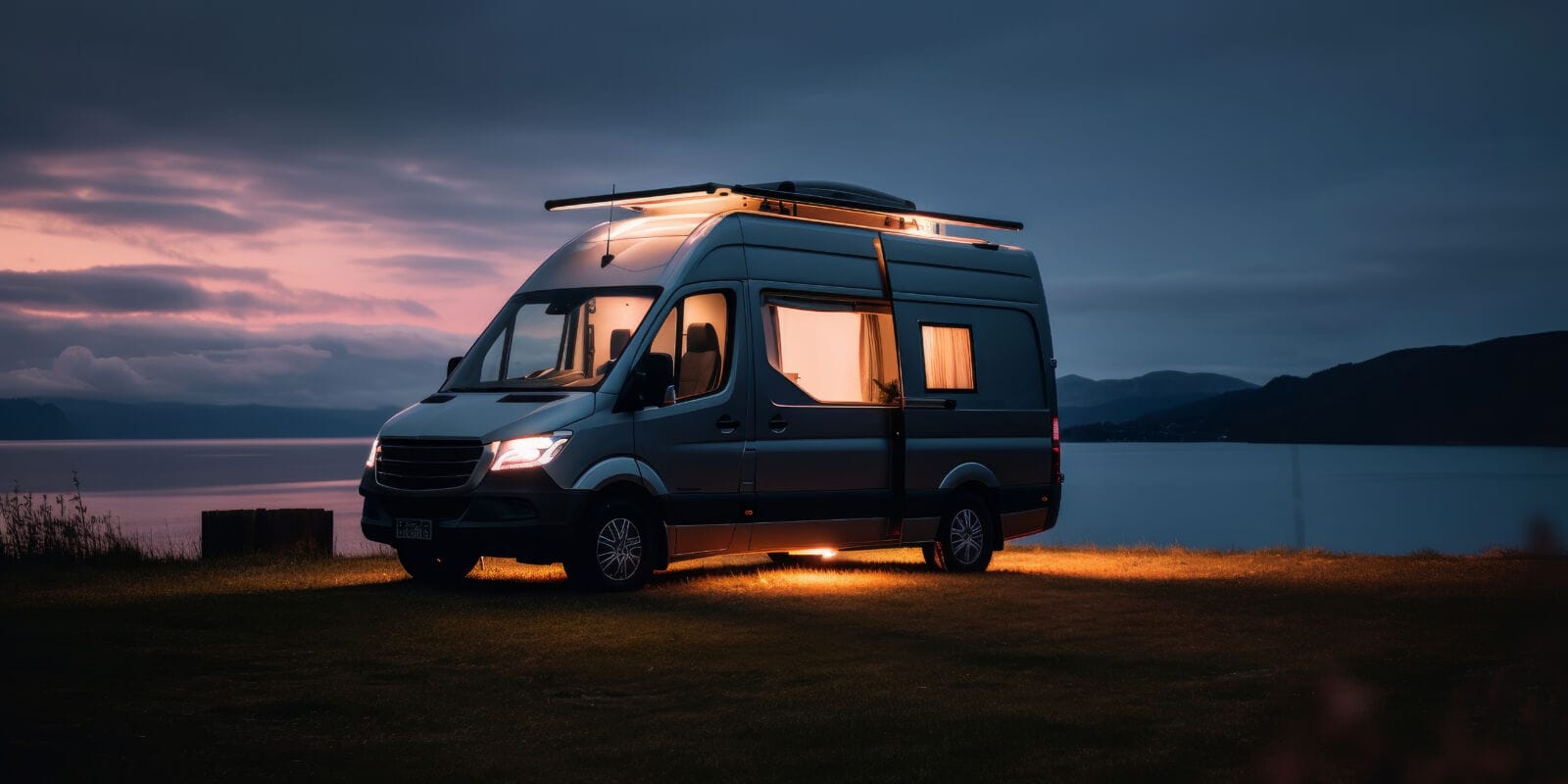
Quick Answer:For a 42-hour camping weekend with no recharging, basic gear such as phones, headlamps, a lantern, and a small fan requires about 294Wh of rated capacity. Adding a compressor cooler raises the requirement to roughly 1,324Wh. A coffee maker and kettle used separately need about 882Wh of capacity, but the power station must also provide at least 1,500W of continuous AC output. If you only need to charge phones, a standard power bank may be enough.
Key Takeaways
- Calculate capacity from your gear’s total energy use for the entire trip.
- Check AC output as well as capacity when using kettles, coffee makers, or coolers.
- Reliable campsite, vehicle, or solar charging can reduce the capacity you need.
- Allow for efficiency losses and keep some battery power in reserve.

Capacity Needs for Three Common Weekend Setups
A portable power station is a rechargeable battery with 120V outlets, USB ports and a 12V car port. For a weekend from about 6 p.m. Friday to noon Sunday (42 hours, not 72), starting with a full battery and without recharging the station during the trip, these setups need:
| Weekend setup | Energy for the trip | Rated capacity needed | What to check next |
|---|---|---|---|
| Phones, headlamps, lantern, small fan | About 200 Wh | About 294 Wh | USB ports, overnight small loads |
| Same gear plus an electric cooler | About 900 Wh | About 1,324 Wh | Cooler type, outlet, start-up |
| Coffee maker and kettle (van or RV) | About 600 Wh | About 882 Wh | 1,500 W kettle; one appliance at a time |
Only gear powered by the station is counted, with 85% efficiency and a 20% reserve assumed. Recharging during the trip can lower these figures.
What Will You Run Between Friday and Sunday?
Watt-Hours and Watts: Check Both
Watt-hours (Wh) measure stored energy; together with the load, they set how long the battery lasts. Watts (W) measure power and decide whether an outlet can run a device at all. A small station can recharge phones for days yet cannot run a 1,500 W kettle, while a high-output station still drains quickly under a heater. Check both numbers for every device, plus start-up demand for anything with a motor or compressor.
The Simple Formula Behind the Numbers
Without recharging along the way, rated capacity ≈ energy the gear uses during the trip ÷ efficiency ÷ usable share of the battery. For gear that needs 900 Wh between Friday evening and Sunday noon, starting full, with 85% efficiency and a 20% reserve, that is 900 ÷ 0.85 ÷ 0.8 ≈ 1,324 Wh.
The 85% and 20% are example assumptions, not specifications of any product. The 85% is one overall figure for conversion losses and the station’s own consumption while outputs are on; real efficiency differs between USB, 12V and AC loads. Because the reserve is already in the formula, it should not be added again.
Output is a separate check, because capacity says nothing about whether a station can run a kettle. The next sections check the loads first, then whether recharging changes the requirement.
Phones, Headlamps and Lanterns: Count Charges and Hours
Phones and headlamps draw from the station only while they recharge, so count charges rather than hours. Two phones charged twice each at about 15 Wh per charge come to 60 Wh; a rechargeable headlamp might hold around 5 Wh, so check your own. Lanterns and fans run for hours, so multiply their power by actual use: a 5 W lantern for four hours a night over two nights uses 40 Wh.
Small overnight loads can trip energy-saving settings. On the Jackery Explorer 300 v2, energy-saving mode shuts all outputs off after six hours below 25 W on AC or 2 W on USB and DC, and a switch turns the mode off. A 5 W USB fan stays above that USB threshold, but thresholds and defaults differ between models, so check yours before relying on overnight power.
Electric Coolers: Check the Type and Actual Consumption
An electric cooler can be the largest load of the weekend, but how large depends on its type. Compressor coolers cycle on and off to hold a set temperature, while thermoelectric coolers usually run continuously and can only cool to a limited margin below the outside air.
Use the 24-hour consumption from the cooler’s manual or your own measurement rather than its rated wattage. Hot weather, frequent opening, warm food packed at departure and a colder setting all raise consumption, while pre-chilling the cooler and its contents at home eases the load on Friday evening. The example in this article assumes a compressor cooler using 400 Wh per 24 hours in warm weather.
Coffee Makers, Kettles and Hot Plates: Check Power and Run Time
Heating appliances start with the output check: a 1,500 W kettle needs at least 1,500 W of continuous AC output. Run time varies too: a kettle may boil in four minutes, while a hot plate can run for 20 minutes or longer, so they cannot all be treated as short loads. At 1,000 W, 15 minutes uses about 250 Wh before conversion losses. Check the running power, any start-up surge and the outlet each appliance needs.
Build Your Weekend Power List
For each item, multiply quantity by energy per charge and the number of charges, or power by operating time. Count only what the station will power. The cooler runs from Friday evening to Sunday noon, 42 hours, so two full days would overstate it:
| Item | Assumption | Use, 6 p.m. Friday to noon Sunday | Wh for the trip |
|---|---|---|---|
| Two phones | About 15 Wh per charge | Two charges each | 60 |
| Two headlamps | About 5 Wh per charge | Two charges each | 20 |
| LED lantern | 5 W | 4 hours a night, two nights | 40 |
| USB fan | 5 W | 8 hours a night, two nights | 80 |
| Compressor cooler | 400 Wh per 24 hours | 42 hours | 700 |
The first four rows make up the 200 Wh light setup; with the cooler, the total is 900 Wh. Where a figure is uncertain, a plug-in energy meter used on an AC device over a full day at home gives a better number than a guess.
Can You Recharge Before Sunday?
Recharging during the trip lowers the capacity you need, but only if it arrives in time. Each option comes down to when it is available and how much energy it actually returns. Totals alone can mislead: power added on Saturday afternoon does not help if the station ran flat on Saturday morning, so check the battery level in the order things happen.
Campsites With Electric Hookups
A site with electric hookup lets you recharge while the site is powered, so the station only covers the gap between charges rather than the whole weekend. If it can be fully recharged once a day, averaging the cooler example over 24 hours gives roughly 515 Wh, or about 760 Wh of rated capacity. Check the actual interval between charges, especially the overnight loads.
Not every site has hookups, so confirm when you book, and check the site’s power limit if the station charges while other gear is plugged into the same supply.
Charging From the Car Between Stops
Car charging is practical mainly while driving, and it is slow. From a 12V car socket, the Jackery Explorer 1000 v2 takes about 12 hours to charge fully, and a larger battery takes longer to fill at the same charging power. A short drive to a trailhead returns only a fraction of a charge, and some vehicles cut power to the socket when the engine is off.
Solar Panels at an Off-Grid Site
Solar charging needs the panels deployed in sufficient daylight. Weather, season, shade and panel wattage determine the energy recovered, so plan around realistic yield rather than rated power alone. Input limits matter too: a station charges no faster than its solar input rating allows, and panels stowed in the car add nothing.
Putting It Together: Example Setups for Three Weekend Trips
The three setups from the capacity table are worked through here in the order you would plan them: the energy your gear uses, the outputs it needs, then a station that fits. The models named are examples, and the same checks apply to any portable power station.
A Two-Night Trip With Phones and Lights
The gear is two phones, two headlamps, an LED lantern and a USB fan, with no recharging until Sunday. The trip uses about 200 Wh, which works out to about 294 Wh of rated capacity. Output needs are small, but the station needs enough USB ports, and the fan and lantern must keep running during their planned hours without an energy-saving shutoff.
A model around 300 Wh is close to the calculated requirement. A 288 Wh unit falls slightly below the chosen reserve target, so verify actual consumption, reduce usage or choose more capacity if you want a larger buffer. Running the fan six hours a night instead of eight, for example, brings the need to about 265 Wh. If you only need to charge phones, a power bank may be enough.
Off-Grid Car Camping With an Electric Cooler
This setup adds a compressor cooler to the same small devices, running from Friday evening to Sunday noon with no hookup. The trip uses about 900 Wh, which calls for about 1,324 Wh of rated capacity. The cooler also needs a suitable 12V or AC outlet and room for its start-up demand.
If your station holds around 1,000 Wh, it falls short here unless you trim loads or can recharge reliably. The 1,070 Wh Jackery Explorer 1000 v2, for instance, would need roughly 200 Wh more usable energy at battery level, delivered before the reserve is reached. A larger station such as the 1,536 Wh Jackery Explorer 1500 v2 covers the 1,324 Wh requirement without recharging, though it weighs about 8 lb more.
A Van or RV Weekend With Selected High-Power Appliances
Here only selected appliances go on the station. On each of two mornings, it runs a 1,000 W coffee maker for 12 minutes and a 1,500 W kettle for four minutes. That adds up to 400 Wh plus 200 Wh, about 600 Wh, or about 882 Wh of rated capacity.
Lights, the water pump and other loads on the RV’s house battery are not counted again, and a station of around 2 kWh does not replace the vehicle’s electrical system.
Here output decides the choice: the kettle alone needs 1,500 W, which leaves no headroom on a 1,500 W station, and running both appliances together would need 2,500 W.
The Jackery Explorer 1500 v2 has 2,000 W of AC output, enough for either appliance at these ratings but not both at once, so the coffee maker and kettle take turns. Its 1,536 Wh also covers the 882 Wh requirement. Check each appliance’s label and the outlet it needs.
FAQs About Portable Power Stations for Camping Weekends
Can You Use a Portable Power Station During Campground Quiet Hours?
Rules differ by campground, so the site’s own rules come first. Generator hours and quiet hours are separate: according to the official camping regulations for Juniper and Cottonwood Campgrounds in Theodore Roosevelt National Park, generators may run from 8 a.m. to 8 p.m., while quiet hours run from 10 p.m. to 6 a.m. This means a generator is already off-limits at 9 p.m., even though quiet hours have not yet begun.
Across the National Park System, 36 CFR 2.12 prohibits generators and similar equipment louder than 60 dB(A) at 50 feet, as well as unreasonable noise below that level. These rules do not name battery power stations, and that does not make them exempt.
A station is usually much quieter than a gas generator, but cooling fans can be audible at night. Check the campground’s rules and, if needed, explain that you use a battery power station.
How Do Hot Cars and Cold Nights Affect the Battery?
Charging, use and storage each have their own limits. The Jackery Explorer 1000 v2, for example, is rated to charge at 32 to 113°F (0 to 45°C) and discharge at 14 to 113°F (−10 to 45°C), so a station that runs on a cold morning may still refuse to charge until it warms up.
For any model, look up the charging range separately before a cold trip rather than relying on the operating range. A closed car in summer sun can exceed these limits; avoid leaving the station there.
What Should You Pack Besides the Power Station?
Pack for the charging methods you plan to use. If you will charge from the car, check whether a car charging cable is included; none of the models discussed here has one in its standard box. For solar, check panel voltage, current, approved connections and cable compatibility. An extension cord helps when gear sits away from the station, and with a bundle, check what it actually contains.
Final Thoughts
Sizing a portable power station for a camping weekend comes down to three steps: list the gear the station will power and its energy for the whole trip, check when you can recharge before Sunday, then convert the total into rated capacity and confirm the output each appliance needs. If a power bank covers your phones and the rest of your gear runs on its own batteries, you may not need a station at all.