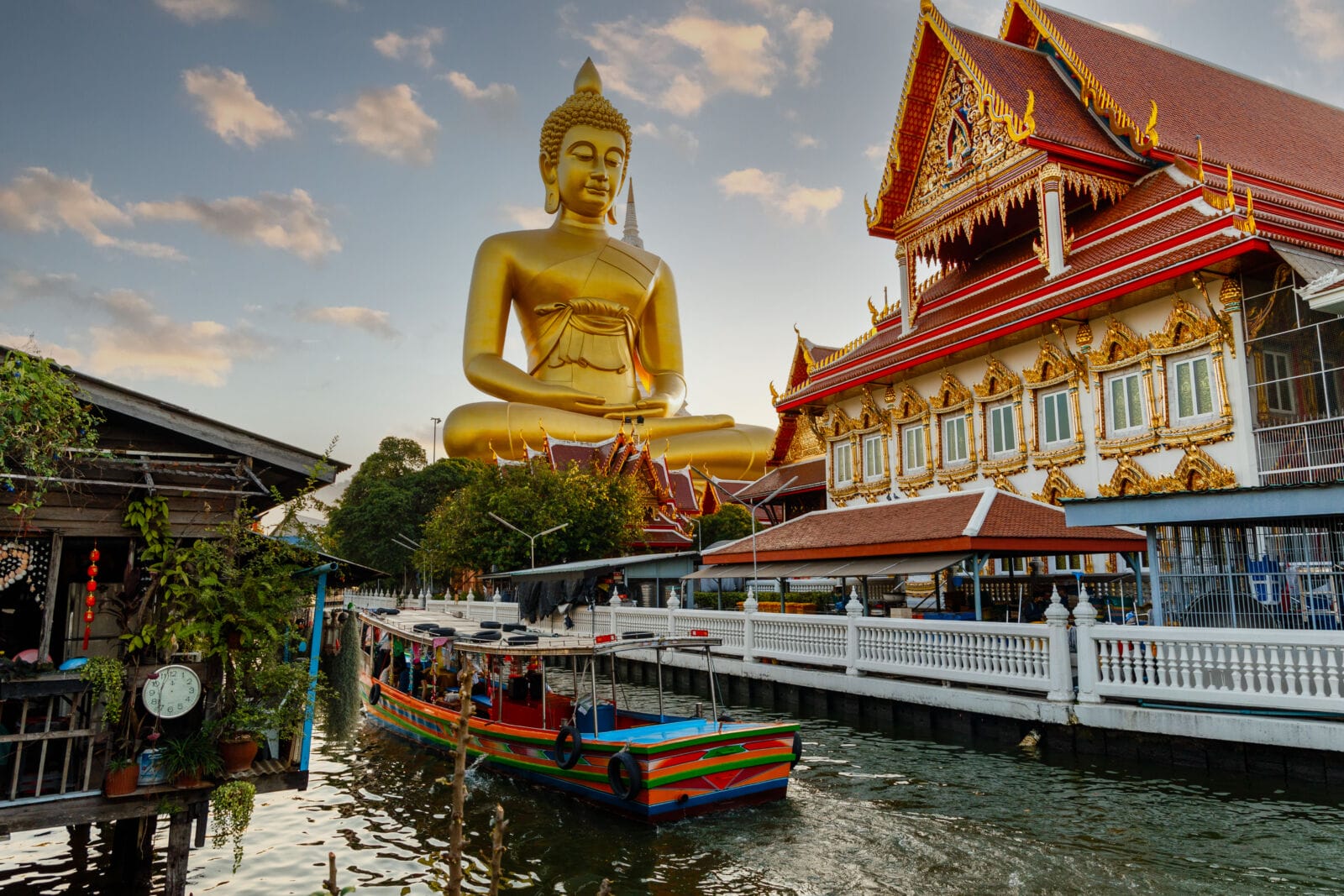
Walk through any Thai market, and somewhere among the stalls you will find glass cases filled with small amulet clay tablets, metal medallions, and tiny Buddha images in plastic casings. Some sell for a few baht. Others change hands for sums that would buy a car.
To an outside observer, this can look like a curiosity shop. To millions of Thai people, it represents something considerably deeper: a living tradition connecting devotees to particular monks, particular temples, and particular lineages of practice stretching back generations.
Understanding that tradition means understanding the figure at its centre:e the phra geji.
What Does Phra Geji Actually Mean?
The term phra geji (พระเกจิ) refers to a monk recognised within Thai Buddhism for exceptional attainment, typically in meditation, scriptural mastery, or monastic discipline. The honorific is not conferred by any central authority. It emerges from reputation, built over decades and sustained by communities who knew the monk personally.
This distinguishes a geji from a monk holding formal ecclesiastical rank. Administrative titles are appointed. Geji status is earned in the estimation of laypeople and fellow monks, and it often grows stronger after a monk has died, as stories accumulate and disciples carry the teaching forward.
Thai sites onepra documenting traditions typically organise their material around individual monks for exactly this reason: the tradition is biographical rather than systematic. You cannot understand it in the abstract. You understand it one life at a time.
The Historical Roots
Thai Buddhism follows the Theravada tradition, but the amulet and sacred-object practices surrounding geji monks reflect a longer and more layered history. Pre-Buddhist animist beliefs, Brahmanic ritual inherited through the Khmer courts, and Chinese folk religion carried by immigrant communities have all left traces.
The result is a devotional landscape where orthodox Buddhist practice coexists with protective ritual, and where the boundary between them is handled differently by different practitioners.
The making of sacred objects has deep precedent. Votive tablets were produced across Southeast Asia for centuries, often buried in temple foundations or stupas to preserve the Dharma for future generations. Many of the oldest amulets in circulation today were originally recovered from such deposits rather than made for distribution.
What changed in the nineteenth and twentieth centuries was the association of specific objects with specific monks. An amulet stopped being simply a Buddha image and became this monk’s amulet, carrying the weight of that monk’s reputation and practice.
The Consecration Process
Central to this tradition is pluk sek (ปลุกเสก), the ritual consecration of an object by a monk. The larger ceremonial version, phutthaphisek (พุทธาภิเษก), may involve many monks chanting over an extended period, sometimes through an entire night.
The process typically involves several elements. Materials are gathered, often with symbolic significance: sacred clay, temple ash, crushed flowers from offerings, fragments of older amulets, or herbal preparations. The objects are formed and then consecrated through sustained chanting, meditation, and the recitation of katha protective verses.
What devotees believe is transferred through this process varies. Some describe it in terms of blessing or merit. Others speak of the monk’s meditative concentration being invested in the object. Many practitioners hold a more modest view: that the amulet functions as a reminder, keeping the wearer mindful of the monk’s teaching and the precepts they are meant to uphold.
That last interpretation sits most comfortably with orthodox Theravada doctrine, which emphasises that protection comes from one’s own conduct rather than from objects.
Figures Who Shaped the Tradition
Certain monks have become so widely venerated that their names are recognised across Thailand regardless of regional affiliation.
Somdej Toh of Wat Rakhang, one of the most celebrated monastic figures of nineteenth-century Siam, is associated with the Phra Somdej amulet. These clay tablets, simple in form and restrained in design, became among the most sought-after sacred objects in Thai history and are counted among the Benjaphakhi, the five amulet types traditionally regarded as the most significant.
Luang Pu Thuat, a figure from the Ayutthaya period connected with Wat Chang Hai in the south, occupies a slightly different position. Much of what is known about him comes through legend rather than documented record, yet his image remains among the most widely worn in the country.
Beyond these nationally known names, countless regional monks hold deep significance within their own provinces and communities. Luang Pho Pan of Wat Bang Hia in Samut Prakan, Luang Pu Kee of Wat Hu Chang in Nonthaburi, and Luang Pho Phoem of Wat Klang Bang Kaeo in Nakhon Pathom each anchor devotional traditions rooted in specific places and specific histories.
This local dimension matters. For many Thai families, the relevant geji is not the most famous monk in the country but the one whose temple their grandparents visited.
The Amulet Market and Its Complications
It would be incomplete to describe onepra with this tradition without acknowledging the commerce that has grown around it.
A substantial market exists for amulets, complete with specialist publications, authentication services, and dealers who trade rare pieces at extraordinary prices. Authentication is genuinely difficult. Forgeries are common, and distinguishing a period piece from a convincing reproduction often requires expertise built over years.
This commercialisation has drawn criticism from within Thai Buddhism itself. Reform-minded monks and scholars have questioned whether the amulet trade distracts from core Buddhist practice, and whether treating sacred objects as investments contradicts teachings on attachment and material craving.
Practitioners respond in various ways. Many distinguish between bucha, reverent acquisition of an object for devotional purposes,s and speculative trading. The convention of saying one “rents” rather than “buys” an amulet reflects this distinction, framing the transaction as support for a temple rather than a commercial purchase.
A visitor approaching this tradition respectfully does well to understand that both the devotional and the critical perspectives are genuinely held by Thai Buddhists, and that neither represents the whole picture.
Visiting a Temple Associated with a Geji Monk
For travellers interested in experiencing this tradition directly, a few points of etiquette apply.
Dress modestly. Shoulders and knees covered, for all visitors regardless of gender. Many temples provide covering garments if needed.
Remove shoes before entering ordination halls and other sacred buildings. Follow what others are doing.
Observe the foot convention. Never point your feet toward a Buddha image or a monk. Sit with feet tucked behind you.
Respect the rules on contact. Women should not touch monks or hand items directly to them; an intermediary cloth or a male companion is used instead.
Ask before photographing. Particularly inside halls and never during ongoing ceremonies.
Make offerings at the designated point. Temples maintain donation boxes, and supporting the temple is considered a meritorious act independent of any object received.
Keep your voice low. Many visitors are there to pray rather than sightsee.
Approaching the Tradition Honestly
For readers encountering this subject from outside Thai culture, the most useful framing is probably this: the geji tradition is less about objects than about relationships between a community and a teacher, between the present and a remembered past, between daily life and the aspiration toward something better.
Whether one shares the beliefs involved or not, the tradition documents something real. It records which monks lived with enough integrity that people still speak their names a century later, and which temples held enough meaning that families return across generations.
That is worth understanding on its own terms, before any question of amulets or efficacy arises at all.