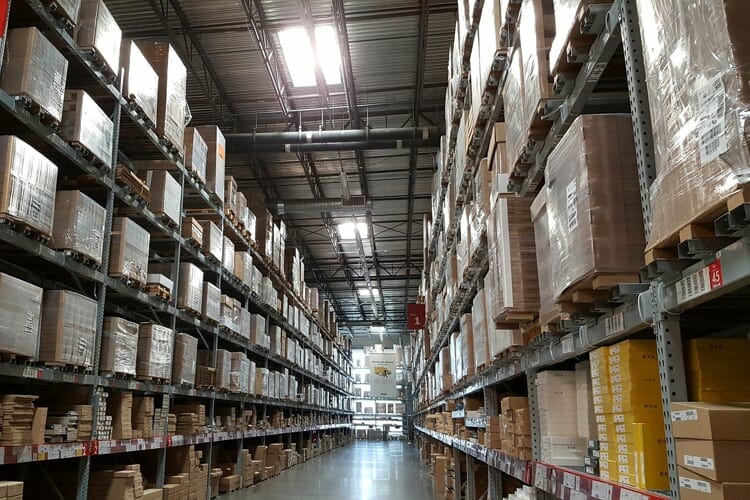
Proper storage solutions are essential for efficient warehouse management. Among all the storage systems, warehouse racking seems to be one of the most practical ways to increase space efficiency and organization. Structured shelving creates an organized setting, maximizes available space, and simplifies both access to and tracking of inventory. In this post, we look at some of the key advantages, as well as the best practices of a warehouse racking system.
Maximizing Vertical Space
By taking advantage of vertical space, they are able to fit more items without taking on an additional floor footprint. The rack-type system utilizes all available height and stacks products vertically. This keeps the ground clear, ensuring walkways are not blocked, which also helps with safety. Shelving units can be adapted for different product sizes, allowing for ongoing flexibility where the inventory held may change. With warehouse racking, businesses gain structured systems that maximize space, streamline workflows, and reduce clutter
Improving Inventory Visibility
A good organization assists staff in locating items efficiently. Racking is the best resource for keeping your products visible, and it always separates them by category or type. It provides visibility, which reduces search time, as well as reduces picking errors. Correct placement of goods also aids in batch rotation, which is essential for perishable goods and seasonal inventory. Racking helps minimize losses caused by misplaced items by keeping a logical sequence.
Enhancing Safety Measures
Correct use of the racking lowers the possibility of accidents in the storage areas. Stable shelves avoid tipping or falling merchandise, safeguarding both staff and goods. A racking will leave clear defined aisles, these being the paths for equipment and personnel traffic to move within the space. Safety features, including guardrails and load capacity signs, also encourage responsible stack storage.
Streamlining Workflow
A simple, organized storage space leads to quicker order delivery. Reduced product search time for workers means that they can pick and pack faster. Uniformity in shelf layout facilitates structured loading and locating, hence increasing productivity. A uniform layout can also expedite the learning process for newcomers, providing a clear and concise approach to understanding the protocols.
Supporting Inventory Management
Box relations are magnified and garnished with systematized racking, which makes it simpler to keep track of stock. By putting labels across your shelves or checking zones for assigned products, you can monitor the movement of stocks live. This helps perform regular stock counts and minimizes mistakes in entries for goods received or dispatched. Distinct lines at the product level also facilitate shortages or overstock conditions detection as soon as possible.
Adapting to Changing Needs
Stock volume or product variety can often change in warehouses. With adjustable racking, you can change the heights of the shelves or add new pieces if necessary. Modular solutions are scalable, growing or downsizing along with the company or as a function of seasonal trends. Such flexibility makes it possible for storage solutions to stay effective over time despite different needs.
Reducing Operational Costs
Racking systems are an investment that will help you reduce the overall storage cost. Space is optimized, and wasted space is eliminated, thereby requiring fewer facilities. Smart vertical storage can extend or eliminate the need to implement expensive warehouse expansions. Pallet racking and other automated systems decrease reliance on labor and the cost of operation.
Boosting Accuracy and Customer Satisfaction
A high level of order accuracy is required to keep the customer base stronger than ever. Organized storage minimizes the shipping of damaged goods or incorrect ones. When customers receive their orders on time, their satisfaction level increases, and they tend to return to you for business. It also allows companies to swiftly respond to urgent orders because everything is better organized.
Facilitating Cleanliness and Maintenance
A tidy storage area is easier to clean and maintain. Racking elevates products from the ground, which means that you can also regularly sweep and inspect the space. Clear aisles and organized shelving units minimize dust accumulation and pest infestations. It also allows you to identify safety hazards before they become critical by conducting regular inspections of shelving.
Setting Your Warehouse Up for Success
Warehouse racking is a key component in maximizing storage capacity and improving organization. Racking systems help warehouse operations be more seamless by maximizing space, improving visibility, and supporting safe operating practices. By implementing the appropriate storage organization, companies could save costs, increase flexibility, and facilitate customer satisfaction. Structured racking is a reliable long-term solution for companies looking to optimize their storage processes while maintaining flexibility.