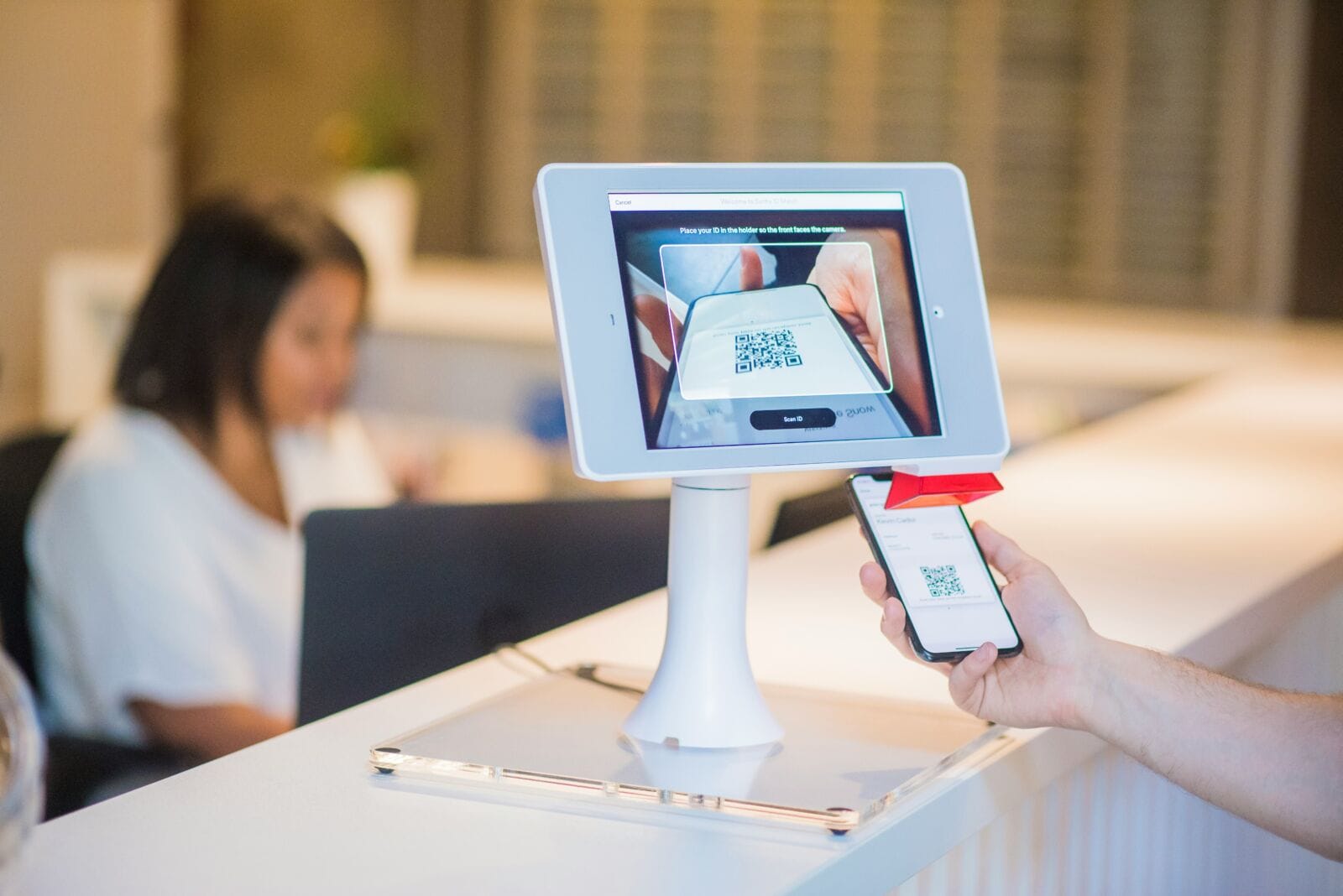
The QR code market grew from $13.04 billion in 2025 to $15.23 billion in 2026, according to Mordor Intelligence, with dynamic codes now accounting for 64.92% of global revenue. Scan volumes in Europe climbed 42% year over year. Latin America followed at 40%. North America, already a mature market, added another 8% (Bitly, State of QR Code Scans 2026). More businesses are printing QR codes on more materials than at any point in the technology’s history.
And yet, the business model behind most QR code platforms still depends on a single trick: let users print codes during a trial, then charge them to keep those codes alive.
That model is breaking. Consumer behavior, regulatory pressure, and competitive alternatives are converging on the same conclusion: subscription traps are a liability, not a growth engine. The shift is already underway.
Key takeaway: The QR code subscription trap, where platforms deactivate codes after a trial expires to force payment, is facing pressure from three directions: consumer subscription fatigue (37% of digital subscribers canceled at least one service due to fatigue in late 2025), incoming regulation in both the UK and EU that targets auto-renewal dark patterns, and the emergence of free-tier platforms like FreeQR that prove the model works without holding printed materials hostage. The industry is moving toward permanent free tiers, and businesses choosing QR platforms today should plan for where the market is heading, not where it has been.
What the subscription trap looks like in practice
A subscription trap in the QR code industry works like this: a platform offers a free trial (typically 7 to 14 days), during which users create dynamic QR codes and print them on business cards, menus, packaging, or event materials. When the trial expires, the platform deactivates those codes. Scanning them returns an error page or a prompt to resubscribe. The user’s choice at that point is to pay whatever the platform charges or accept that every printed copy of that code is dead.
The mechanism relies on one technical fact. A dynamic QR code does not contain the user’s URL. It contains a redirect URL controlled by the platform’s servers. The platform decides, in real time, whether a scan reaches the intended destination. Billing status controls that decision.
This is the default across the industry’s largest players. QR Code Generator by Egoditor deactivates codes after a 14-day trial. QRFY does the same after 7 days. Uniqode (formerly Beaconstac) confirmed the policy in writing to a customer: “As a subscription-based service, ending the subscription ends the service. That would mean the deactivation of the QR codes.” QR Tiger caps its free tier at 500 scans, then silently disables the code.
Three forces pushing the industry to change
The subscription trap has been profitable. But three developments are converging to make it unsustainable.
1. Subscription fatigue has reached a tipping point
Consumers are canceling subscriptions faster than companies can replace them. A CivicScience survey from late 2025 found that 37% of Gen Z digital subscribers had canceled at least one subscription due to fatigue, with another 29% planning to do so. Subscription growth across major streaming platforms dipped to 7% in 2025, the first year of single-digit growth on record, according to Antenna.
The fatigue is not limited to entertainment. C+R Research found that consumers underestimate their monthly subscription spending by a factor of 2.5x, estimating $86 per month when the actual average is $219. West Monroe’s data is starker: 89% of consumers underestimate their subscription spending, and 66% are off by more than $200.
The QR code industry is not immune to this. A platform charging $10 to $25 per month for a service that most users need intermittently is competing for wallet share against dozens of other subscriptions. The platforms that survive the fatigue wave will be the ones that do not require a recurring payment to keep a printed code functional.
2. Regulators are targeting the exact mechanics subscription traps use
The UK’s Digital Markets, Competition and Consumers Act 2024, taking effect in Spring 2026, directly targets subscription traps. The law requires businesses to provide clear pre-contract information, send reminders before renewal charges, grant cooling-off periods after auto-renewal, and offer easy exit mechanisms. Non-compliance carries fines of up to 10% of global group turnover, enforced by the Competition and Markets Authority (CMA).
The European Commission is moving on a parallel track. Its Digital Fairness Act, expected in draft form by Q4 2026, will address dark patterns in online commerce, including manipulative cancellation flows, hidden opt-outs, and false urgency tactics. A public consultation concluded in October 2025, with consumer protection organizations calling for tighter rules while platforms argued against further intervention. The scope targets B2C offerings across e-commerce, SaaS, and digital services.
| Regulation | Jurisdiction | Effective date | Key provisions | Penalty |
|---|---|---|---|---|
| Digital Markets, Competition and Consumers Act 2024 | UK | Spring 2026 | Pre-contract disclosure, renewal reminders, cooling-off periods, easy exit | Up to 10% of global turnover |
| Digital Fairness Act (proposed) | EU | Draft expected Q4 2026 | Dark pattern prohibitions, cancellation transparency, unfair personalisation controls | TBD (expected to align with DSA enforcement) |
| FTC Negative Option Rulemaking (restarted) | US | Pending | Disclosure of auto-renewal terms, simple cancellation, consent requirements | Per-violation civil penalties |
The pattern these regulations target, offering a free trial, converting to paid automatically, making cancellation harder than signup, maps precisely onto the QR code subscription trap. The added complication for QR platforms: the lock-in is not just digital. It is physical. A consumer cannot unsubscribe from a printed business card.
3. Free-tier competitors are proving the alternative works
The strongest signal that the subscription trap is ending comes not from regulators but from the market itself. Platforms that offer permanent free tiers with no code deactivation are demonstrating that the model works commercially.
FreeQR, a dynamic QR code platform and best free QR code generator, operates on what it calls a “delete-only” policy: codes created on the free plan stay active permanently. No trial period, no credit card requirement, no scan cap. The only way a code stops working is if the user deletes it. Each QR code links to a customizable landing page with content blocks and scan analytics. Paid tiers add team collaboration, higher volumes, and advanced customization, but deactivation is never used as a conversion lever.
The business logic is straightforward. Users who upgrade because they want more features retain at higher rates than users who upgrade because their printed materials stopped working. Voluntary upgrades produce lower churn and higher lifetime value. It is a retention strategy built on value rather than coercion.
This is not a fringe position. Chargebee’s 2025 State of Subscriptions Report found that 43% of SaaS companies now use hybrid pricing structures (combining free tiers with usage-based or tiered paid plans), with adoption projected to reach 61% by end of 2026. IDC forecasts that 70% of software vendors will move away from pure per-seat subscription models by 2028. The direction is clear: the companies that grow fastest are the ones that let users experience value before asking for payment.
What this means for businesses choosing a QR platform now
If you are selecting a QR code platform today, you are making a decision that will outlast several regulatory cycles and pricing model shifts. The materials you print this quarter will be in circulation for months or years. The platform you choose needs to work not just under today’s terms but under the terms the industry is moving toward.
Three criteria matter more than they did a year ago:
Permanent free tier, not a trial. A 14-day trial is designed to give you enough time to commit codes to physical materials but not enough time to evaluate the platform. A permanent free tier means the platform is confident enough in its product to let you use it indefinitely without paying. If the platform needs a countdown to convert you, the product is not doing the selling.
Delete-only deactivation. The only acceptable reason for a code to stop working is that the user chose to remove it. Billing status, plan changes, trial windows, none of these should affect whether a printed code resolves. This is the direction regulation is heading. Choose a platform that is already there.
Transparent upgrade path. Paid features should be additions (team seats, higher volumes, deeper analytics, API access), not restorations of functionality that was taken away. The distinction between “upgrade” and “ransom” is whether the free version works on its own.
The parallel with other industries
The QR code industry is not the first to face this reckoning. The pattern is familiar from other sectors where subscription traps eventually gave way to fairer models.
Cloud storage went through a similar correction. Early providers offered limited free storage with aggressive upsell tactics and data hostage scenarios. The market settled on a model where the free tier is genuinely functional (Google Drive at 15 GB, Dropbox at 2 GB) and paid plans add meaningful capacity rather than unlocking access to files you already uploaded.
Email marketing followed the same arc. Mailchimp’s free tier, which allowed up to 500 contacts with full functionality, reset industry expectations. Competitors that gated basic sending behind paywalls lost market share to platforms that let users build real campaigns before upgrading.
The QR code industry is in the early stages of the same transition. Platforms that deactivate codes on cancellation are operating on a model the rest of the software industry has already moved past. The holdouts will face pressure from three sides: consumers who are tired of subscriptions, regulators who are writing laws against exactly this behavior, and competitors who are proving the alternative works.
What to watch next
UK enforcement actions after Spring 2026. The CMA’s new powers under the Digital Markets, Competition and Consumers Act will be the first test of whether subscription trap enforcement extends beyond streaming and e-commerce into SaaS tools like QR code generators. The 10% turnover penalty ceiling makes non-compliance expensive enough to force preemptive changes.
The EU Digital Fairness Act draft. Expected Q4 2026, this legislation will define how dark patterns are regulated across the EU’s single market. If auto-renewing trials that convert to paid subscriptions without clear consent are covered (and early consultation signals suggest they will be), QR code platforms selling to EU businesses will need to restructure their onboarding entirely.
Competitive pressure from free-tier platforms. As more users discover that permanent free tiers exist, the platforms relying on trial-to-paywall conversion will face a straightforward problem: why would a business risk printing codes on a platform with a 14-day trial when a platform with a permanent free tier and no deactivation policy exists?
The QR code industry built a $15 billion market on a technology that is supposed to make physical-digital interaction seamless. The subscription trap is the opposite of seamless. It introduces fragility into a medium that businesses depend on for permanence. The market is correcting, and the correction favors platforms that treat free as a product, not as bait.
Frequently asked questions
What is a QR code subscription trap?
A QR code subscription trap is when a platform lets you create dynamic QR codes during a free trial, waits for you to print them on physical materials, then deactivates the codes when the trial expires. Your options at that point are to pay a recurring subscription or accept that your printed materials are dead. The trap works because dynamic QR codes route through the platform’s servers, giving the platform the ability to turn codes on or off based on billing status.
Are QR code subscription traps being regulated?
Yes, on multiple fronts. The UK’s Digital Markets, Competition and Consumers Act 2024, effective Spring 2026, requires clear pre-contract disclosure, renewal reminders, and easy exit mechanisms for subscription services, with fines up to 10% of global turnover. The EU’s proposed Digital Fairness Act (draft expected Q4 2026) targets dark patterns including manipulative cancellation flows. In the US, the FTC has restarted its negative option rulemaking and has pursued major settlements against companies using subscription dark patterns.
How do I know if my QR code platform uses a subscription trap?
Check three things. First, does the platform offer a “free trial” or a permanent free plan? A trial with a countdown means your codes have an expiration date. Second, read the support documentation for words like “deactivated,” “service page,” or “inactive” in connection with trial expiration or cancellation. Third, scan the QR code and check the URL it decodes to. If it points to the platform’s domain rather than your URL, the platform controls the redirect and can disable it at any time.
What is a delete-only QR code policy?
A delete-only policy means the only way a QR code stops working is if the user explicitly deletes it. Billing status, plan changes, trial expiration, and account inactivity do not affect whether the code resolves. FreeQR uses this model: codes on the free plan stay active permanently. The only deactivation trigger is the user choosing to remove the code.
Why are QR code platforms moving away from subscription traps?
Three reasons. Consumer subscription fatigue is reducing willingness to pay for recurring services (37% of digital subscribers canceled at least one subscription due to fatigue in late 2025). Regulators in the UK, EU, and US are writing laws that target the exact mechanics subscription traps use. And free-tier competitors are proving that the alternative business model, selling upgrades instead of ransoms, produces better retention and lifetime value.