
Fall changes a bedroom in ways that are easy to miss at first. Sunrise comes later, streetlights seem brighter against the early darkness, and bedding that felt comfortable in September may be too light by November. Meanwhile, the nightstand quietly fills with chargers, books, and the remains of the working day.
A useful fall bedroom refresh is not a seasonal decorating project. It is a chance to notice what interrupts comfort after dark and fix those details one at a time. The most practical bedroom ideas for better sleep usually involve light, temperature, noise, and routine rather than an expensive redesign.
Start With Unwanted Light
Inspect the bedroom after dark with the usual lamps switched on, then repeat the check early in the morning. These two moments reveal different problems. Streetlights may shine through the window overnight, while sunrise exposes narrow gaps that were invisible when the shade was chosen.

Blackout roller shades can limit light passing through the window covering itself. The word “blackout,” however, normally describes the material. It does not mean that every installation will produce complete darkness. An inside-mounted shade needs clearance to move, so slim lines of uncovered glass may remain along the sides.
Use the table below to identify where the light is coming from before changing the entire window treatment.
| Light source | Quick test | Possible response |
| Gaps beside the shade | Check the window at sunrise | Add wider coverage, side channels, or curtain panels |
| Light above the headrail | Stand back from the window after dark | Mount higher or add a top treatment |
| Hallway light | Switch off the bedroom lamp and close the door | Reduce the door gap or turn off nearby lighting |
| Electronics | Scan the room once your eyes adjust | Dim, cover, or relocate unnecessary displays |
A bright outline does not always justify replacing the shade. If the fabric already blocks light well, adding lined curtains may be simpler than starting again. Renters can also consider removable solutions, provided they do not interfere with safe window operation or emergency egress.
THINGS TO DO: 10 quirky restaurants you have to visit in Arizona
Balance Evening Privacy With Daytime Light
Privacy should be tested under the conditions in which it matters. Stand outside the window after sunset while the bedroom lights are on or ask another person to check. A fabric that appears private during the day may reveal shadows or a clear interior view at night.
Choosing bedroom blinds, therefore, involves more than selecting an opacity level. Think about how the room is used from morning to bedtime. Someone who dresses near the window may need full privacy as soon as the lights come on. A second-floor bedroom facing a quiet backyard may allow a lighter treatment that preserves more daylight.
Consider three questions:
- Does the covering provide privacy when the room is lit from inside?
- Can it admit useful morning light without exposing the entire room?
- Is it simple enough to adjust every day, rather than being left permanently closed?
Adjustable slats provide flexible privacy and daylight, but small gaps remain between them. Roller and cellular shades create broader coverage when lowered, although they offer less precise control over the direction of daylight than adjustable slats. Layering a shade with curtains can handle both needs, but only if there is enough space around the frame for each treatment to operate freely.
The goal is not to make the bedroom dark at all hours. Daylight keeps the room from feeling sealed off and makes ordinary tasks such as dressing, cleaning, and reading more comfortable.
Adjust Bedding for Changing Temperatures
Many cozy fall bedroom ideas begin with a thick duvet. That can be premature. Early fall often brings warm afternoons, cool nights, and heating systems that have not yet settled into a regular schedule. One heavy layer leaves little room to adjust.
Start with breathable sheets and add warmth in removable stages: a light blanket, a quilt, or a folded throw at the foot of the bed. Each layer can be added or removed without remaking the entire bed. Partners who sleep at different temperatures may prefer separate blankets rather than one warmer covering across both sides.
Material matters, but personal comfort matters more. A simple fabric comparison can make seasonal layering easier:
- Cotton percale feels crisp and breathable, making it useful for sleepers who tend to overheat.
- Brushed cotton retains more warmth and suits bedrooms that become noticeably cooler overnight.
- Linen works well across changing temperatures because it breathes while still providing texture and weight.
Fabric content and weave are generally more informative than seasonal marketing labels.
Keep the bed clear of supply vents, radiators, and baseboard heaters. Bedding hanging over a heat source can obstruct airflow and, depending on the system, create a safety concern. A bed placed directly against a cold exterior wall may also feel less comfortable than one moved a few inches away.
There is no single correct bedroom temperature. The Sleep Foundation’s guide to bedroom environments notes that a cool, dark, and quiet room can support sleep, while also recognizing that temperature preferences differ. Adjust the bedding and thermostat together rather than making one compensate for the other.
Soften Lighting and Simplify the Bedside Area
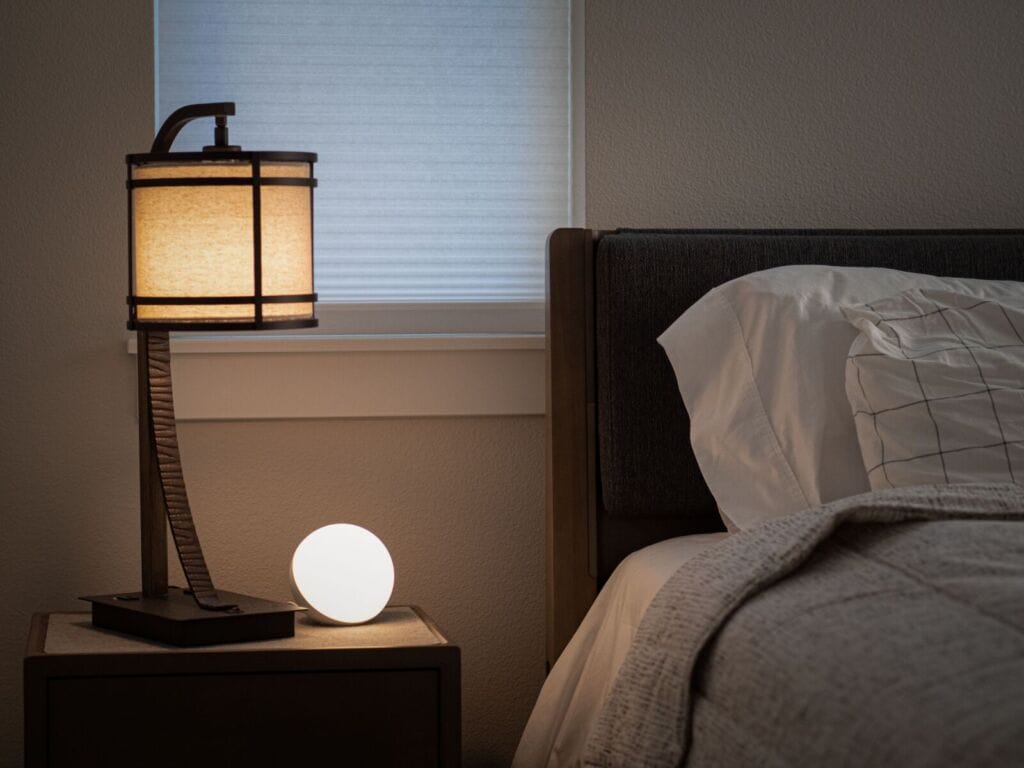
An overhead fixture is useful for cleaning or finding a lost earring. It is rarely the most comfortable light for the final hour of the day. A bedside lamp creates a smaller pool of light and leaves the rest of the room quieter visually.
Choose a lamp that can be reached without getting out of bed. A dimmer or several brightness settings are useful when one person reads while another is trying to sleep. Warm-toned light generally feels less stark than a bright, cool-white bulb, but it still needs to be strong enough for safe movement and reading.
The nightstand deserves the same practical edit. Keep what is actually used overnight: perhaps a lamp, water, glasses, and one book. Work papers, unopened mail, and laundry reminders belong elsewhere. They may not take up much physical space, yet they keep daytime obligations within sight.
Create a deliberate charging location away from the pillow. A dresser across the room is often far enough to discourage automatic scrolling while keeping the phone available for emergencies. If the phone serves as an alarm, increase the volume rather than leaving it beside the bed.
The CDC’s sleep guidance recommends turning off electronic devices at least 30 minutes before bedtime. It also advises keeping the bedroom quiet, relaxing, and cool. Moving the charger will not enforce that habit, but it removes one common obstacle.
Finish With a Repeatable Evening Reset
A bedroom reset should take a few minutes, not become another household chore. Attach it to something that already happens every evening, such as brushing your teeth or setting the morning alarm.
Try this sequence for one week:
- Close the window coverings and check that exterior light is not entering through a newly created gap.
- Adjust the bedding for that night’s temperature instead of waiting until you feel too hot or cold.
- Put work materials away and move the phone to its charging spot.
- Silence nonessential notifications and address avoidable sounds, such as a rattling vent or loose window.
Do not change everything again after one restless night. Weather, stress, and daily schedules all affect sleep. A week provides a better sense of whether darker windows, lighter bedding, or a less cluttered bedside area makes a noticeable difference.
Persistent noise may call for a door seal, a rug, or heavier curtains. A bedroom that remains stuffy may need an airflow or ventilation check rather than another decorative layer. If sleep problems continue despite a comfortable environment and consistent habits, they may have causes that a room update cannot solve.
The point of the reset is not to create a bedroom that looks staged for fall. It is to make the room easier to use when you are tired: private when the lights are on, dark when they are off and simple to settle each night.