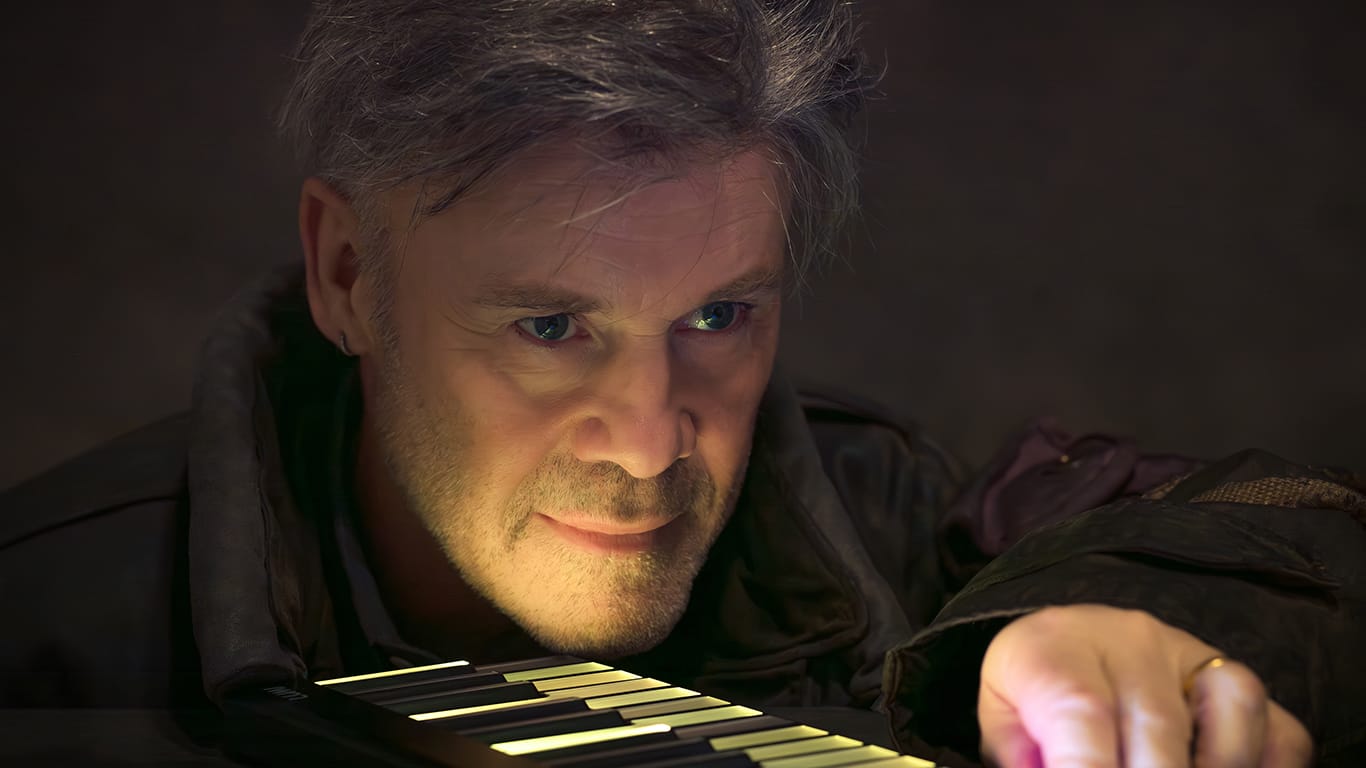
Fans of ’80s music aren’t the only ones who will be reminiscing during the Totally Tubular Festival on Friday, July 17, at the Celebrity Theatre.
The headliner, technology-forward singer/synthesist Thomas Dolby, will as well. He has reformed Lost Toy People, his backing back from 1986 to 1989. Dolby & the Lost Toy People recorded and released the Grammy-nominated “Aliens Ate My Buick.”
To form the band in 1986, Dolby put an ad in the Los Angeles-based Recycler, a now-defunct shopper.
“I auditioned about 200 musicians,” said Dolby, who now lives in Baltimore.
“I put together this amazing band, Lost Toy People. We played secret club gigs up and down the West Coast.”
A not-so-secret gig was a spot opening for Depeche Mode at Pasadena’s Rose Bowl on June 1988. Part of Depeche Mode’s “Music for the Masses tour, the show was dubbed “Depeche Mode 101: A Concert for the Masses,” as it was the legendary darkwave act’s 101st and last show of the run.
DEEPER DIVE: Read all the Ranking Arizona Top 10 lists here
INDUSTRY INSIGHTS: Want more news like this? Get our free newsletter here
‘Aliens Ate My Buick’
Lost Toy People recorded “Aliens Ate My Buick” with producer Bill Battrell, which Dolby said was “later famous for [working with] Michael Jackson, Sheryl Crow and so on.” The collection is a departure for Dolby as it was “very extroverted and had funky jams.”
“It’s actually used to this day by audiophiles and sound engineers to test out their speaker systems. I guess it’s held the test of time.”
During the Totally Tubular jaunt, which kicks off at the Celebrity Theatre, Dolby will just jam live with his band — no click tracks, no computers.
Dolby has shared stages with Foreigner, Def Leppard, Belinda Carlisle and Joni Mitchell. Those types of shows challenge him. Notably, Dolby played the synthesizer intro and main keys on Foreigner’s 1981 ballad “Waiting for a Girl Like You.” Hired by producer Robert John “Mutt” Lange, Dolby also provided keys for four other tracks on Foreigner’s “4” album, including “Urgent.”
“It forces me to reach deep and find a different aspect of my musicality and my creativity,” he said.
“I’ve always liked that diversity in my music.”
He took a “couple of decades off” with his start-up Beatnik in 1993. The company “ended up making the synthesizer that Nokia licensed and shipped to do polyphonic ringtones.” After a couple of years, he returned to teaching. For 10 years, he has served as a professor of music at the Peabody Institute, part of Johns Hopkins University in Baltimore.
The moves have allowed him to mix up his career.
“I never really got into a rut of doing something that I wasn’t enjoying and that’s very important to me,” he said. “You can do whatever you do, if you have the energy for it.
“You can’t just dial it in. I’ve enjoyed the successive chapters of my career. Having taken a couple of decades off from music, I’m really excited to be coming back to it. I’m in my late-60s, and I’m frankly honored and amazed that I can still be out there playing the music that I love and I’m getting paid for it.”