Healthcare in Arizona is undergoing significant transformation. Five major providers — Abrazo Health, Dignity Health, City of Hope, Banner Health and HonorHealth — are accelerating their expansion to meet the needs of a rapidly growing population and a shifting statewide demand for advanced, accessible care.
These investments also reflect Arizona’s emergence as a medical destination. Seasonal visitors fill medical centers when they arrive late in the year.
Executives across all five systems describe the moment similarly: long‑planned, data‑driven and deeply tied to the state’s future.
MORE NEWS: Mattamy Homes buys 59 homesites in Glendale for $10.6 million
DEEPER DIVE: 10 Arizona restaurants make Yelp’s Top 100 Mexican food spots
City of Hope: Bringing advanced cancer care to Northern Arizona
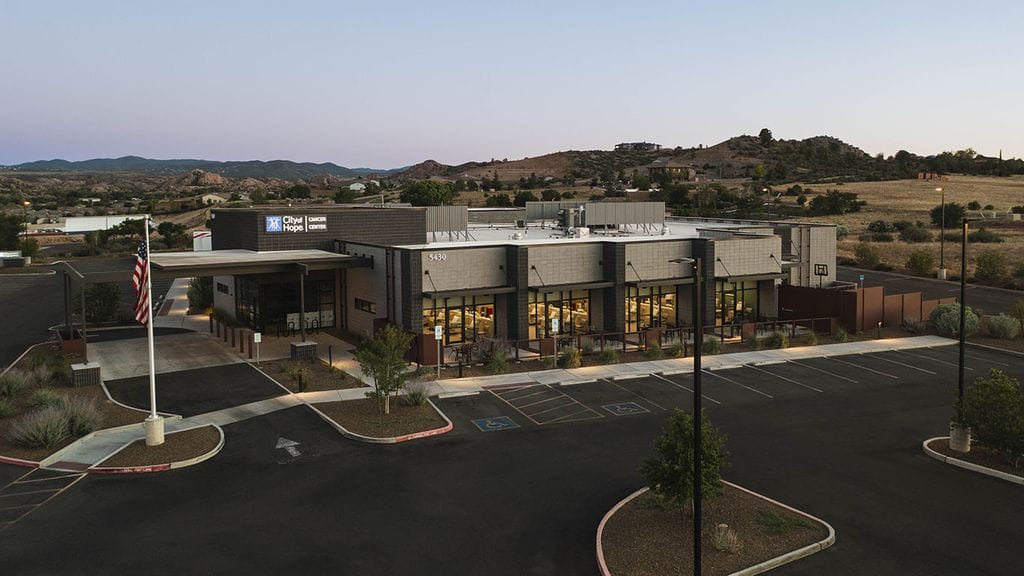
City of Hope expanded its footprint beyond Metro Phoenix by acquiring a Prescott medical center in March, bringing advanced cancer care, clinical trials and innovative therapies closer to rural communities.
Elizabeth Parra, director of outpatient services, City of Hope Cancer Center Arizona, said her organization’s mission is rooted in access and equity.
“Our goal would be to end cancer as a whole,” Parra said. “It’s a competition against cancer and making sure our patients have access to timely, quality cancer care.”
The clinic, previously known as Arizona Oncology, long served Yavapai County in collaboration with Dignity Health’s Yavapai Regional Medical Center. The practice includes three medical oncologists, a radiation oncologist and a breast surgeon — who will remain with the clinic, Parra said. This will “right-size the resources,” she added.
Some patients travel from Bullhead City, Lake Havasu and Mojave County for care, proving the need for more accessible cancer services outside Phoenix Metro.
“If you look at Yavapai as a whole, they’re about two hours from Phoenix,” Parra said. “We want to make sure patients in rural communities have access to the same cancer care our metropolitan community members have.”
Parra noted that more than 42,000 Arizonans are expected to be diagnosed with cancer this year, which reinforces the urgency behind statewide expansion.
“It’s always a partnership,” she said. “If we can’t provide the care that’s needed, we make sure patients can get to Dignity or HonorHealth as appropriate. We want people to get care as soon as possible.”
Abrazo Arizona Heart Hospital: A generational investment in cardiovascular care
Kimberly Blaha, Abrazo Arizona Heart Hospital’s president and chief administrative officer, called her center’s project a generational investment in cardiovascular care.
“It’s a long‑term investment in the health of Arizona and our growing communities,” she said.
Founded in 1998, Abrazo remains one of Arizona’s only dedicated heart hospitals. The 59-bed facility treats patients from across the state and neighboring regions, providing preventive care, diagnostic services, advanced surgical care, and interventional treatments. However, demand has surged far beyond its footprint.
“Heart disease and the prevalence of cardiovascular disease are among the leading health challenges in the nation, let alone in the state,” Blaha said. “We’ve seen significant increases in the need for complex heart and vascular services.”
The heart hospital’s expansion will meet its needs for decades. Those services include electrophysiology, vascular, open-heart surgery and critical care.
“Every future bed represents more lives we’re able to touch,” she said.
The expansion will also support continued participation in clinical research and technological innovation. While final details such as bed counts, square footage and construction costs are still being finalized, Blaha said the groundbreaking should happen in 2027.
“We want to put a shovel in the ground, hopefully by next year,” she said. “It’s the latest phase of multi‑year investments in the hospital.”
Dignity Health: A new approach to care in North Phoenix
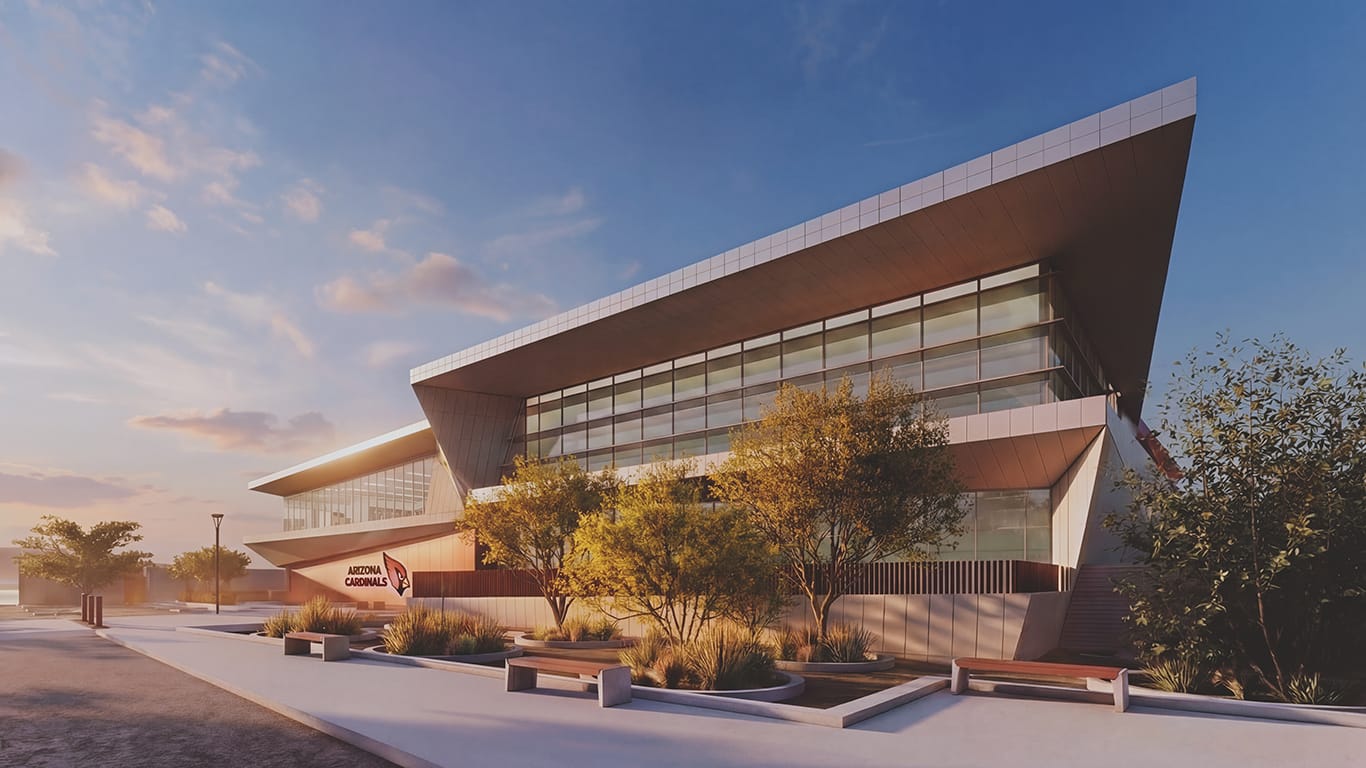
Dignity Health is preparing to build its largest outpatient campus — a state‑of‑the‑art medical complex anchoring the Arizona Cardinals’ new 217‑acre development at Scottsdale Road and the Loop 101.
The Cardinals purchased the 217-acre property, where the team’s 30-acre performance center and business operations will anchor a broader mixed-use development.
As the first partner, Dignity Health’s multi-phase project will ultimately feature two buildings totaling up to 300,000 square feet across 8 acres. Phase one will feature a 120,000- to 150,000-square-foot medical campus. Upon completion, the project is expected to create 700 medical and support positions and will be Dignity Health’s largest outpatient campus.
The medical campus will offer a sports medicine institute, services from the world-renowned Barrow Neurological Institute, along with orthopedics, cardiology, specialized primary care, executive health, imaging and outpatient surgery.
This is expected to become a destination for patients across the Valley, said Anthony Houston, Dignity Health Arizona president, in a statement.
“This new medical campus in North Phoenix will expand access to high‑quality health care, serving not only professional athletes but every member of our community,” Houston said.
Construction on phase one is expected to begin in 2027, with an opening planned for 2028.
“Our long-standing relationship with Dignity Health is a profound win for the entire community,” said Michael Bidwill, Arizona Cardinals owner, in a statement.
“We [the Cardinals and Dignity Health] are both deeply rooted in Arizona, and our shared commitment to health, well-being, and community impact has transformed this project from a simple idea into something truly special. This isn’t just about constructing buildings — it’s about building a healthier future for our community.”
Banner Health: Building ecosystems of care across Arizona
While Abrazo and Dignity Health are expanding specialized and outpatient capacity, Banner Health is scaling across the full continuum of care, from urgent care to ambulatory surgery to imaging and behavioral health.
Mark Whalen, executive vice president and chief enterprise growth officer, said Banner’s strategy is rooted in community needs.
“Banner takes a community needs‑based approach — building ecosystems of care that bring the full continuum of services closer to where people live and work,” Whalen said.
That continuum is designed to reduce travel time and increase access. The services include acute care, urgent care, imaging, physical therapy, ambulatory surgery, pharmacy, lab and physician services.
“This thoughtful, community‑centered strategy continues to shape how and where Banner grows — ensuring that as Arizona expands, so does access to exceptional care,” Whalen said.
Banner’s growth accelerated in 2025 with multiple openings and renovations, including the Banner Cardiovascular Center in Arcadia, Banner Health Center in Goodyear, and expansions at Banner Desert and Banner Thunderbird.
In 2026, Banner continued its momentum with a 19,000‑square‑foot expansion in Mesa, a 32,000‑square‑foot project at Banner Ironwood Medical Center, and the opening of Banner Urgent Care in North Phoenix.
Whalen said Banner’s growth is driven by a commitment to ensuring access for all patients, including Banner Plans & Networks members.
“We remain deeply committed to ensuring that our Banner Plans & Networks members have access to the care they need, when and where they need it.”
HonorHealth: Growing with the Valley — thoughtfully and sustainably
HonorHealth’s expansion strategy mirrors the Valley’s rapid outward growth, with a focus on accessibility, community needs and long‑term sustainability. Peter Gray, vice president of facilities and real estate, said the organization’s approach is rooted in responsibility.
“The Valley continues to grow in all directions, and our responsibility is to grow thoughtfully with it,” Gray said.
“For HonorHealth, expansion is about improving the health and well‑being of the communities we serve by making high‑quality care more accessible and bringing the right services closer to where people live.”
Gray emphasized that expansion is not simply about adding more buildings. The move is about designing care models that meet people where they are.
“It allows us to meet the needs of our community today while preparing to serve future generations,” he said.
A major part of HonorHealth’s strategy is its Complete Care model, which blends urgent care, emergency care and primary care access points into a single, streamlined system.
“Our Complete Care model is part of that commitment,” Gray said. “It allows us to bring essential services into the community and connect patients to the right level of care in the right setting.”
He added that the goal is not volume.
“It’s responsibility. The goal is not simply to add more healthcare infrastructure, but to provide high‑quality, accessible care in a way that is responsible and sustainable for the communities we serve.”