
Core Pillars of Pest Control Company Local SEO
The pest control industry has evolved into a multi-billion-dollar market, driven by increasing urbanization and a growing consumer preference for preventative, recurring service plans. However, the nature of this demand is unique: it oscillates between urgent, emergency-driven pest removal and planned, seasonal maintenance. Because pest control is an inherently physical, on-site service, your success depends on your ability to dominate a specific geographic radius.
Local SEO is the engine that connects your service area to the people searching for help. Unlike broad, national SEO strategies that target generic terms, local SEO focuses on “near me” intent. When a homeowner searches for “termite control,” they expect to see results within their city or neighborhood. If your business isn’t optimized for these location-specific queries, you are essentially invisible to the very people who need your help most.
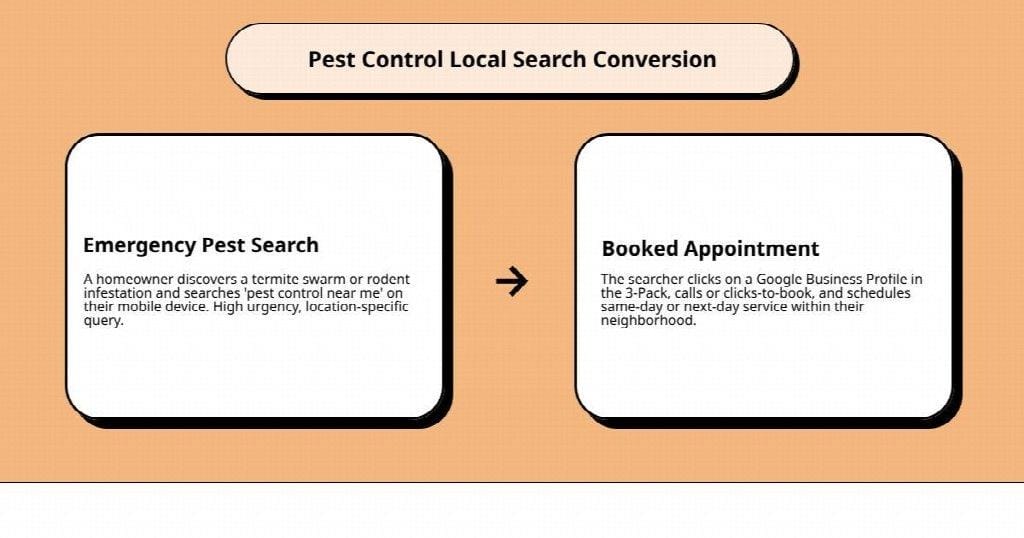
The core pillars of this strategy involve building a digital presence that mirrors your physical service area. By aligning your online assets—your Google Business Profile, your website, and your local citations—you signal to search engines that you are the most reliable, proximate, and qualified option for the job.
Google Business Profile Setup for Pest Control Company Local SEO
Your Google Business Profile (GBP) is the most critical asset in your local SEO toolkit. It is the primary gateway to the Google Maps 3-Pack, the coveted cluster of three businesses displayed at the top of local search results.
To start, ensure you have selected “Pest control service” as your primary category. This is the single most important signal to Google regarding what you do. If you offer specialized services like wildlife removal or termite treatment, add these as secondary categories to capture nuanced search traffic.
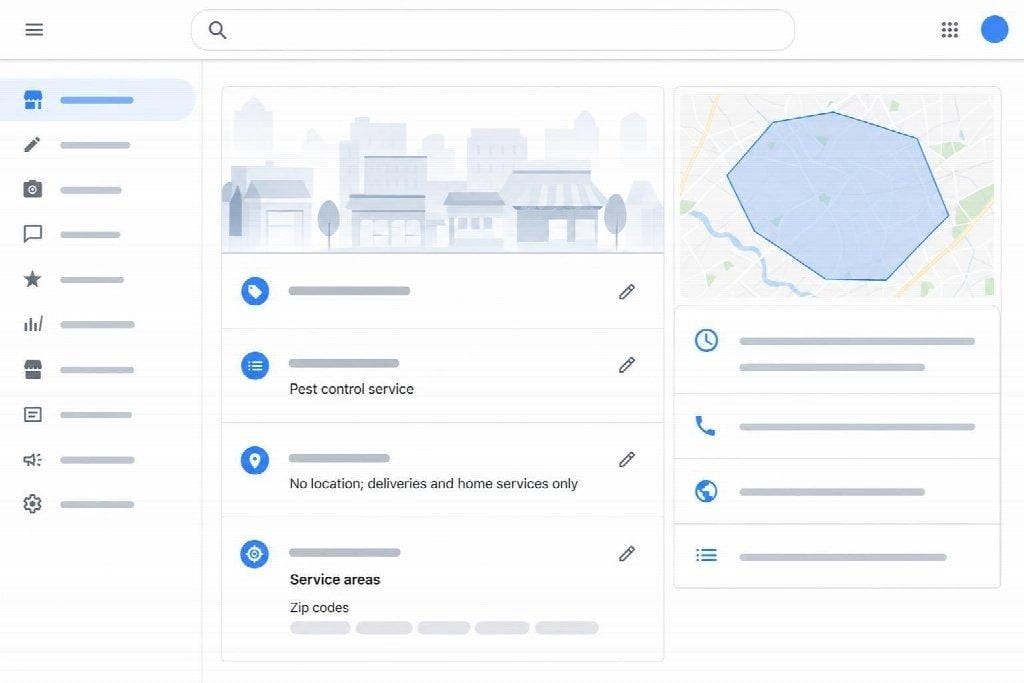
As a service-area business (SAB), you should hide your physical address if you do not have a customer-facing office, protecting your privacy while still allowing you to define your service area by zip codes or city names. We strongly recommend defining your service area based on your actual, profitable route density. Expanding your service radius to areas where you cannot maintain efficient travel times will only erode your margins. Finally, keep your profile active by uploading high-quality, geotagged photos of your branded trucks, your technicians in uniform, and your team in action. Avoid generic stock photos; real, authentic imagery builds immediate trust with homeowners who are nervous about inviting strangers into their homes.
High-Intent Keyword Targeting and Service-Area Web Architecture
Many pest control websites fail because they attempt to rank their homepage for every single service and city they cover. This leads to “keyword stuffing,” which confuses search engines and frustrates human visitors. Instead, your website architecture should be granular.
Create a dedicated landing page for every major service you offer (e.g., /bed-bug-removal, /rodent-control) and pair these with specific city-level landing pages (e.g., /pest-control-in-cityname). This creates a logical hierarchy that allows search engines to match a user’s specific problem with your specific solution. When drafting content for these pages, focus on the problems the customer is experiencing. Use “seed” keywords—terms like “ant exterminator,” “mice in attic,” or “termite inspection”—and weave them naturally into your headers and body copy.
Ensure that your city-specific pages are not just “doorway pages” with duplicate text. Include local context, such as common pests in that specific region or testimonials from nearby neighbors. This adds value to the reader and signals to Google that your business is truly embedded in that community.
On-Page Optimization and Schema for Pest Control Company Local SEO
Technical SEO is the foundation upon which your content rankings are built. If your website takes longer than three seconds to load, you are losing potential customers who are likely searching on mobile devices during an active pest crisis.
Your on-page strategy should start with clean, descriptive title tags and meta descriptions that include your primary keywords and your service area. For example, a title tag reading “Expert Termite Control in [City Name] | [Company Name]” is far more effective than a generic “Home Page.”
Beyond standard optimization, implement LocalBusiness schema markup. This is a form of structured data that tells search engines exactly where you are located, what your operating hours are, and what services you provide. By providing this information in a code format that Google can easily parse, you increase your chances of appearing in rich snippets and voice search results. For a deeper dive into structuring your site for growth, you can review this resource about pest control local seo to ensure your internal linking strategy supports your most profitable service pages.
Off-Page Authority, Reputation, and Performance Measurement
While your website and GBP provide the foundation, your off-page authority determines your staying power. Search engines look at your business through the lens of “trust signals,” which are largely built through reviews, citations, and backlinks.

Route-Driven Review Systems and Citation Consistency
In the pest control industry, you have a unique advantage: you visit your customers’ homes multiple times a year. This is a built-in “review engine.” We recommend training your technicians to request a review immediately after a successful service visit. Providing a simple QR code or an automated SMS link can drastically increase your review velocity.
When managing these reviews, your response is just as important as the review itself. Respond to every review—positive or negative—with professionalism. If a customer leaves a complaint, address it with empathy and a focus on resolution, but avoid making specific claims about the “safety” or “non-toxicity” of your chemicals, as this can violate federal pesticide advertising regulations. Instead, emphasize your adherence to EPA label standards and your commitment to professional, certified application.
Furthermore, ensure your Name, Address, and Phone number (NAP) are 100% consistent across all directories, such as Yelp, the Better Business Bureau, and local chambers of commerce. Inconsistent data creates “digital noise” that confuses search crawlers and can lead to lower rankings.
Local Backlink Acquisition and Outranking Regional Competitors
To outrank large, national franchises, you must demonstrate deep roots in your local community. National chains have massive budgets, but they often lack the hyper-local authority that comes from being an active community participant.

Focus on earning backlinks from local sources. This might include sponsoring a local youth sports team, joining the regional Chamber of Commerce, or partnering with non-competing home service providers like local plumbers or real estate agents for cross-referral links. These links act as “votes of confidence” from your community, telling Google that you are a legitimate, established local entity.
Integrating Local Services Ads and Measuring SEO Success
While organic SEO is a long-term play, Local Services Ads (LSAs) can provide an immediate boost to your lead flow. LSAs appear at the very top of the search results and are backed by the “Google Verified” badge, which builds instant credibility.
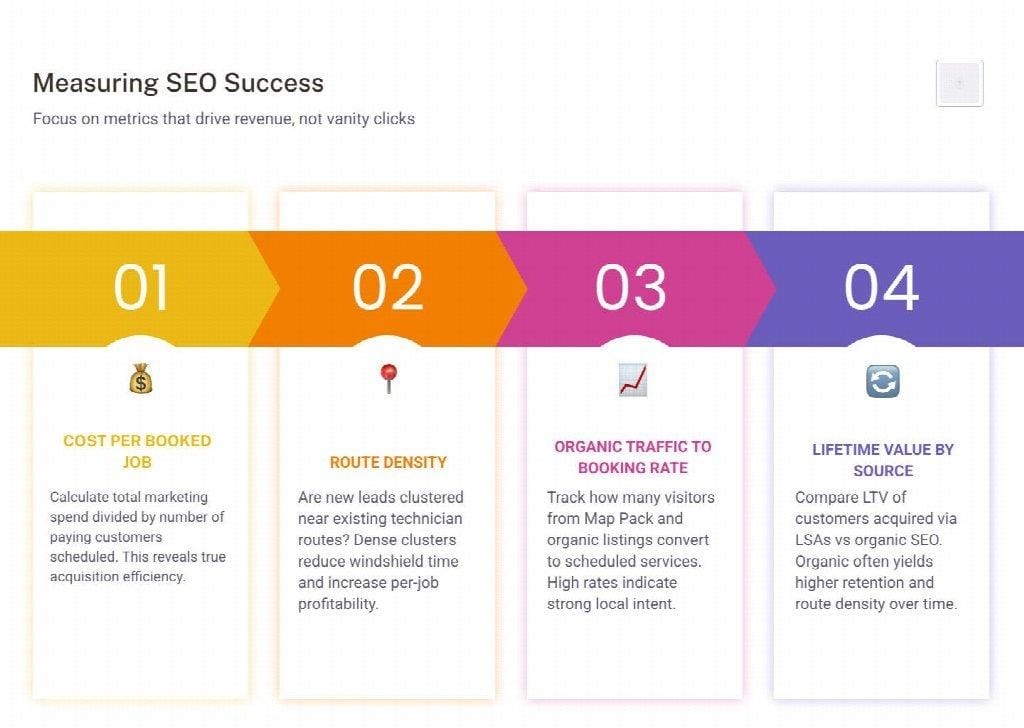
The beauty of a robust SEO strategy is that it works in tandem with paid efforts. While you pay for every lead through LSAs, your organic rankings in the Map Pack and standard search results provide a “free” stream of high-intent traffic that lowers your overall cost per acquisition.
To measure your success, move beyond “vanity metrics” like raw clicks. Focus on:
- Cost per booked job: How much are you spending to get a paying customer on the schedule?
- Route density: Are your new leads clustered in areas where you already have technicians, or are they outliers that increase your windshield time?
- Call attribution: Use call tracking software to identify which search terms are actually resulting in phone calls.
By integrating these metrics with your field service software, you can connect your marketing spend directly to your bottom line. SEO in the pest control industry is not a “set it and forget it” task; it is a compounding investment. By consistently optimizing your digital presence, you ensure that when the next pest emergency hits your service area, your business is the first one the customer sees—and the first one they call.