Arizona didn’t crack the top 10 states for foreign direct investment in the latest national accounting, but the forces remaking the state suggest its absence may not last long.
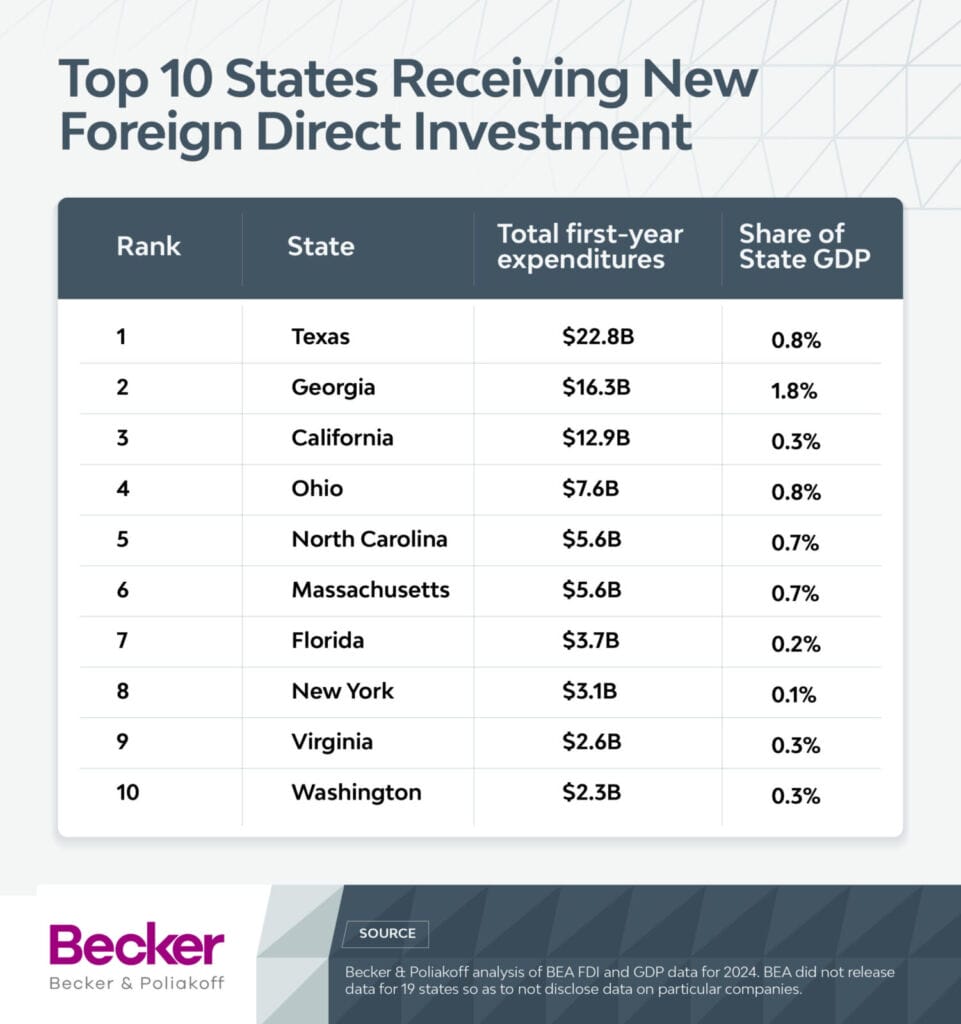
A new study from the law firm Becker & Poliakoff found the United States attracted $279 billion in foreign direct investment, ranking first in the world and more than doubling China’s $116 billion, based on the most recent full-year federal data through 2024. Texas led all states at $22.8 billion, trailed by Georgia at $16.3 billion and California at $12.9 billion. Ohio, North Carolina, Massachusetts, Florida, New York, Virginia and Washington completed the top 10.
DEEPER DIVE: ‘America’s Top 50 New Boomtowns’ includes 7 Arizona cities
INDUSTRY INSIGHTS: Want more news like this? Get our free newsletter here
Arizona’s name is missing from that list, a conspicuous gap for a state that has spent recent years near the front of nearly every growth ranking in the country.
Start with the people. Between July 2024 and July 2025, Arizona added 97,044 residents, a 1.2% increase that equates to roughly 266 newcomers a day, according to Census estimates. The Phoenix metro area, now home to about 4.78 million people, ranks among the nation’s fastest growing.
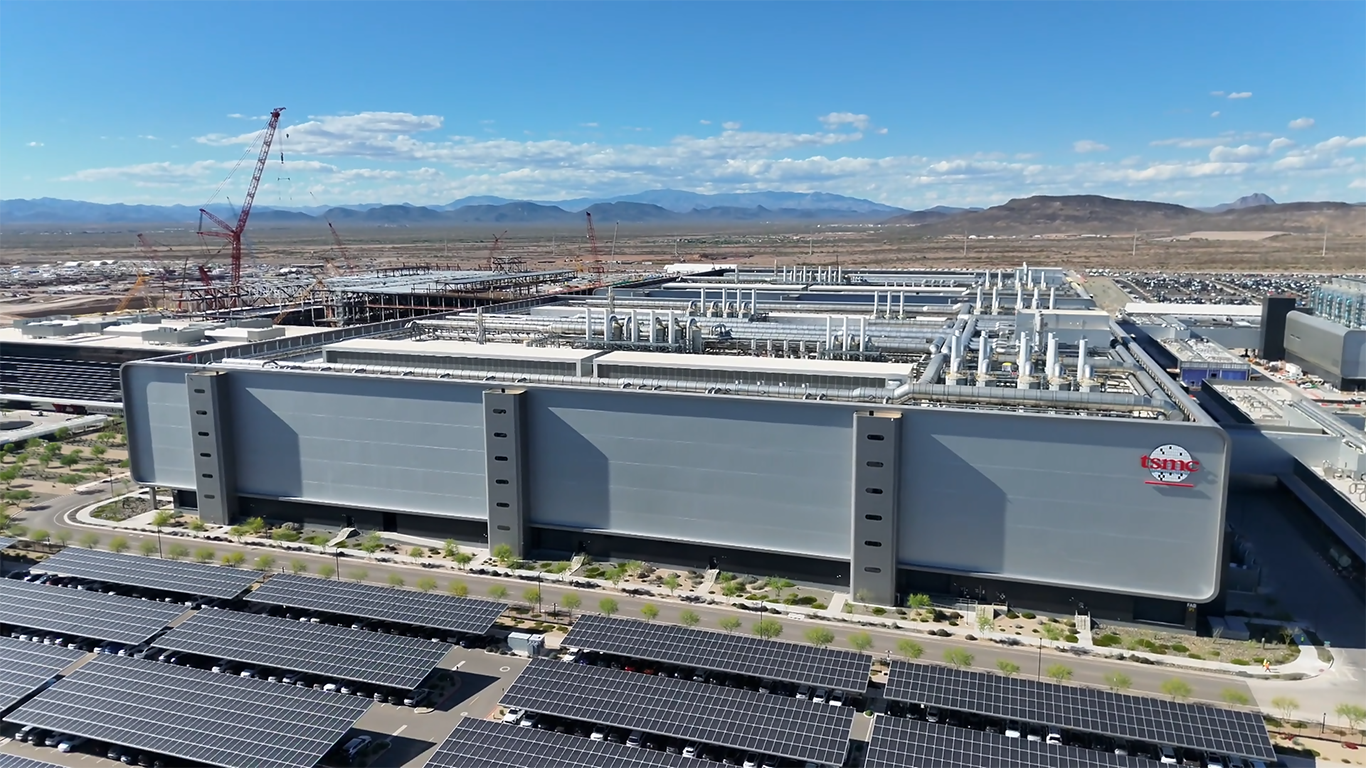
The capital is following the crowds, and an increasing share is foreign. Taiwan Semiconductor Manufacturing Co. is building chip fabrication plants in North Phoenix under a multiphase commitment that has swelled to the tens of billions of dollars and is expected to create thousands of jobs. That spending is, by the federal government’s own definition, foreign direct investment, the same category the study tracks. Much of it simply postdates the data underlying the current rankings.
The scoreboard matters for reasons beyond bragging rights. The study’s authors note that leading the world in foreign investment reinforces the dollar’s dominance, strengthens Washington’s hand in imposing sanctions and shaping the global economy, and underpins roughly 15 million American jobs. Manufacturing is the magnet, drawing a cumulative $2.4 trillion foreign investment position in 2024, more than double the next-closest sector. Japan stands as the country’s largest single investor, with a cumulative position that grew to $819 billion in 2024, narrowly ahead of Canada.
For Arizona, the implication is straightforward. The semiconductor build-out concentrated in greater Phoenix is precisely the kind of advanced-manufacturing investment that vaults states up the rankings, and much of it has yet to appear in federal tallies. Pair that with a labor force swelled by relentless in-migration and a business-friendly tax climate, and the state looks less like an also-ran and more like a contender waiting for the numbers to catch up.
The stakes in making that leap are real. States that capture foreign investment gain not only jobs but a broader tax base, deeper supply chains and a measure of insulation when domestic spending softens. Georgia’s rise to No. 2, despite ranking only eighth in population, shows how quickly a single wave of investment, in its case electric-vehicle plants from Hyundai and Kia, can reorder the map.
Arizona has courted exactly that kind of momentum, landing marquee names in chips, batteries and data centers. Whether the next edition of the study reflects it will depend on how much of the announced capital converts to dollars on the ground.