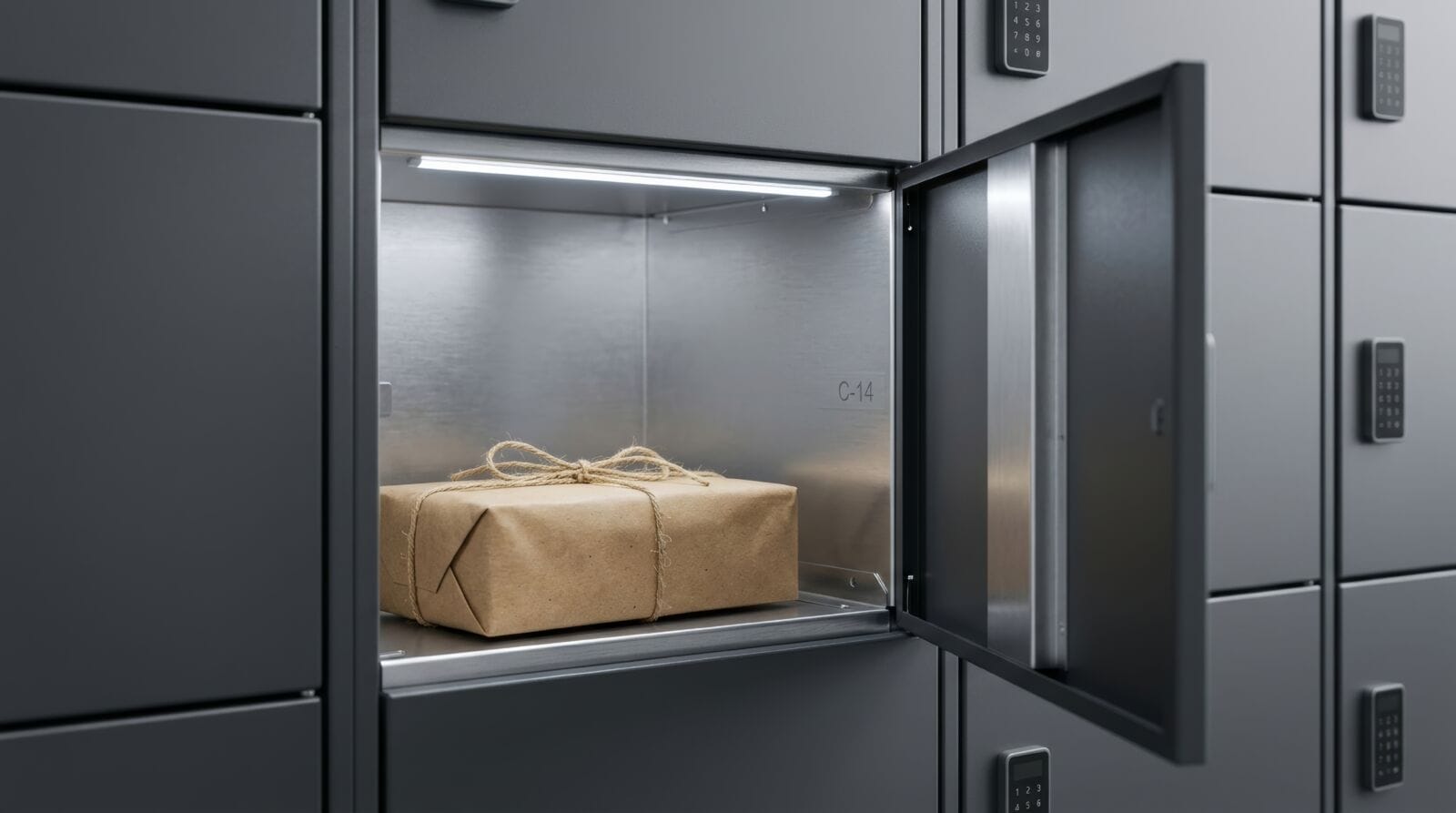
Package lockers solve a familiar campus problem: deliveries arrive throughout the day, but students cannot always collect them during mailroom hours. It is easy to understand the appeal of a secure collection point that works around their schedules.
That helps explain why deliveries dominate discussions of campus smart lockers. Yet universities arrange many other exchanges between people who are rarely in the same place at the same time. Looking at smart lockers beyond package delivery brings those less visible, everyday tasks into view.
Why Package Delivery Became the Default Use Case
Growth in online ordering has given mailrooms an immediate operational problem. Each parcel needs receiving, recording, storage, and collection. As deliveries accumulate, staff spend more time finding items and serving queues, while storage space becomes harder to manage.
Package lockers make part of that work more predictable. Staff place an item in an assigned bay, the recipient receives collection instructions, and the system records access. A visible installation near student housing makes the use case easy to recognize.
Other handoffs attract less attention because they happen within individual departments. A camera returned after a class project or a laptop collected while another is being repaired rarely creates a mailroom-sized queue. The work still has to happen, often around limited desk hours.
Device and Equipment Checkout: A Growing Second Use Case
For IT departments and libraries, lending gives lockers a different job. Equipment must leave university custody temporarily, remain associated with a borrower, and come back ready for further use. The same controlled pickup and drop-off model applies, with additional rules for the loan.
The University of Western Australia’s laptop service shows this in practice. Students use their Campus Card to borrow and return laptops through self-service lockers in two libraries. Loans last 48 hours, and devices must be returned to the library where they were borrowed.
Similar campus locker use cases include tablets, recording equipment, and AV kits. University equipment checkout lockers can provide a collection point for a pre-booked camera or a prepared teaching kit. However, issuing a complete kit involves more than opening a door: staff need to account for microphones, batteries, cables, and other accessories that travel with it.
How Automated Loaner Programs Work in Practice
Following one device makes the process easier to understand. A published guide to loaner laptop program automation covers requests, collection, returns, and inventory management.
A typical workflow has four stages:
- Request and eligibility. Borrowers request a device in advance or select an available option at the locker. Campus rules govern eligibility, loan length, and approvals.
- Pickup. After authentication, the borrower collects the assigned device. The lending record should identify the borrower, asset, checkout time, and return deadline.
- Return. The borrower follows the return instructions, places the device in the designated bay, and connects charging where required. The system records the return through its configured verification process.
- Condition logging. Reported faults, missing accessories, and inspection results are attached to the equipment record. Items needing attention are held back from further loans.
The final stage deserves particular care. A closed door does not establish that the correct laptop came back or that it works. Identification controls can help verify the asset; staff may still need to inspect or prepare it for the next borrower.
Automation changes when people need to meet. Preparation and maintenance remain staff responsibilities, while routine collection and return can take place without arranging a face-to-face appointment.
Other Emerging Uses Across Campus
Once that distinction is clear, other applications are easier to assess. The question is whether an item can be prepared in advance and released to an authorized person without a staffed exchange.
- Exam materials and lab kits. Departments could use controlled collection for sealed exam packs intended for approved invigilators or for non-hazardous kits needed before a lab session. Exam handoffs require an approved security procedure, restricted recipients, appropriate release times, and records that support the institution’s custody requirements.
- Athletics and equipment rooms. Prepared training gear, communications equipment, or event kits could be collected against a booking. Staff would still need to check completeness and condition after return, including cleaning where relevant.
- Residence life. Approved key collection, key returns, or welcome-pack exchanges could accommodate arrivals outside reception hours. Package pickup remains useful here, alongside housing tasks with their own identity checks and escalation routes.
- Interdepartmental transfers. A secured drop-off point could help staff exchange IT peripherals, documents, or project materials without leaving them unattended on a desk. The sender needs confirmation of deposit, and the intended recipient needs clear collection instructions.
These are possible extensions to evaluate individually. An exam pack, a room key, and a sports kit carry different responsibilities, even when their physical handoff looks similar.
What Determines Whether Lockers Can Support Multiple Use Cases
Multi-use campus smart lockers need software that can distinguish a one-time collection from a loan, accommodate different item types, and apply different deadlines. Physical requirements matter too: bay dimensions, charging, location, and access to the building all affect suitability.
Connections to campus systems should follow the task. A student information system (SIS) may supply enrollment or course eligibility. An IT service management (ITSM) platform may hold the support request. A library or equipment-booking system may manage reservations and borrowing limits. Define which records need updating and what happens when an update fails.
EDUCAUSE’s work on expanding digital access pairs improved availability with privacy and data protection. For locker services, that means limiting who can view borrowing and collection histories, as well as controlling who can retrieve an item.
Finally, each use needs a named departmental owner. Someone must prepare items, investigate missed collections, handle reported problems, and decide when returned equipment can be issued again. Identifying those responsibilities early makes additional smart locker applications in higher education easier to introduce and sustain.
Conclusion
Package delivery is often the first reason a campus considers smart lockers. It gives institutions a familiar starting point, but it leaves out much of the daily work involved in getting equipment and materials to the people who need them.
Device lending shows how the model can extend to borrowing and returns. Equipment checkout, departmental collections, and approved materials exchanges offer other possibilities, each with its own rules. The strongest use cases are those where secure, recorded access removes the need to coordinate a routine meeting while preserving staff oversight.
Planning for that range from the start gives universities more options for using their investment. It also helps them choose suitable hardware and software, identify the connections they need, and agree who will run each service. The aim is dependable access to campus resources wherever a locker-based exchange makes sense.