
Scandinavia operates as one of the most advanced digital economies globally. Sweden, Norway, Denmark, and Finland consistently rank at the top in terms of connectivity, innovation, and technology adoption. This is not incremental progress—it is a structural advantage built on infrastructure, education, and coordinated policy. In markets like iptv suomi, this digital strength is clearly visible, where high-speed connectivity and advanced infrastructure support seamless streaming experiences.
Digital transformation is no longer limited to tech companies. It defines how all sectors function: finance, retail, logistics, media, and energy. Businesses in Scandinavia are not transitioning to digital—they are built on it from the start. This creates an environment where efficiency, automation, and scalability are standard expectations rather than competitive advantages, which also benefits services like iptv suomi that rely on stable, high-performance digital ecosystems.
A Fully Integrated Digital Infrastructure
The foundation of Scandinavian dominance lies in infrastructure. High-speed fiber networks, widespread 5G deployment, and near-universal internet access create a frictionless digital environment.
This enables:
• Real-time data processing
• Seamless cloud integration
• High-performance streaming and communication
Unlike many regions where infrastructure limits growth, Scandinavian companies operate without technical bottlenecks. This allows faster iteration, lower operational costs, and rapid deployment of new services.
The result is a business environment where digital execution is immediate and scalable.
Startup Ecosystem and Innovation Density
Scandinavia has one of the highest startup densities per capita in the world. Stockholm, Helsinki, and Copenhagen are recognized as global innovation hubs.
The ecosystem is structured around:
• Strong access to venture capital
• Highly skilled technical talent
• Early adoption by consumers
Startups in the region scale quickly because local markets are digitally mature. Products are tested in demanding environments before expanding internationally.
Key sectors include:
• SaaS (software as a service)
• Fintech
• E-commerce infrastructure
• Health technology
This concentration of innovation creates continuous pressure for improvement, forcing companies to evolve rapidly or disappear.
Cloud, AI, and Automation as Core Layers
Technology in Scandinavia is not an add-on. It is embedded at the core of business operations.
Cloud Computing
Cloud infrastructure supports scalability and reduces dependency on physical systems. Companies deploy services globally with minimal latency.
Artificial Intelligence
AI is used for:
• Customer personalization
• Predictive analytics
• Operational automation
This reduces costs while increasing performance and user satisfaction.
Automation
Processes that are manual in other regions are automated in Scandinavia. This includes logistics, customer service, and financial operations.
The combined effect is a highly efficient business environment with minimal friction.
E-Commerce and Digital Consumer Behavior
Scandinavian consumers are among the most digitally advanced in the world. Online purchasing is standard behavior, not an alternative.
Key characteristics:
• High trust in digital platforms
• Strong adoption of online payments
• Demand for fast and reliable delivery
Consumers expect simplicity. Any friction—slow loading, complex checkout, limited access—results in immediate abandonment.
This behavior forces businesses to optimize continuously. Only platforms that deliver speed, clarity, and convenience survive.
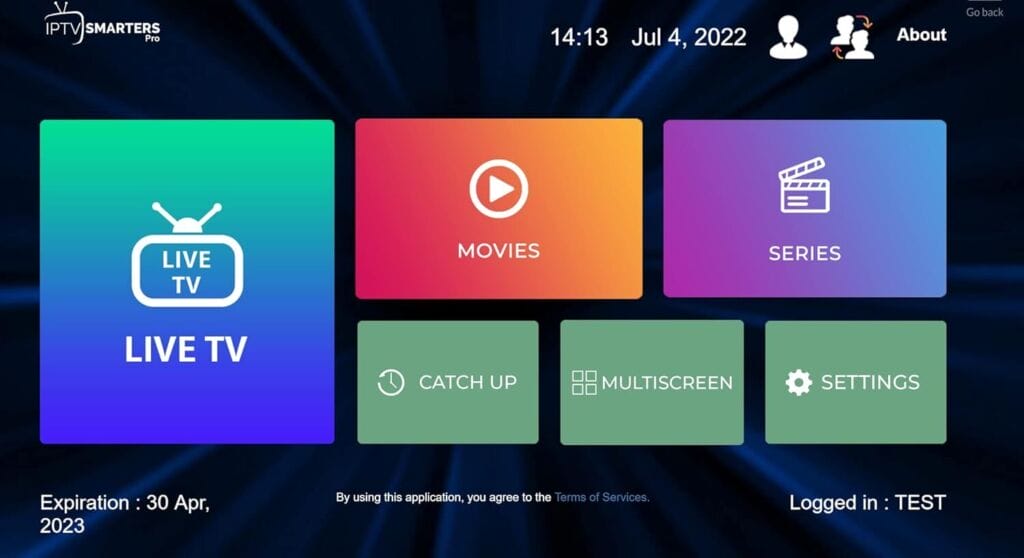
Streaming, IPTV, and Platform-Based Consumption
Entertainment consumption reflects broader digital behavior. Users expect immediate access, high quality, and multi-device compatibility.
This has driven rapid adoption of streaming services and IPTV solutions across Scandinavia.
Traditional broadcasting is declining because it cannot compete with:
• On-demand access
• Global content availability
• Flexible pricing models
Modern users prefer centralized platforms that combine multiple services into a single interface. This reduces complexity and improves user experience.
In Finland, many users explore iptv suomi solutions to access a wide range of content through flexible digital platforms tailored to local preferences.
Similarly, broader iptv-tjenesten offerings reflect the shift toward integrated, user-centric entertainment ecosystems across the region.
This shift is not limited to entertainment. It reflects a broader move toward platform-based consumption in all sectors.
Sustainability as a Structural Requirement
In Scandinavia, sustainability is integrated into business operations, not added as a marketing layer.
Companies are expected to:
• Reduce carbon emissions
• Optimize energy consumption
• Adopt circular production models
This has created growth in sectors such as:
• Clean energy
• Electric mobility
• Sustainable infrastructure
Norway, for example, leads globally in electric vehicle adoption. This demonstrates how policy, infrastructure, and consumer behavior align to accelerate transformation.
Sustainability is both a constraint and a competitive advantage.
B2B SaaS and Global Export of Digital Solutions
Scandinavian companies are increasingly focused on exporting digital products rather than physical goods.
B2B SaaS is a dominant model due to:
• Scalability
• Recurring revenue
• Low marginal cost
Products developed in Scandinavia are designed for global markets from day one. The local environment acts as a testing ground for high-performance solutions.
This approach allows companies to expand internationally with minimal structural changes.
Telecom and 5G as Competitive Leverage
Telecom infrastructure is a critical advantage in Scandinavia. Advanced networks enable real-time services that are not viable in less developed regions.
5G deployment supports:
• Ultra-fast data transfer
• Low-latency applications
• High-density device connectivity
This infrastructure is essential for:
• Streaming platforms
• Cloud computing
• Remote work systems
• IoT ecosystems
Companies operating in Scandinavia build services assuming constant connectivity, which increases performance expectations across all sectors.
Structural Challenges
Despite its strengths, the Scandinavian market faces constraints:
Talent Shortage
Demand for skilled engineers and developers exceeds supply, increasing labor costs.
Regulatory Pressure
Strict data protection laws require continuous compliance, adding operational complexity.
Market Saturation
Highly competitive environments reduce margins and require constant innovation.
High Operating Costs
Labor and infrastructure costs are higher than in emerging markets.
These factors do not limit growth but increase the threshold for success.
Future Direction: Platform Consolidation and AI Expansion
The next phase of business and technology in Scandinavia will be defined by consolidation and integration.
Key trends:
• Platforms combining multiple services into unified ecosystems
• Expansion of AI across all business functions
• Growth of data-driven decision-making
• Integration of entertainment, commerce, and communication
The market is moving toward fewer, more powerful platforms controlling distribution and user access.
Companies that control infrastructure or user interfaces will capture the majority of value.
Conclusion
Scandinavia represents a fully realized digital economy where technology, business, and consumer behavior are aligned.
The region’s strength comes from:
• Advanced infrastructure
• High digital literacy
• Strong institutional support
• Rapid innovation cycles
This creates a system where efficiency is standard, and competition is driven by execution rather than access.
In this evolving landscape, services such as iptv suomi reflect how digital platforms are becoming an essential part of modern entertainment ecosystems.
The direction is clear: platform-based models, AI integration, and digital scalability will define the next generation of businesses in Scandinavia.