Wesley Li did not enter the restaurant industry through tradition, nor did he arrive with years of culinary training or experience running a dining room. His path began with a question, one rooted less in food and more in structure. He had been working in economics and mathematics when he first encountered the concept of ghost kitchens, and what struck him was not the menu but the model itself.
“My journey into the restaurant industry was rather unconventional and driven by curiosity and opportunity rather than a pre-existing passion for food,” Li said. “Coming from a background in economics and math, I was immediately intrigued by the business model’s potential for scalability and innovation in the restaurant space.”
That curiosity led Li and his partner, Ana Moreno, to launch their first delivery-only concept in 2021 inside a CloudKitchens facility. They entered the industry without the traditional guardrails that many operators rely on, and in doing so, they found themselves navigating a steep learning curve that required both adaptability and discipline.
“We officially entered the industry without a traditional restaurant background, which meant there was a steep learning curve,” Li said. “However, the supportive environment of the ghost kitchen community played a pivotal role in our early days. Fellow tenants were exceptionally welcoming and always willing to share insights, and CloudKitchens’ customer success team helped us understand what we didn’t yet know.”
Their early traction encouraged expansion, and within six months, the team opened a second kitchen. The outcome, however, did not meet expectations, forcing them to reassess their approach. Unlike a traditional restaurant model, which often locks operators into long-term leases and rigid infrastructure, the ghost kitchen model offered something different, the ability to pivot.
“We realized that the second location wasn’t performing as expected, but CloudKitchens gave us the flexibility to adjust,” Li said. “We were able to consolidate and rethink how we were operating, and that decision ended up strengthening the business.”
Today, Li and Moreno operate three kitchens within a single CloudKitchens facility, managing multiple virtual brands and preparing for further expansion. Their growth trajectory has been both steady and aggressive, driven by a model that allows them to scale without the typical constraints of a physical restaurant footprint.
“In terms of our growth trajectory, we are essentially able to double our run rate revenue every year with CloudKitchens,” Li said.
Cloud Kitchens Is The World’s Largest Provider of Ghost Kitchens
While operators like Li and Moreno represent the front line of this shift, CloudKitchens operates behind the scenes, positioning itself not as a restaurant company but as the infrastructure enabling a new kind of growth.
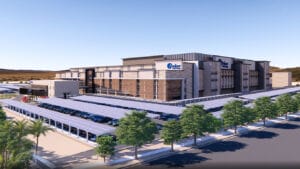
“CloudKitchens is the world’s largest provider of ghost kitchens, delivery-optimized commercial kitchen spaces, that help restaurants expand without the need for a traditional storefront,” a company spokesperson explained. “We offer private kitchens in our facilities, and we handle the real estate, on-site logistics and technology integration so that our partners can focus on cooking great food.”
The company operates more than 5,000 kitchens across 30 countries, transforming underutilized real estate into purpose-built facilities designed for delivery efficiency. These locations are strategically placed in high-demand urban areas, where proximity to customers is more important than visibility from the street.
The problem CloudKitchens set out to solve is one that has long constrained restaurant growth. Opening a traditional location requires significant capital investment, often ranging from hundreds of thousands to more than a million dollars, along with months or even years of planning, permitting and construction.
“We set out to remove those barriers,” the spokesperson said. “By providing move-in-ready kitchen space, we enable brands to launch new locations in weeks instead of years, and at a fraction of the cost.”
In practice, the model allows restaurants to expand digitally rather than physically. Instead of relying on foot traffic, they rely on delivery demand. Instead of committing to long-term leases in high-cost retail corridors, they operate from kitchens designed specifically for production and fulfillment.
CloudKitchens also provides a layer of operational support that goes beyond real estate. Through its proprietary technology platform, Otter, operators can manage orders from multiple delivery apps within a single system, reducing complexity and improving accuracy. On-site teams handle logistics such as driver coordination and order handoff, allowing kitchen staff to remain focused on cooking.
“We think of ourselves as an infrastructure partner for restaurant growth,” the spokesperson said. “We provide the space, the technology and the support that allows food businesses to scale quickly in a delivery-first world.”
CloudKitchen Reviews: Speed Matters
The promise of the ghost kitchen model is often best understood through the experiences of those using it. Across CloudKitchens reviews and operator feedback, several consistent themes emerge, each pointing to a shift in how restaurants are built and scaled.
One of the most frequently cited advantages is speed. Traditional restaurant openings can take six to 12 months or longer, depending on location and complexity. In contrast, CloudKitchens enables many operators to launch within a matter of weeks.
“With our turnkey kitchens, restaurateurs can go from idea to opening in under two months,” the spokesperson said.
That speed directly impacts financial performance. Lower upfront costs and faster launches allow operators to reach break-even more quickly, reducing risk and improving overall margins.
Cost efficiency is another central theme. Without the need for dining rooms, front-of-house staff or high-traffic retail leases, operators significantly reduce overhead expenses. Those savings can be reinvested into product quality, marketing or expansion.
Operational simplicity also stands out in reviews. The Otter platform consolidates orders, provides real-time analytics and streamlines workflows, while on-site support teams manage logistics that would otherwise require additional staff.
For operators like Li, these efficiencies translate into tangible improvements in day-to-day operations.
“This streamlined approach allows for more space to innovate and refine our processes,” he said. “We can experiment with new recipes, optimize our kitchen layout and improve the delivery experience without being pulled in multiple directions.”
How CloudKitchen Works And The Future With The ‘Picnics’ Platform
The onboarding process at CloudKitchens is designed to move quickly and remove many of the barriers that typically slow restaurant expansion. It begins with an initial consultation, where operators share details about their concept, the markets they want to reach and how they plan to operate. From there, CloudKitchens identifies a suitable facility within its network and walks the operator through available kitchen options, pricing and local demand data to help inform the decision.
Once a kitchen is secured, CloudKitchens supports setup, including permitting, equipment coordination and technology integration. Operators are trained on the Otter platform and introduced to best practices for managing a delivery-first business.
“We assign a dedicated onboarding manager to guide each customer from initial interest to opening,” the spokesperson said.
The timeline from initial contact to launch can be as short as several weeks, depending on local requirements. Once operations begin, on-site teams remain available to support logistics and ensure a smooth flow of orders.
Quality control remains a shared responsibility. Operators maintain full control over their food, staff and processes, while CloudKitchens ensures that facilities meet high standards for cleanliness, safety and efficiency.
Looking ahead, the company is focused on expanding both its geographic footprint and its capabilities. New facilities are planned in additional markets, and new technologies are being introduced to enhance the delivery experience.
One such initiative is Picnic, a digital food hall platform that allows customers to order from multiple brands in a single transaction, with consolidated delivery. The concept is designed to increase order volume for operators while improving convenience for customers.
CloudKitchens is also expanding its customer base beyond traditional restaurant brands. Consumer packaged goods companies, creators and nontraditional food businesses are increasingly exploring the model as a way to engage directly with customers.
The broader trend is becoming harder to ignore. Restaurants are no longer defined solely by their physical footprint or the visibility of a storefront. Increasingly, they are defined by how efficiently and consistently they can reach customers wherever they are, whether that is across town or across an entire city. That shift is being reflected in the numbers. The global cloud kitchen market is projected to reach more than $80 billion in 2026, with continued double-digit growth expected as delivery demand expands and operators look for lower-cost ways to scale.
For Wesley Li and Ana Moreno, that shift is already reality. Their business was not built around a dining room or a single location. It was built around a system that allows them to adapt, scale and refine continuously.
“Ghost kitchens strip the business down to its core,” Li said. “It becomes about producing great food and getting it to customers as efficiently as possible.”
CloudKitchens is betting that the future of restaurants will not be built around dining rooms, but around reach. The company is already ahead of the curve.
“We handle everything around the kitchen so our partners can focus on cooking great food,” the company said.