
Arizona lets you deduct up to $2,000 per child ($4,000 for joint filers) regardless of which state’s 529 you use. That freedom multiplies your choices—but also bombards you with glossy claims and fee tables. Which plans truly earn your dollars?
We mined disclosures, Morningstar medals, and firsthand feedback from Arizona parents. Then we checked ten-year returns, verified deduction eligibility, and weighed the SECURE 2.0 rule that lets up to $35,000 of leftover 529 money roll into a beneficiary’s Roth IRA. Below are the three plans that blend lean costs, tight oversight, and full Arizona tax perks.
1. Illinois Bright Start 529: our top pick
Fees come first. Its age-based index track costs about 0.10 percent a year, one of the lowest price tags among direct-sold 529 plans. Over a ten-year saving run, that difference can preserve thousands of dollars you would otherwise pay in expenses. Pair the low cost with a Morningstar Gold medal and the case grows stronger.
Performance backs it up. Across five- and ten-year periods, Bright Start’s index portfolios land in the top quartile of all direct plans. No exotic strategy; just market returns minus a slim slice.
Flexibility seals the deal. The lineup of Bright Start 529 investment portfolios spans Enrollment Year, Static Allocation, and Individual tracks, so you can keep it simple with an automated glide path or build a custom mix from index and active funds. Few plans offer this control without adding cost.
Because Arizona allows tax parity, you can still deduct up to 2,000 dollars per child (4,000 dollars joint) on your return while your money grows in Illinois. Bottom line: Bright Start is the 529 we would open today if we had to choose just one—inexpensive, transparent, and thoroughly tested.
2. Utah my529: low-cost champion with DIY power
my529’s standard enrollment-year tracks cost about 0.12 percent. Pair that lean cost with a Gold medal from Morningstar every year since 2012, and you get performance that closely tracks global markets with minimal drag.
What sets my529 apart is control. It is the only large direct plan that lets you design a portfolio from scratch—70 percent U.S. equity, 20 percent international, a slice of short-term bonds. You may change the allocation twice a year, enough for seasonal rebalancing without inviting day trading. If menu planning feels tiring, choose an enrollment-year option and let the glide path ease from stocks to bonds as college approaches.
Arizona residents keep the same 2,000- or 4,000-dollar deduction they would earn with the in-state plan, so there is no tax penalty for shopping nationwide.
DEEPER DIVE: Read all the Ranking Arizona Top 10 lists here
INDUSTRY INSIGHTS: Want more news like this? Get our free newsletter here
3. Arizona’s AZ529: a hometown plan in the big leagues
The state handed management to Fidelity, trimmed portfolio costs, and watched Morningstar raise the plan to a Silver medal. Stick to the Index Age-Based track and you pay about 0.11 percent a year, placing AZ529 within striking distance of our top two picks.
Being the in-state option means enrollment and support are tailored for Arizonans. If you already hold a Fidelity brokerage or IRA, your 529 lives on the same dashboard—one login, minimal friction. Fidelity also sends two-percent cash back from its Rewards Visa straight into your 529, creating automatic extra savings each time you swipe.
The active-fund portfolios cost about 0.70 percent, so skip them unless you favor Fidelity stock pickers. And Arizona’s flat 2.5-percent tax means the deduction trims at most around 100 dollars per child each year—free money, but not a windfall.
How we ranked these plans
Transparency matters. You deserve to know exactly why one plan lands first while another settles for third, so we relied on a five-factor scorecard.
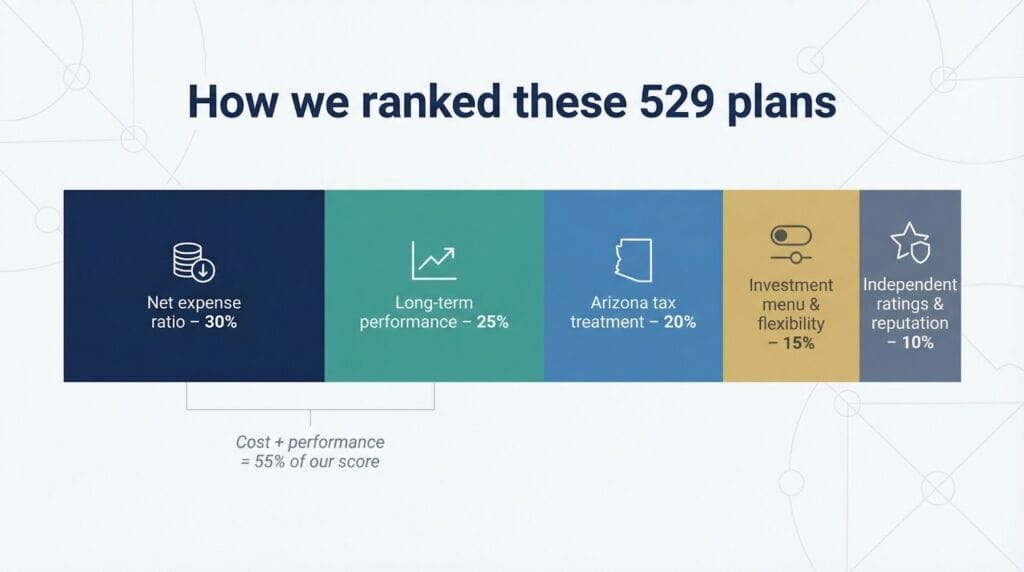
- Net expense ratio (30 percent): All three finalists charge roughly a quarter of the national average, with Bright Start leading at 0.10 percent.
- Long-term performance (25 percent): We examined five- and ten-year returns for each plan’s default index track. Low cost plus strong oversight equals top-quartile results.
- Arizona tax treatment (20 percent): Because Arizona offers tax parity, you can deduct contributions to any state’s plan. All three qualified.
- Investment menu and flexibility (15 percent): Utah scores high for build-your-own portfolios; AZ529 earns points for Fidelity integration.
- Independent ratings (10 percent): We cross-checked against Morningstar’s 2023 Medalist list. Gold and Silver medals confirmed sound governance.
Conclusion
The SECURE 2.0 rollover rule now allows up to 35,000 dollars of leftover 529 money to shift into a beneficiary’s Roth IRA, making every plan more forgiving if college costs less than expected. Low fees and strong oversight remain your best defense against market swings and policy shifts.