According to a report recently released by Arizona’s three state universities, most of the precipitation that falls in the state is evaporated back into the atmosphere, underscoring an urgent need to find more efficient ways to capture and retain water.
“Based on the study, we realized that evapotranspiration amounts to 95% of precipitation, so basically the large majority of our precipitation goes back into the atmosphere,” said Giuseppe Mascaro, Arizona State University’s lead researcher for the project.
“So now, capturing somehow a small portion of the water that does not evaporate becomes critical — even a tiny little percent relative to what we have available, is a lot,” he said.
The report stems from the Arizona Tri-University Recharge and Water Reliability Project, a collaborative effort composed of 40 faculty members, postdoctoral scholars, and graduate and undergraduate students across the state. It was created and funded by the Arizona Board of Regents, at the request of the Arizona Department of Water Resources, in 2023.
The project’s goal is to analyze and identify mechanisms to capture water that would otherwise evaporate across the state. The project also establishes region-specific guidance about how and where water can be recharged.
DEEPER DIVE: How Cave Creek Water Reclamation Plant shores up supplies
Mascaro, an associate professor in the School of Sustainable Engineering and the Built Environment, led a sub-team within the project focused on estimating the hydroclimatology of key basins in Arizona using hydrological model simulations.
They identified how much rain and snow are collected in 51 state groundwater basins, and the portions that run off, evaporate and recharge aquifers.
Assistant Professor Tianfang Xu, also in the School of Sustainable Engineering and the Built Environment, led a study on the urban side of the water cycle: how the spread of cities changes stormwater runoff and the recharge of the aquifers beneath them, and how some of that runoff might be captured rather than lost.
Key basin hydroclimatology findings
Natural groundwater recharge represents a small fraction of Arizona’s water budget, accounting for less than 3% of average annual precipitation statewide. However, recharge rates vary substantially across the state’s groundwater basins, ranging from less than 1% in the Basin and Range province to more than 10% of annual precipitation in individual basins along the Mogollon Rim.
Mascaro and postdoctoral researcher Abdul Moiz (now at the Scripps Institute for Oceanography at UC San Diego) began with the data from the National Oceanic and Atmospheric Administration, which provides a reconstruction of water budget components over the U.S. and its territories for the last 40 years.
“We assessed the accuracy of the NOAA simulations for Arizona by comparing them against observations of streamflow and evapotranspiration across the state,” Mascaro said. “The most critical component for future planning is evapotranspiration, which represents the largest portion of the water budget in Arizona’s semiarid and arid basins.”
Evapotranspiration is comprised of two elements: evaporation, or the conversion of liquid water to vapor from surfaces like rivers, lakes and soil, and transpiration, the process in which plants absorb water from the soil through their roots and release it as vapor through pores in their leaves.
Data collection tools
A key step in assessing the accuracy of the NOAA simulations has been the collection of high-quality ground observations. This includes data from nine Arizona eddy covariance towers, which provide the most accurate estimates of evapotranspiration on a variety of land covers.
The team also identified 124 daily and 98 hourly Arizona streamflow gauges — numbers larger than those used in previous regional and continental studies. And, because snowmelt is a key runoff-generating mechanism in Arizona, they assessed the ability to simulate snow water equivalent at 19 sites.
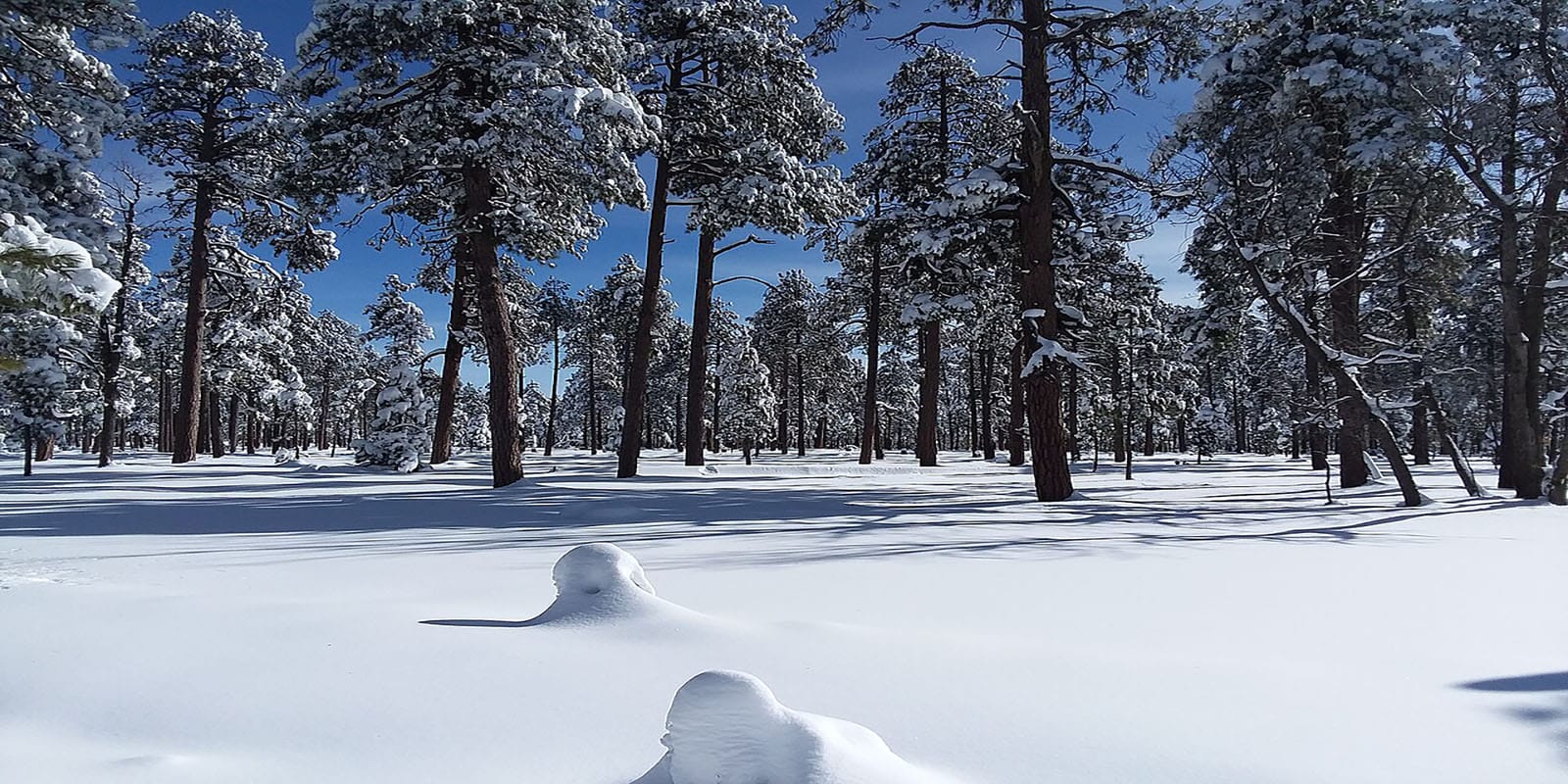
“We also gathered data about how much water is in snow form at the site of weather stations called SNOwpack TELemetry (SNOTEL) stations,” Mascaro said. “These are sites that measure the snow depth and the water equivalent at high elevations in the states, and in the West in general. We have some in Arizona, especially in the Mogollon Rim.”
Suraj Tiwari, a graduate research student working with Mascaro on the next phase of Arizona Tri-University Recharge, is currently evaluating the potential to use floodwater normally collected in rivers for flood-managed aquifer recharge via fallow agricultural fields.
“It’s basically a semi-natural process where you can divert water from the river,” Mascaro said. “The only infrastructure is the diversion mechanism.”
Groundwater basin profiles
One of the major challenges for expanding groundwater recharge in Arizona, Mascaro said, is that many promising approaches involve surface water, which is governed by a complex legal framework. Any proposal to capture or redirect surface water must comply with Arizona water law and requires close coordination with the Arizona Department of Water Resources, or ADWR.
“This is where the simulations and analyses performed by the (Arizona Tri-University Recharge) project could provide critical support for the agency,” Mascaro said. “The project has developed comprehensive profiles for each of Arizona’s 51 groundwater basins, providing estimates of current and future recharge and other key components of the water cycle to help ADWR and local stakeholders identify and prioritize recharge opportunities.”
The project also produced a matrix that catalogs potential recharge strategies and a framework that helps water managers identify and evaluate the most suitable solutions for their local conditions.
Sarah Porter, director of ASU’s Kyl Center for Water Policy, noted that outside of Arizona’s eight Active Management Areas, there is virtually no regulation of groundwater use.
“An entity that develops a recharge project currently doesn’t have any legal right to, or protection of, the recharged groundwater,” she said. “That may deter investment in some recharge projects.”
From nuisance flooding to groundwater resource
Xu’s research pairs artificial intelligence with physics-based groundwater models to predict how aquifers behave and how human pressure likes urbanization and agriculture shape water quantity and quality.
A study published last year in City and Environment Interactions addresses using publicly available data to evaluate stormwater capture and how that capture offers potential to address groundwater depletion challenges in arid cities.
Within the Arizona Tri-University Recharge project, Xu’s group is now extending that line of research, working with University of Arizona colleagues to determine how much of the captured stormwater actually reaches the aquifer.
“Cities have a whole toolkit for managing stormwater, and in Phoenix two of those tools are everywhere: drywells and basins,” Xu said. “You’ve probably parked next to a drywell or walked through a park that doubles as a retention basin.”
A drywell sends stormwater down a deep shaft into the permeable ground below the topsoil; a basin holds it in a shallow depression at the surface. According to Xu, they do the same essential thing: give stormwater a place to soak into the ground instead of running off.
“Between 2010 and 2020, drywells and retention basins captured more than 94,000 acre-feet of stormwater a year across the Phoenix AMA (Active Management Area). That’s roughly what 280,000 Phoenix-area homes use in a year,” Xu said.
This is stormwater already being captured instead of lost, with the majority soaked back into the ground rather than evaporating or running off.
“For years the working assumption in Arizona was that urban stormwater mostly runs off and is lost,” Xu said. “What we found is closer to the opposite: the drywells and basins already in place are quietly intercepting and infiltrating a large share of it.
“The question we’re tackling now is how much of that water actually makes it down to the aquifer.”
This article was originally published in ASU News.