The 2026 World Cup is complete and the capital expenditures have been incurred. Only one recent host city knows how event-related housing develops after the event, and its data are instructive.
The confetti had clearly cleared from MetLife Stadium by July when real estate research firm Partners Real Estate published its research on the 2026 World Cup. The firm calculated that four host metros, namely Atlanta, Dallas-Fort Worth, Houston and San Antonio, would receive a $3 billion to $4 billion total economic impact. That number does not include hundreds of millions of dollars spent on event-related infrastructure.
Partners found that Atlanta issued $120 million in bonds for World Cup-related construction; AT&T Stadium received $295 million in renovations; and Houston spent $100 million to upgrade transit services.
Sixteen cities from three countries are hosting the largest World Cup ever. One thing we don’t yet know is what will happen to all the buildings erected for one month of soccer games once they’re no longer needed. The track record for such properties is not positive. Both South Africa, Brazil and Russia were saddled with stadium districts and hotel inventory that was not required by their real estate markets.
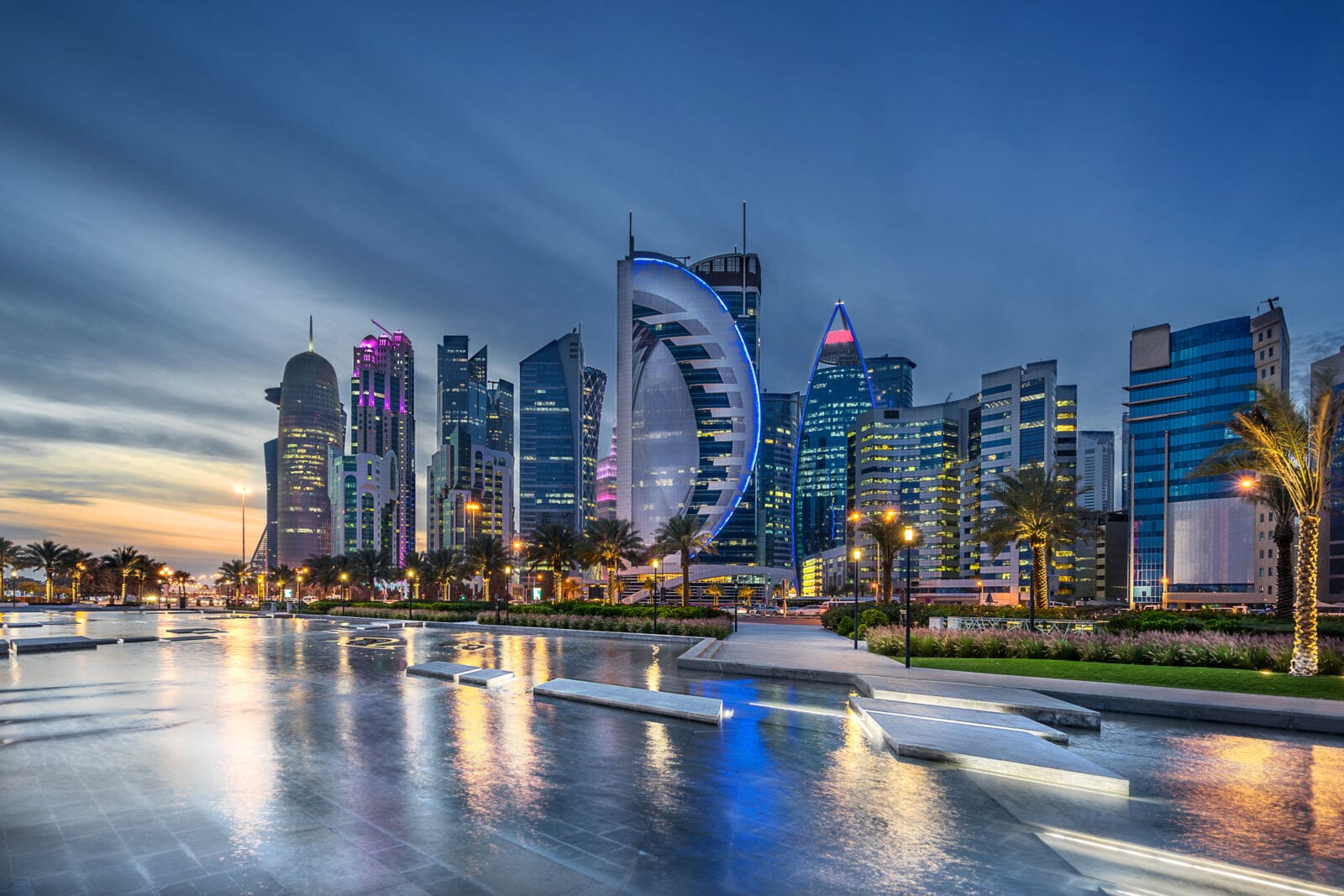
One recent host knows what happened to its event-related real estate inventory, because it hosted the World Cup in December 2022 and has generated four years of post-event data. Qatar constructed more for the World Cup than any previous host, a construction project commonly said to exceed $200 billion, including an entirely new city of Lusail, where an 89,000-seat stadium hosted the final game. For both host cities in the U.S. and investors in event-related real estate, Doha offers a natural experiment with data that is easy to analyze.
What Qatar Did Before Kickoff
One of the smartest moves Doha made was declining to construct sufficient permanent space to accommodate demand. During the initial planning for the World Cup, it was estimated that 60,000 hotel rooms would be needed. The country entered the tournament with 38,000 hotel rooms and covered the deficit with temporary options: around 64,000 hotel beds on cruise liners anchored during the tournament, a fan village that was disassembled and moved away once the fans departed, and a vacation home program allowing homeowners to rent their homes during the tournament and convert back to normal residential use after.
Analysts at ValuStrat gave credit to Qatar for precisely this move in avoiding the hotel oversupply that was seen in South Africa and Brazil. Hotel occupancy has remained above 66% annually since the World Cup, which is a solid figure for a market that had added to its inventory, but far from the ghost town that some analysts warned would happen.
For host cities in the 2026 World Cup, the lesson is clear. U.S. cities generally avoided an excess of permanent construction, instead using existing stadiums, hotels and vacation rentals rather than building new districts. The American approach is at risk in a few specific cases: submarkets that converted existing spaces into short-term rental properties and built new hotels in anticipation of a one-month demand increase, especially around stadium areas, need to find long-term tenants for those units.
What Qatar Could Not Prevent
A temporary solution resolved the hotel shortage. Apartments were another story. Apartment rents dropped up to 10% in Qatar in the two years following the World Cup as short-term leases expired and new apartments were completed. That correction has carried over into this year.
Apartment values dipped 2 percent in 2025 to an average of QAR 12,865 per square metre, or roughly $328 per square foot, while apartment rents fell 7 percent in the fourth quarter of 2025 alone, according to Knight Frank’s latest Qatar market review.
What makes the data interesting, though, is the number of deals. In 2025, there were 6,831 residential transactions in Qatar totalling QAR 26.6 billion, or roughly $7.3 billion. Sales volume was up 50 percent in the same period that prices were falling. Falling prices didn’t empty out the market. They re-valued the market, and investors were ready to take part.
The third key takeaway is the most important for US investors. The correction didn’t impact all properties equally. It separated the wheat from the chaff. Prime locations and well-maintained apartments maintained strong occupancy and high rental rates. The market for substandard units built during the World Cup preparation period, which tend to be older or hastily constructed, saw increased vacancy and lower prices.
You can see the divide by looking at the current selection of apartments for sale in Qatar. Premium waterfront apartments in Lusail and on The Pearl Island are selling for nearly QAR 14,630 per square metre, or about $373 per square foot, but the majority of properties that sold at a discount are located inland and were constructed rapidly ahead of the 2022 deadline. Four years later, the market is rewarding quality in terms of construction, property management, and location, and very little else.
4 Takeaways For US Cities Hosting The 2026 FIFA World Cup
First, temporary demand disappears permanently after the event. Every rental unit in the host city in 2022 that was leased by a tourist, a sports fan or an owner of a secondary residence will be available in 2026 as unoccupied space. Developers who assumed that demand from the tournament would remain consistent will face a different reality.
Second, sales volume and pricing don’t always move in tandem for several years. The fact that rents are declining at the same time that we’re seeing record numbers of transactions isn’t a contradiction. It’s a result. People who focus on the headline that rents are dropping won’t realize they are missing out on an opportunity to invest.
Third, the correction reflects a shift in demand for quality. The rush to complete stadiums and infrastructure for the tournament caused rushed construction in many cases. In Doha, these construction shortcuts weren’t apparent when housing was scarce, but once the market became less competitive, buyers could find cheaper alternatives. This could also happen in US cities that built quickly ahead of the World Cup.
Fourth, it takes about four years for the true impact of a major event to be realized. Qatar’s housing market didn’t reflect the long-term consequences of the tournament in 2023. Instead, it took until 2024 and 2025, after all short-term demand disappeared and the construction boom ended, for the true impact of the tournament to become clear. Atlanta, Houston, Dallas and other cities hosting the World Cup will have similar data available around 2030. Until then, all reports of positive or negative effects are speculative.
This doesn’t mean that large events shouldn’t take place in America. Qatar has gained new metro lines, a modern city and worldwide attention, and the number of transactions shows that the real estate market is healthy. But the benefits of the event will be long-lasting, and will likely only impact properties that were built for a reason unrelated to the tournament. It will take approximately four years to see the results of this experiment in the 16 US cities set to host the World Cup in 2026.