Automotive leather restoration offers a focused path into service work, but turning the skill into a business requires sound diagnosis, consistent results and practical planning.
For someone considering a career change or side business, specialized service work offers an alternative to selling products or opening a full-service shop. The starting point can be a specific customer problem rather than a large operation.
Automotive interiors provide one example. A vehicle may remain useful even when its seats look worn. Where damage is localized and the material is sound, restoration can preserve existing upholstery instead of requiring a replacement cover. The business opportunity lies in determining when that option makes sense, then delivering it reliably.
Why automotive interior restoration is a specialized skill
Automotive leather repair involves more than applying color over a damaged area. The technician first identifies the material and determines whether the problem affects the protective coating, the leather beneath it or the seat’s underlying support. Leather and vinyl require appropriate products and preparation, even when they look similar.
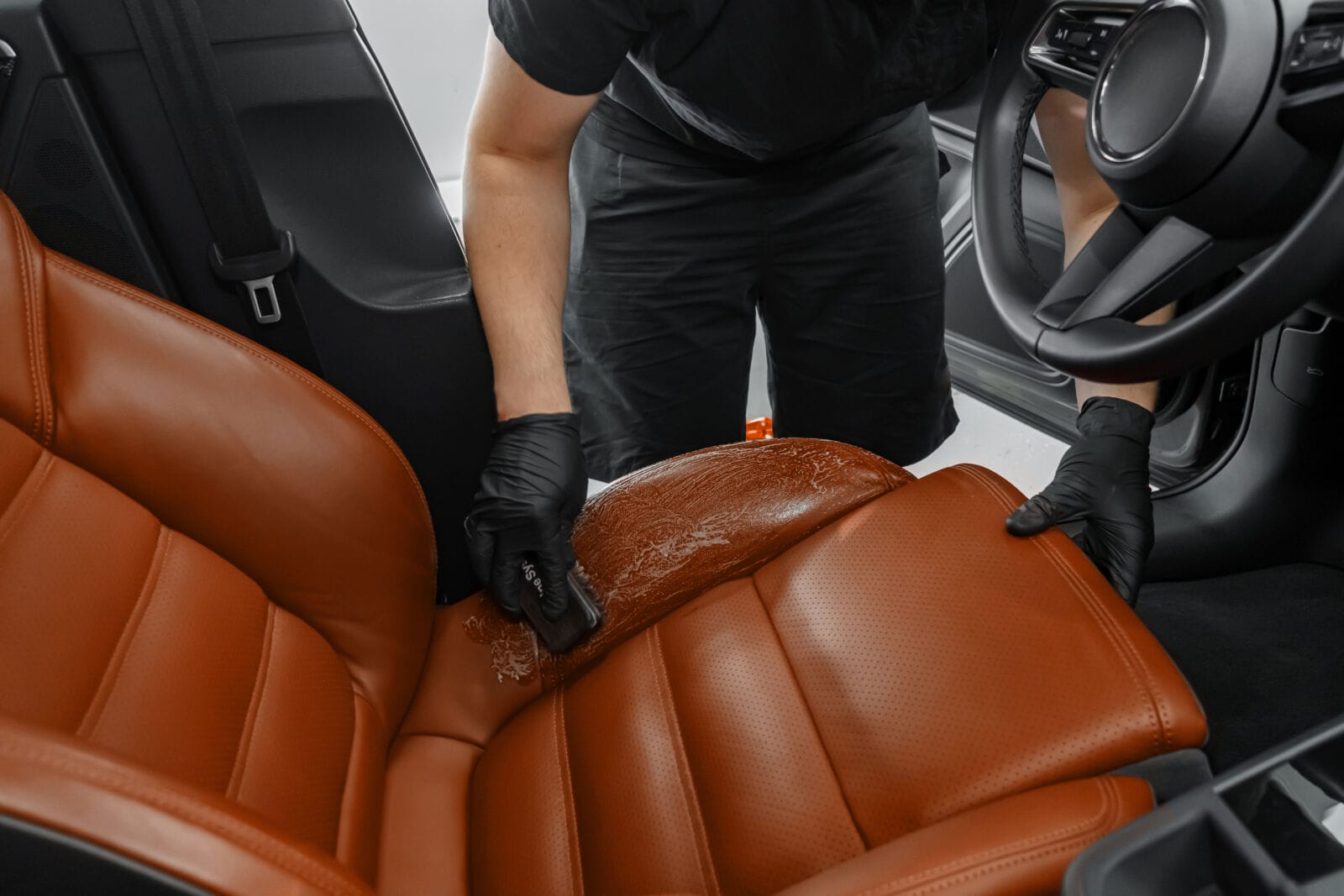
That diagnosis shapes the work. Restoring a worn finish may involve cleaning, removing contamination, repairing surface defects, matching color and applying a compatible protective topcoat. Skipping preparation can compromise adhesion. Adding color alone does not resolve the underlying damage.
What a professional needs to learn
The foundation includes leather and vinyl identification, cleaning, surface preparation and assessing repairability. Practical skills then extend to correcting scratches, scuffs, surface cracking and suitable minor damage before restoring color and protection. That includes recognizing when a surface crack is repairable and when the material itself has failed.
Color matching requires attention to both shade and sheen. A repaired section should blend with the surrounding seat rather than appear as a glossy patch. Practice on discarded panels gives beginners room to evaluate texture, coverage and flexibility before accepting customer work.
Job assessment, pricing and customer communication belong alongside those technical skills. A technician must be able to explain the proposed repair, not simply perform it.
From technical skill to small business
A leather repair business needs a repeatable process: inquiry, inspection, estimate, scheduling, repair, quality control and customer sign-off. Photographs support preliminary assessments, but an in-person inspection may reveal weaknesses that images miss.
Pricing should reflect preparation, repair time, materials, color work, travel and operating expenses. Charging only according to a defect’s size can overlook most of the labor. Written estimates should identify the scope, expected appearance, limitations and turnaround time.
Before-and-after photographs, taken with permission under comparable conditions, provide a record of completed work. Final checks should compare color, sheen and texture, followed by clear aftercare instructions.
Local demand should be tested, not assumed. Conversations with vehicle owners, detailers and used-car dealers can reveal recurring needs, existing providers and acceptable service arrangements. A beginner can start with selected repairs part time, expanding only as workmanship and demand justify it.
Tracking estimated versus actual hours helps identify which jobs fit the business. A full calendar is not enough if preparation, travel and rework consistently consume the margin.
How professional training supports the transition
Structured training can organize the learning process around diagnosis, repair methods and real job decisions rather than disconnected demonstrations. Its value depends on the instruction, practice and feedback involved.
Lerega, a leather and upholstery restoration company, provides one example of a working service business formalizing its experience into education. Lerega’s leather repair training includes automotive interiors within a broader program covering material identification, damage repair, color restoration and protective finishes. The published curriculum also addresses estimating, pricing logic and customer expectations.
The company presents client restoration projects alongside its program and offers a path into advanced hands-on training. That connection helps illustrate how techniques relate to actual jobs, while continued practice remains essential before taking on unfamiliar work.
Why automotive interiors are a practical niche
Wear often concentrates around entry bolsters, seat panels and other contact areas. When surrounding upholstery remains serviceable, targeted car seat leather repair may avoid the expense of replacing an entire cover. Similar assessment and finishing principles apply across vehicles, although materials and construction vary.
Selected jobs can suit mobile service without a large automotive workshop. Others need a controlled workspace or upholstery equipment. The operating model should account for lighting, ventilation, weather, access and product requirements; mobile service still needs suitable working conditions.
When repair is not enough
Severely weakened leather, widespread vinyl delamination, badly stretched panels and collapsed foam can require replacement or upholstery work rather than surface refinishing. Learning restoration does not automatically qualify someone for complete seat reconstruction.
Seats containing airbags, occupancy sensors or heating components introduce additional considerations. Work affecting these systems requires appropriate expertise and vehicle-specific procedures. Recognizing when to refer a job is part of professional judgment.
Building a service around a skill
Automotive interior restoration can become a specialized local service when technical ability is paired with accurate diagnosis, consistent processes, customer care and business fundamentals. The progression is practical: learn the craft, demonstrate reliable work, validate demand and build a service around problems the technician can confidently solve.