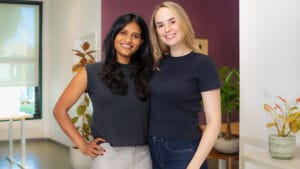
When Dr. Mandeep Johal looked at her 4-year-old son’s crowded baby teeth, she expected a straightforward dental answer. Instead, the question launched a journey that would reshape her career and inspire a growing movement among healthcare professionals.
A Toronto-based general dentist with a focus on functional dentistry, Johal believes oral health extends far beyond teeth and gums. Her work examines how the mouth influences breathing, posture, sleep and overall wellness. But it was her son’s health that revealed just how interconnected the human body can be.
MORE NEWS: Vote for the best Arizona companies for career growth
“When I saw his crowded teeth at age 4, I started wondering what would happen when his adult teeth came in,” Johal said. Traditional advice told her to wait until he was older for orthodontic treatment. Unsatisfied, she began researching preventive approaches.
Her search led her to an orthodontist in California who asked an unexpected question: How does your son sleep? The specialist wasn’t interested in photos of the child’s teeth. Instead, he encouraged Johal to observe her son during the night. What she witnessed was alarming.
Johal discovered her son was struggling to breathe while sleeping. He was later diagnosed with severe sleep apnea at just 4 years old. The experience was emotional and eye-opening, particularly because she had followed routine medical checkups and consultations without anyone identifying the problem.
“I cried,” Johal recalled. “My son literally could not breathe at nighttime.”
Determined to help him, Johal assembled a team that included an ear, nose and throat specialist, an orthodontist, a tongue therapist and a physical therapist. Together, they addressed multiple factors contributing to her son’s condition, from enlarged tonsils and adenoids to tongue posture, breathing mechanics and facial development.
The experience fundamentally changed how she viewed healthcare.
“I realized it takes a village to help our patients,” she said. “We’re taught and regulated to practice in silos, but patients don’t experience health in silos.”
Johal began applying those lessons in her own practice, working closely with professionals from different disciplines. She found herself collaborating with physical therapists, chiropractors, vision therapists and other specialists, recognizing that complex conditions often require multiple perspectives.
That philosophy eventually led to the creation of the Heal Summit, a networking and educational event designed to bring healthcare providers together under one roof. What began as a small gathering in her local community has expanded to cities including Los Angeles, Portland and now Phoenix.
Unlike traditional professional conferences that focus on a single discipline, Heal Summit, held Sept. 17 in the Valley, encourages practitioners to learn from each other’s expertise. A chiropractor might present alongside a physical therapist or vision therapist, giving attendees a broader understanding of patient care and referral opportunities.
“We’re actually missing out by not learning from other practitioners,” Johal said. “The more we understand what each person does, the better we can help patients.”
The Phoenix event features local healthcare providers discussing their specialties and participating in structured networking sessions. Johal and her team intentionally mix practitioners from different fields into small groups, allowing attendees to meet everyone in the room and discuss real-world case studies together.
Johal said the response has been overwhelming. Events regularly reach capacity, and attendees often leave with new professional relationships, referral partnerships and fresh perspectives on patient care.
For Johal, the success has little to do with personal recognition and everything to do with creating meaningful connections.
“I’m literally a nobody,” she said with a laugh. “People aren’t coming because of my name. They’re coming because they genuinely want to work together and elevate patient care.”
She also hopes to expand that mission through the Heal Directory, an online resource connecting practitioners committed to collaborative healthcare. Her goal is to make it easier for both providers and patients to find professionals willing to work as part of a team.
Looking back, Johal sees her son’s diagnosis as a turning point.
“I think God gave me my son for a reason, so that I could help others,” she said. “Once I realized he wasn’t the only child facing these challenges, I knew I had to do something.”