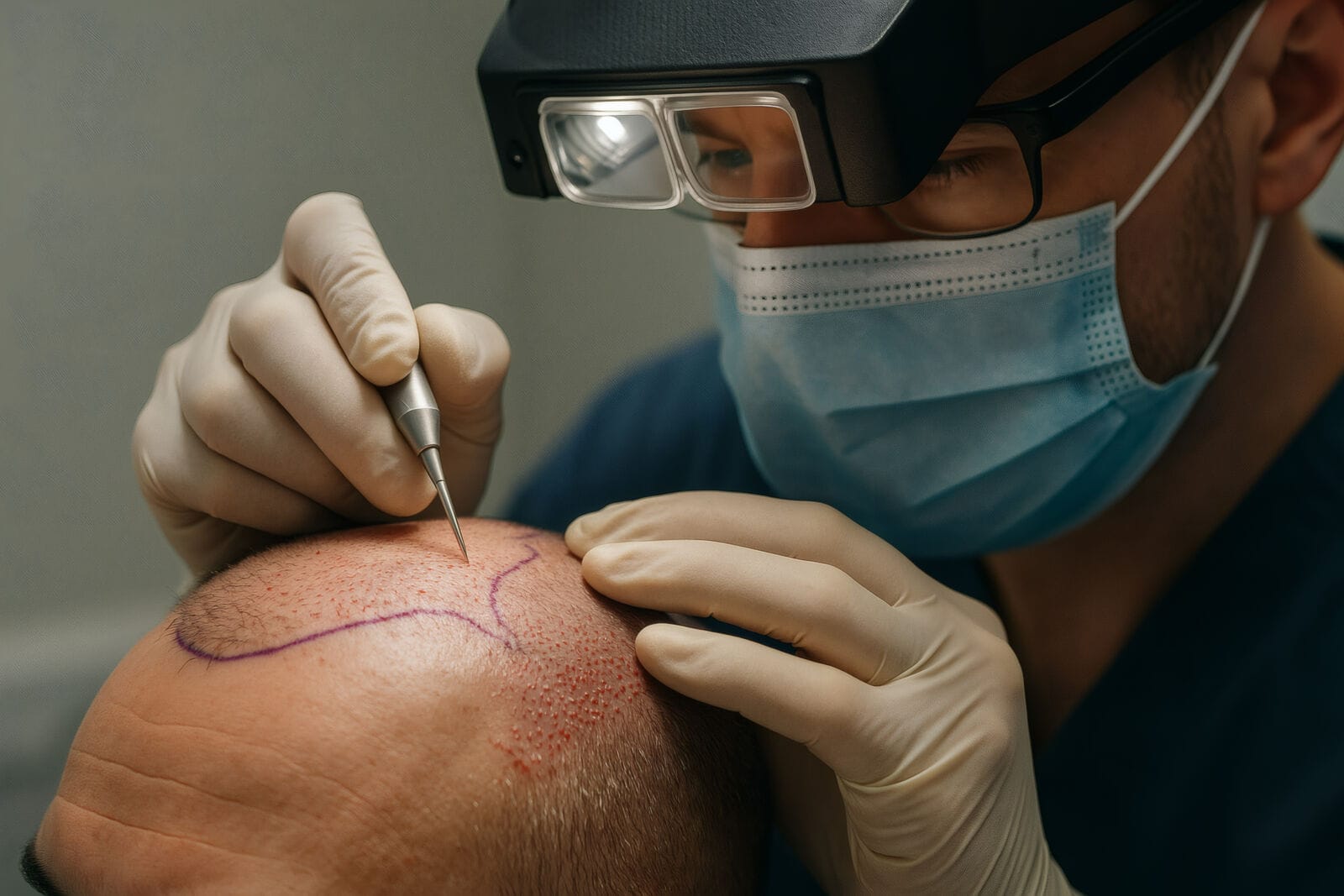
Most people considering a hair transplant have spent years thinking about it. They’ve studied hairlines in the mirror, scrolled through before-and-after photos, and maybe watched a friend go through it. Then they book a consultation and things suddenly move quickly. A price comes up, a date is pencilled in, a deposit is mentioned, and a consent form shows up on a clipboard.
That form is where a lot of people switch off. They shouldn’t. Signing it isn’t really the point. The point is the conversation that should happen before anyone reaches for a pen. If that conversation was thin, rushed or handled by a salesperson, the signature doesn’t mean much.
So what should that conversation actually cover? And how can a patient tell a proper consultation from a sales pitch?
Consent is a conversation, not a form
In the UK, the General Medical Council (GMC) is clear that consent is a process built on shared decision-making. Patients have the right to be involved in decisions about their care, to get the information they need, and to take time over it. The GMC’s seven principles of decision-making and consent came into effect in 2020 and apply to every doctor on its register.
Behind this is an important legal case. In Montgomery v Lanarkshire Health Board (2015), the UK Supreme Court ruled that doctors must tell patients about any “material” risk. That means a risk a reasonable person in the patient’s position would care about, or one the doctor should realise this particular patient would care about. What most surgeons would usually mention no longer sets the bar. What matters is what matters to you.
Make sure you know all your options, not just surgical ones
A good consultation doesn’t assume surgery is the answer. Meaningful consent includes an honest look at other options, including doing nothing.
For many men and women with pattern hair loss, that means talking about medication first. It also means asking whether the hair loss is still progressing. This is especially important for younger patients. A transplant moves hair, but doesn’t stop the hair loss underneath it. Someone who has surgery at 24 to fill in a receding hairline may find the hair behind the new grafts keeps thinning, which leaves an odd-looking island of transplanted hair and a need for more procedures later.
That leads to a point many patients never hear properly explained: the donor area is limited. The back and sides of the scalp only hold so many follicles that can be safely harvested. Grafts used on an aggressive, low hairline now can’t be used again in ten years if the crown thins. A surgeon who talks you out of the hairline you asked for may be doing you a favour.
Other options, such as hair regrowth treatments, cosmetic tattooing of the scalp, or simply accepting a shorter style, might not be what a patient wants to hear. But a consultation that never mentions them hasn’t really been a full discussion.
Complications: What “minor surgery” can still involve
Hair transplantation is often sold as a quick, low-risk procedure. Compared with major surgery, it usually is lower risk, but it’s still surgery. It involves local anaesthetic, hundreds or thousands of small wounds, and a healing process that doesn’t always go to plan.
Medical reviews list complications ranging from common and short-lived to rare and lasting. In a large review of hair transplant complications published in 2021, sterile folliculitis (inflamed, pimple-like bumps where grafts are growing through) was the most common problem. The same review found serious or life-threatening complications were uncommon. That’s reassuring, but it doesn’t mean zero.
What matters most is how these risks are discussed. A surgeon who says “There are no side effects” is failing the Montgomery test before you’ve even sat down. A better sign is a surgeon who tells you how often they see each complication in their own patients, and what they’d do about it.
Recovery: The timeline nobody puts on Instagram
Unrealistic recovery expectations cause a lot of disappointment that could easily be avoided. Clinics usually explain recovery in stages, although the exact timings vary from person to person.
The first week or two tends to involve discomfort, scabbing, redness and swelling. Then comes the part that catches people out: a few weeks after surgery, many of the transplanted hairs fall out. This is a normal part of the cycle, but if nobody has warned you, it can feel like the whole thing has failed. New growth usually starts after a few months, and the final result can take around a year to show.
This has real-world consequences. It affects time off work, sleep comfort, when you can go back to the gym, sun exposure, wearing hats, and when you’d want to be in photos for a wedding or big event. Good consent covers these practical details as well as the clinical ones.
Who’s actually holding the instruments?
In England, clinics carrying out surgical procedures such as hair transplants must be registered with the Care Quality Commission. Patients can check a clinic’s registration and inspection reports themselves. You can check individual doctors on the GMC’s online register, which shows whether they’re licensed to practise and whether they hold specialist registration.
The GMC Specialist Register lists doctors who have completed specialist training. Hair restoration is an unusual field, though. Some very experienced practitioners come from dermatology or general practice rather than plastic surgery, so a missing “plastic surgery” entry doesn’t automatically mean someone is unsafe. It’s a reason to ask more questions.
The honest marketing problem
It would be naive to talk about consent without talking about marketing. Most patients now first hear about a clinic through an advert, a social media post or a search result, often weeks before they speak to a doctor. By the time they’re in the consultation room, their expectations are already set.
This is why the ethics of promotion matter, and why the rules around it exist. In the UK, cosmetic surgery advertising must follow the CAP Code, which the Advertising Standards Authority (ASA) enforces. Ads must not mislead, trivialise surgery or target under-18s. The GMC also tells doctors not to use time-limited deals or other pressure tactics that could rush a patient into surgery. A responsible hair transplant marketing agency should know these rules and work within them. That means helping clinics show real, typical results, explain the surgeon’s qualifications and be upfront about recovery and risks, not pushing countdown timers or high-pressure offers.
Medical tourism makes this harder. Many UK patients see ads from overseas clinics that sell all-inclusive packages with flights, hotels and surgery bundled together at a fraction of the local price. These ads often sit outside UK regulation. They tend to play down risks, make it unclear who will actually do the procedure, and say little about what happens if something goes wrong once the patient is home. By the time many people realise that aftercare and revision aren’t included, they’ve already paid a deposit.
Clinics looking for a healthcare marketing agency in Liverpool, or anywhere else in the UK, should see compliant, honest communication as part of patient safety, not a box-ticking exercise. If an advert promises something the surgeon won’t stand behind in the consultation, the consent process is damaged before it even begins.

Honest marketing starts before the consultation does, and specialist healthcare marketing agencies like Online Marketing for Doctors help UK clinics give patients the clear, balanced information they need to make a truly informed choice.
The right to change your mind
This is probably the most overlooked part of consent, and it’s simple. You can stop.
You can leave a consultation without booking. You can take the paperwork home. You can decide the week before, or the morning of the procedure, that you’re not ready. Consent can be withdrawn at any time before or during treatment. The GMC’s cosmetic guidance specifically expects doctors to give patients time to think before they commit.
Deposits can make this harder. Some clinics have non-refundable deposit terms, and patients worry about losing money if they pull out. It’s worth reading those terms carefully before paying anything. A clinic that ties a large, non-refundable payment to a quick booking puts pressure on the decision, whether it means to or not.
The UK’s clinical improvement programme Getting It Right First Time published principles on shared decision-making for elective surgery in 2026. They reinforce the same idea: patients should get time, clear information and a genuine choice.
What this means in practice
Hair transplants can change people’s lives for the better, and plenty of patients are delighted with their results. The happiest ones aren’t always those with the thickest result. They’re often the ones who knew what they were signing up for: the shedding phase, the limits of their donor area, the chance they’d need a second procedure, and who to call if something went wrong.
That’s the real test of consent. Could you explain your procedure’s risks, recovery and alternatives to a friend in your own words? If you couldn’t, you’re not ready to sign yet, and a good surgeon will be happy to wait.