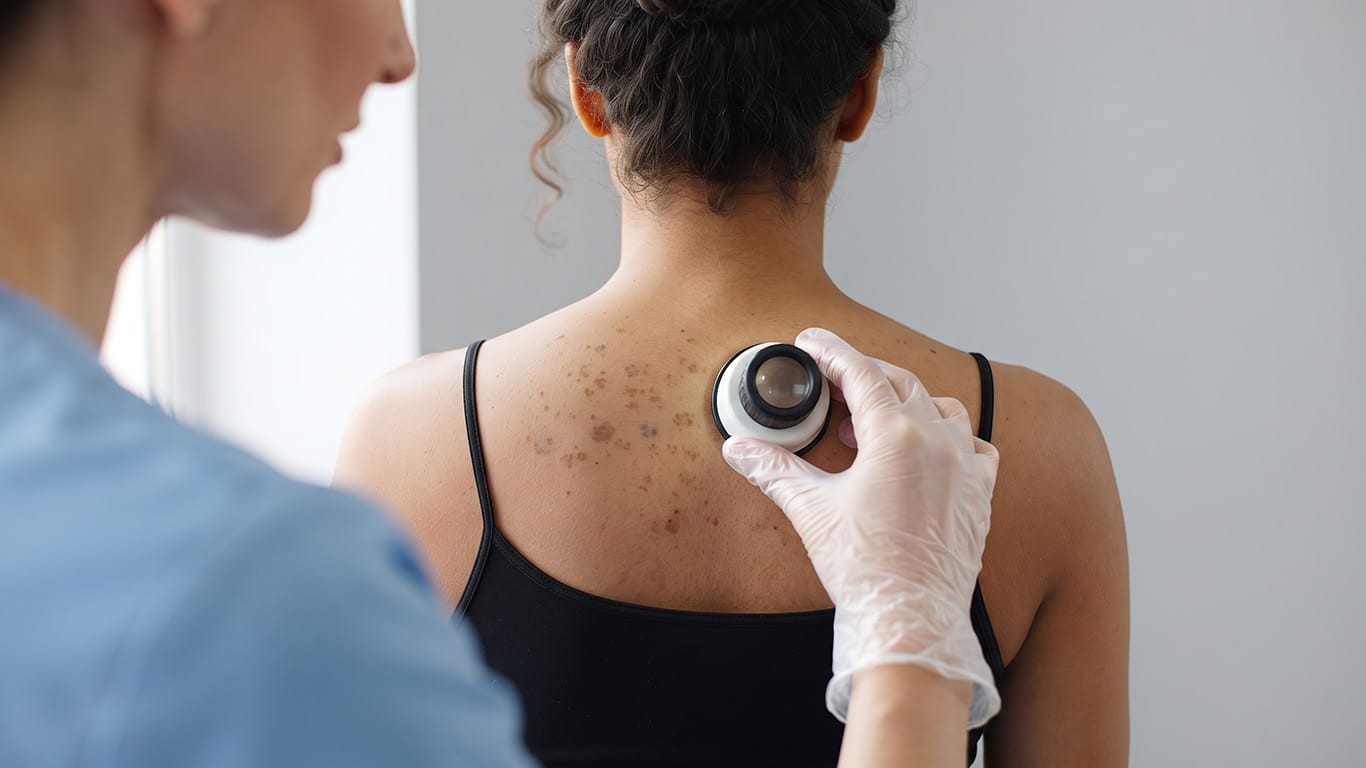
Skin cancer is often dismissed as “not serious,” but Dr. Aleksandar Sekulic has spent his career showing just how dangerous — and preventable — it is.
As City of Hope Arizona’s director of dermatology and leader of its melanoma and skin oncology program, he sees decades of sun exposure written across his patients’ skin.
Childhood burns, lake weekends, and years of “I didn’t know any better” all leave their mark. He doesn’t judge those choices; he does encourage people to pay closer attention to their skin.
He often shares a story that resonates. Bob Marley noticed a dark spot under his toenail and assumed it was a soccer injury. However, a biopsy revealed acral lentiginous melanoma, a rare form of skin cancer unrelated to sun exposure.
Marley refused amputation, and the cancer metastasized. The reggae legend died at 36. Dr. Sekulic uses this example to illustrate how easily people overlook warning signs — especially on parts of the body they rarely examine.
“Noticing new spots — dark, brown, gray — especially on the feet, is important,” he said. “It’s hard to look at your foot, right? But if you make a conscious effort to do that, that can help.”
Some melanomas don’t resemble pigment at all.
“They may look like a sore that isn’t healing. That’s something that should be evaluated.”
DEEPER DIVE: Here are Arizona’s Most Admired Companies of 2026
LEARN MORE: Most Admired Companies of 2026: City of Hope Phoenix
Dr. Sekulic breaks exposure into two categories: the high‑intensity sunburns that happen at the beach or the lake, and the slow, cumulative exposure that builds over years.
“One is that high‑intensity sunburn — you go to the beach and burn,” he said. “That kind of damage is more associated with melanoma.”
The everyday exposure, he added, contributes more to basal cell and squamous cell carcinomas.
“The seed that’s going to grow into melanoma may not manifest for years or decades,” he said.
Even people who avoid the sun now aren’t exempt from earlier damage. “People think, ‘I’m not in the sun anymore, but I had a lot of sunburns.’ True — that decreases your risk, but it doesn’t remove it.”
When teaching patients what to look for, Dr. Sekulic relies on the ABCDEs of melanoma:
A: Asymmetry: One half of a mole or spot does not match the other half.
B: Border: The edges are irregular, ragged, notched, or blurred.
C: Color: The color is not uniform and may show multiple shades of brown, black, tan, red, white, or blue.
D: Diameter: The spot is larger than 6 millimeters (about the size of a pencil eraser), though some can be smaller.
E: Evolving: The mole changes in size, shape, color or height, or develops new symptoms like itching or bleeding.
He always pauses at the last one.
“‘E’ stands for evolution — probably the most important,” he said. “If there’s a spot that’s changing over time, if it’s getting bigger, raised, bleeding, changing color, people are more likely to notice that.”
City of Hope’s dermatology program sees far more than routine skin checks.
“We see a lot of complex skin cancers that may require more than typical things,” Dr. Sekulic said.
His team also treats skin issues triggered by cancer therapies.
“Immunotherapies can activate the immune system to react against components of the skin,” he said.
Dr. Sekulic advises patients and the public to seek shade when possible, avoid direct sun, wear long sleeves and a brimmed hat, and apply sunscreen to any exposed skin.
And he’s realistic about sunscreen preferences.
“Use the sunscreen with the highest SPF you can find and tolerate. If you don’t like it, you’re not going to use it. We are all unique. A good dermatologist will tell you your level of risk and how often you should be seen. That’s the key.”