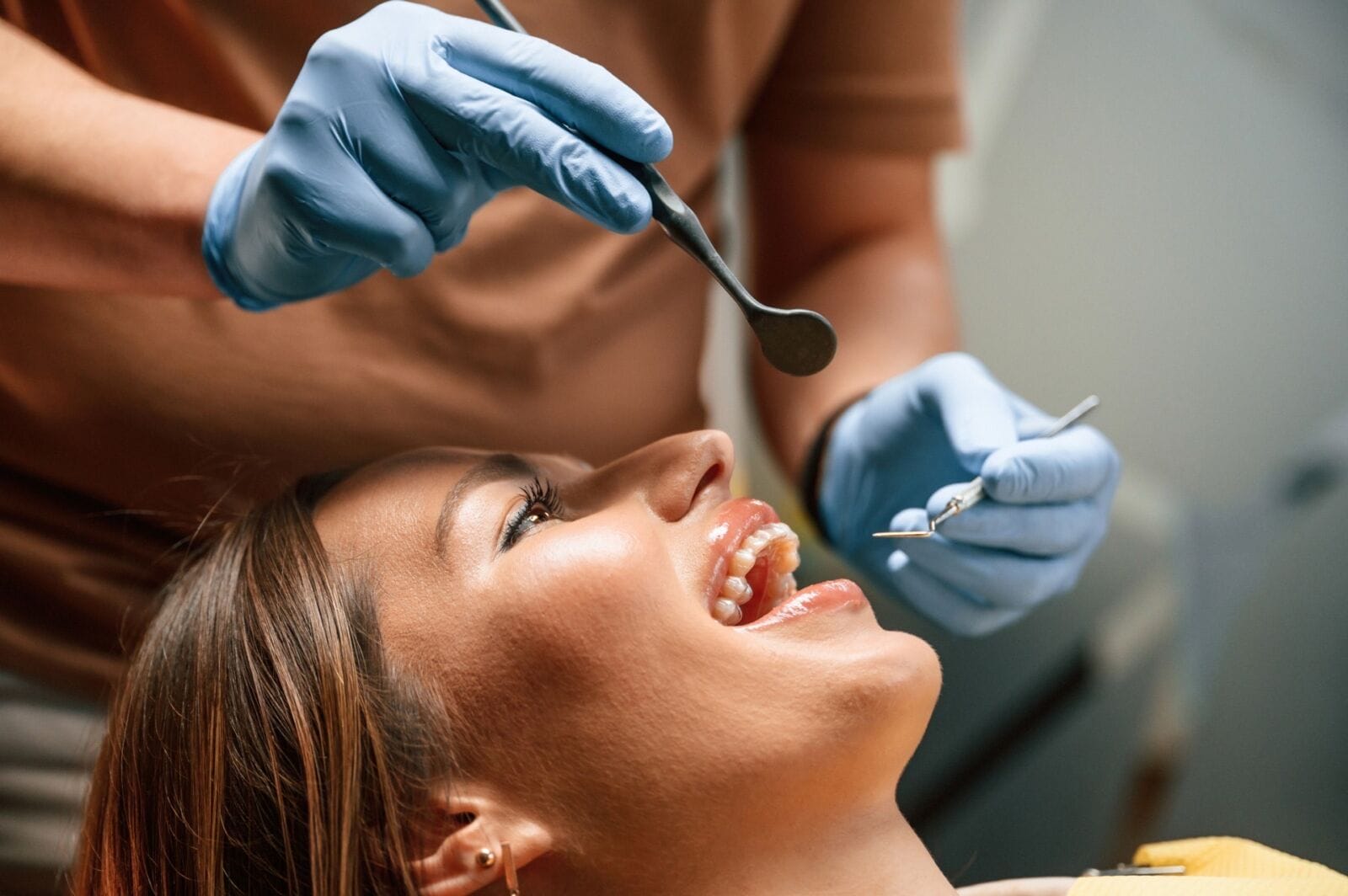
Forty-five minutes in a chair with your mouth propped open can leave you feeling like you lost a wrestling match you never signed up for. That stiffness behind your ears, the dull throb near your cheekbone, the tiny click when you swallow: it’s the number one thing people Google the night after a cleaning or a crown.
Here’s the short version. Most of that soreness is muscle, not damage. Your jaw is a hinge joint run by muscles you barely notice, and holding it wide open for a long stretch is a workout. The other thing worth knowing is that a good a dentist peabody at North Shore Dental Center will tell you ahead of time what might feel tender the next day, because surprise soreness is half the problem.
This guide breaks down what’s normal, what isn’t, and what you can actually do tonight to feel better tomorrow.
What’s actually causing the ache
Think of your jaw like a door on a hinge with a soft cushion in between. That cushion is a disc, and the muscles around it do all the work. When you hold your mouth open for a filling or an impression, the muscles on the sides of your head and those running down to your collarbone stay contracted longer than they ever do in normal life.
Add in the tension that comes with being in a chair under bright lights, and you get a muscle story with a couple of plot twists.
- Muscle fatigue from a long open-mouth stretch, which feels like stiffness and fades over a day or two.
- Injection site soreness where numbness wore off, which can leave a small ache near the hinge.
- Night clenching, often unnoticed, that gets worse when you’re stressed about the visit itself.
- Joint irritation if the disc got compressed, which is the one that needs watching.
My take: if you can chew, open wide without a stabbing pain, and the soreness is spread around rather than pinpointed, you’re almost certainly in the muscle group. That’s the boring, good news category.
Normal soreness vs. something that needs a call
You don’t need a chart to know something is off. You need to know which signals mean “wait a day” and which mean “pick up the phone.”
| What you feel | Usually means | What to do |
|---|---|---|
| Broad ache along the cheeks and temples | Muscle fatigue from holding open | Warm compress, soft food, wait a day |
| Small tender spot near the back of the jaw | Injection site | Cold pack for the first day, then leave it alone |
| Click or pop when you open wide | Disc movement | Avoid big yawns and chewy food, mention it at your next visit |
| Sharp pain, swelling, fever, or you can’t close your mouth | Not normal | Call the office or seek care the same day |
That last row is not there to scare you. It’s there because the rare bad outcomes are obvious and fast, and people who wait a week on swelling always regret it. Everything above that line is a sore muscle with a schedule.
A three-evening recovery plan
You can’t stretch your way out of this in five minutes, so don’t try. Short, gentle, repeated beats hard and long.
Evening one: warm compress on the cheek for ten minutes, then ten minutes off, twice. Eat something soft. Skip the bagel. Take an over-the-counter pain reliever if you normally tolerate one, following the label.
Evening two: try a gentle self-massage. Put two fingers flat on the muscle just below your cheekbone, press lightly, and open and close your mouth halfway a few times. Stop if it hurts. Sore is fine, sharp is not.
Evening three: check your sleep. If you wake up with a tighter jaw than you went to bed with, you’re probably clenching, and that’s worth mentioning at your next appointment so someone can look at your bite and your sleep habits.
One thing I’d skip: aggressive jaw stretches you found in a video. Opening as wide as you can to “loosen up” a sore joint is like stretching a pulled hamstring by sprinting.
The stuff that makes it worse next time
Most of the soreness you feel is predictable, which means you can shrink it before the appointment even starts.
- Book long procedures for a day when you can go home and rest, not the morning of a presentation.
- Tell the team you get sore jaws. A skilled office will build in breaks, a bite block, or a shorter session split across two visits.
- Skip chewing gum and hard candy for a couple of days afterward.
- Bring up nighttime clenching habits. According to the National Institute of Dental and Craniofacial Research, facial pain and jaw joint disorders are common and often tied to muscle habits, so it’s a normal thing to raise, not a strange request.
I’d pick the split-visit option every time for anything over an hour. Two calm appointments beat one heroic one that leaves you eating soup for three days.
What your dentist can do differently
If soreness happens every single time, say so out loud before the work starts. There’s a real list of adjustments: a softer bite block, shorter open intervals, a cue to close and rest between steps, and a check on whether your bite feels even afterward.
People often assume they just have a “bad jaw” and never mention it. That’s the wrong move. The Centers for Disease Control and Prevention tracks oral health as a core part of overall wellbeing, and part of that is comfort during care, not just the absence of cavities. A practice that listens will change how the appointment runs.
If the ache lingers past a week, keeps you up at night, or comes with a change in how your teeth meet, that’s when a professional evaluation earns its keep. The American Dental Association maintains guidance on jaw joint and muscle disorders, and a proper exam beats guessing from a search bar.
Quick answers people actually ask
How long does it last? Muscle soreness usually peaks the night of the visit and eases within one to three days. Anything past a week deserves a call.
Is a click a problem? Not on its own. Plenty of people have a clicking jaw with zero pain. Pain plus a click is the combo worth flagging.
Should I ice or heat? Cold for the first day if there’s a tender spot, warm after that for muscle tightness. When in doubt, warm and gentle wins.
Can I go to work? Yes. Soreness isn’t a reason to cancel your day, just maybe not the day you schedule a three-hour talk.
Bottom line
A sore jaw after dental work is one of the most ordinary discomforts in the chair, and it’s temporary in almost every case. Read the signals, give it a couple of gentle evenings, and speak up if the pattern repeats. Your next appointment doesn’t have to feel like a workout.
So here’s a question worth sitting with: if you knew a two-minute conversation could make your next visit easier, why wait until the soreness starts?