Ask the owner of a food truck in Mesa or a counter-service burger spot in Tempe what changed when they went from one location to three, and packaging comes up sooner than you would expect. At a single site, buying boxes and cups from a cash-and-carry works fine. Once orders are being prepped in volume, handed to delivery drivers and photographed by customers, the packaging becomes part of the product, and the cost of getting it wrong grows with every unit sold.
The operators who grow smoothly tend to treat packaging the way they treat ingredients. They specify it, they buy it in quantities that match real sales, and they order early enough that a seasonal rush does not catch them short. Here is what that looks like in practice for the two items almost every Arizona food business buys every week, which are burger boxes and paper cups.
Why Packaging Becomes a Bottleneck at Scale
A single truck can survive on whatever boxes are in stock at the restaurant supply store. A second truck and a catering contract cannot. Supplies start running out mid-shift, sizes vary from case to case, and nobody has time to drive across Phoenix for a pallet of clamshells on a Saturday afternoon.
The fix is to move from buying what is available to ordering what the menu needs. That means settling on a short list of formats, agreeing on a brand look, and placing orders on a schedule rather than in a panic. The money saved on emergency runs and wasted stock usually pays for the upgrade in printed packaging within the first few orders.
Match the Box to the Menu, Not the Other Way Round
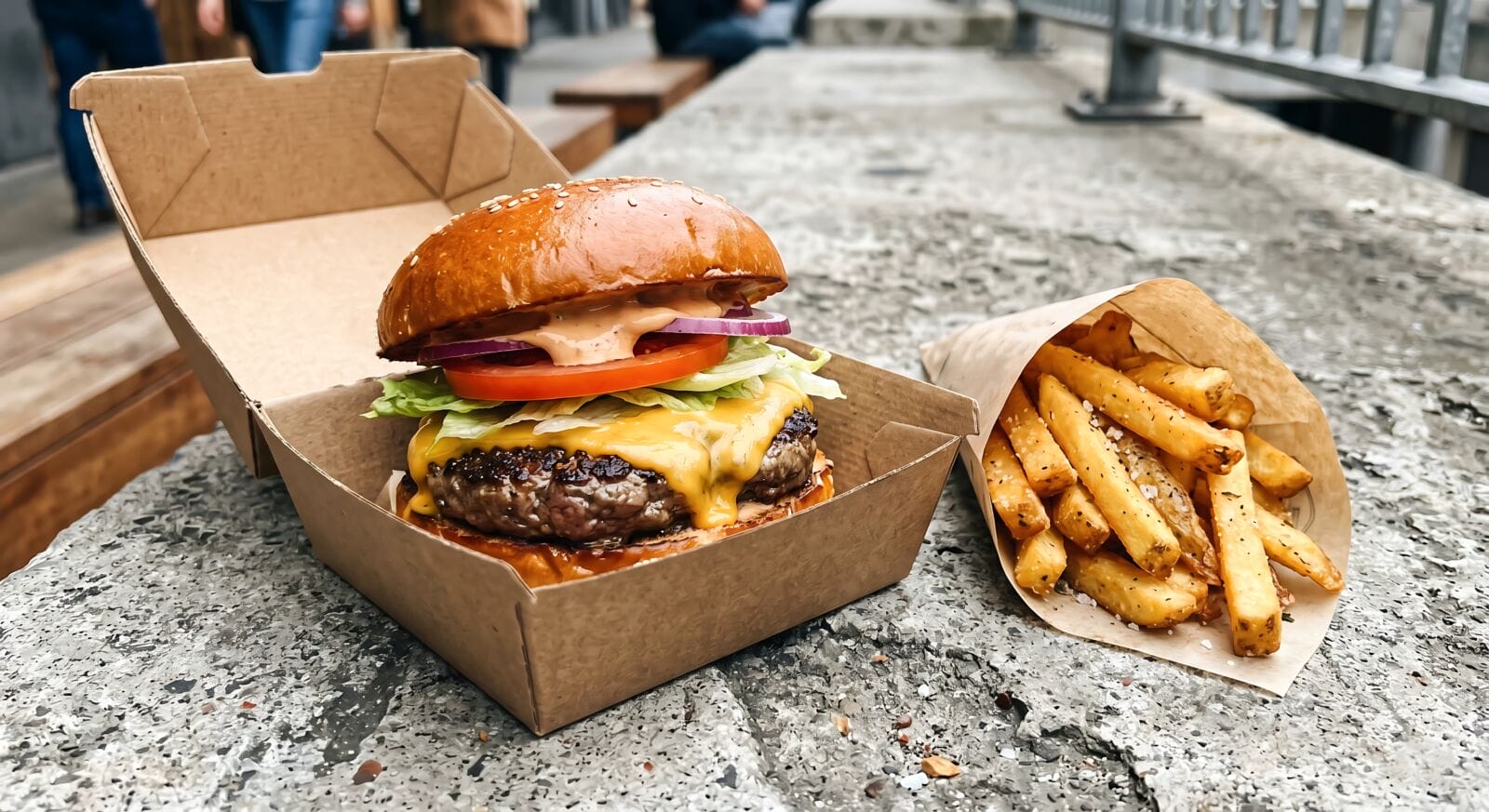
Burger boxes come in more shapes than most operators realize. Mini boxes suit sliders, kids’ meals and appetizer portions. Standard clamshells hold a single burger. Tuck-top and parcel styles work when fries ride along in the same box, and a divider keeps a dip or a side from leaking across the bun.
Suppliers that make custom burger boxes wholesale build the box to the operator’s own dimensions, board and print rather than to a catalog size. Kraft board is recyclable and reads as natural, while white cardboard carries full-color printing better. Production typically runs seven to ten business days after design approval, with minimums starting around one hundred units, which lets a growing business order a trial run before committing to a container load.
The Desert Heat Changes the Spec
Arizona’s climate is hard on food packaging in ways that suppliers in cooler states rarely consider. A burger that sits in a delivery bag at 110 degrees releases more steam and grease than one carried across a street in Portland. A box that works fine in April can turn soft by July.
Two details matter. First, a grease-resistant inner layer keeps the outside of the box dry and presentable when it reaches the customer. Second, vents in the lid let steam escape so the bun does not go limp during a twenty-minute delivery. Both are standard options on custom boxes and both are worth specifying up front rather than discovering the problem through a one-star review.
Cups Are the Other Half of the Order
Nearly every burger order leaves with a drink, and cups are where small cost differences multiply fastest. Food businesses that buy custom paper drinking cups wholesale usually find that one supplier can cover the whole range, from four-ounce sample cups through sixteen-ounce sodas to thirty-two-ounce shakes, in single-wall, double-wall and ripple-wall construction.
Minimum orders start at around one hundred units for most cup types, with wholesale pricing from one thousand units up, and standard production runs ten to fifteen business days with a five-to-seven-day rush option. For an Arizona operator, the practical choice is often a double-wall or ripple cup for iced drinks, because condensation on a single-wall cup soaks napkins and bags in summer.
A Simple Comparison Before You Order
Before placing a first wholesale order, it helps to lay the options side by side.
| Item | Typical minimum | Production time | Best Arizona choice |
| Kraft burger box | 100 units | 7 to 10 business days | Vented lid, grease-resistant liner |
| Printed white burger box | 100 units | 7 to 10 business days | Full-color brand box for dine-in and photos |
| Single-wall cold cup | 100 units | 10 to 15 business days | Short-service counters only |
| Double-wall or ripple cup | 100 units | 10 to 15 business days | Delivery and drive-through drinks |
The right answer differs by concept. A fast-casual spot with heavy delivery volume should spend more on the cup and the box liner. A dine-in counter with a strong social following should spend on the print.
Printing Pays for Itself in Delivery
A plain brown box tells a delivery customer nothing about who made the food. A printed one puts the name, the logo and often a reorder prompt in front of the customer at the exact moment they are happiest with the meal. That matters more in Arizona than in many markets, because third-party delivery apps dominate suburban orders and the restaurant’s own brand can disappear behind the app’s.
Both kraft gable boxes and cups can be printed in full-color CMYK or matched to a Pantone brand color. Matte and gloss finishes are standard, and foil or embossed logos are available for operators who want a premium look on a dine-in box. The sensible approach is one strong design used across every size rather than a different look for each item.
Order on a Calendar, Not on a Shortage
Growing businesses run out of packaging for a predictable reason. They reorder when the last case is opened, and the lead time is longer than the stock left. With custom packaging, the lead time includes a digital proof, production and shipping, so the reorder point needs to sit three to four weeks ahead of an empty shelf.
A good habit is to set a standing monthly order sized to the previous month’s sales, with a buffer for spring training season, Cactus League weekends and the summer slowdown. Suppliers that offer free shipping and tracked delivery make this easier, because the landed cost is known in advance and the arrival date can be planned around.
Start Small and Standardize
The operators who scale cleanly rarely redesign their packaging every year. They pick a kraft or white base, one brand color, one logo placement and two or three box sizes, then reorder the same specification as volumes grow. Custom suppliers keep the dies and artwork on file, so a reorder is a quick confirmation rather than a new project.
For an Arizona food business moving from one site to several, that consistency is the real benefit. The box and the cup look the same in Scottsdale as they do in Tucson, the cost per unit falls as the order size rises, and nobody has to make a supply run on a Saturday again.