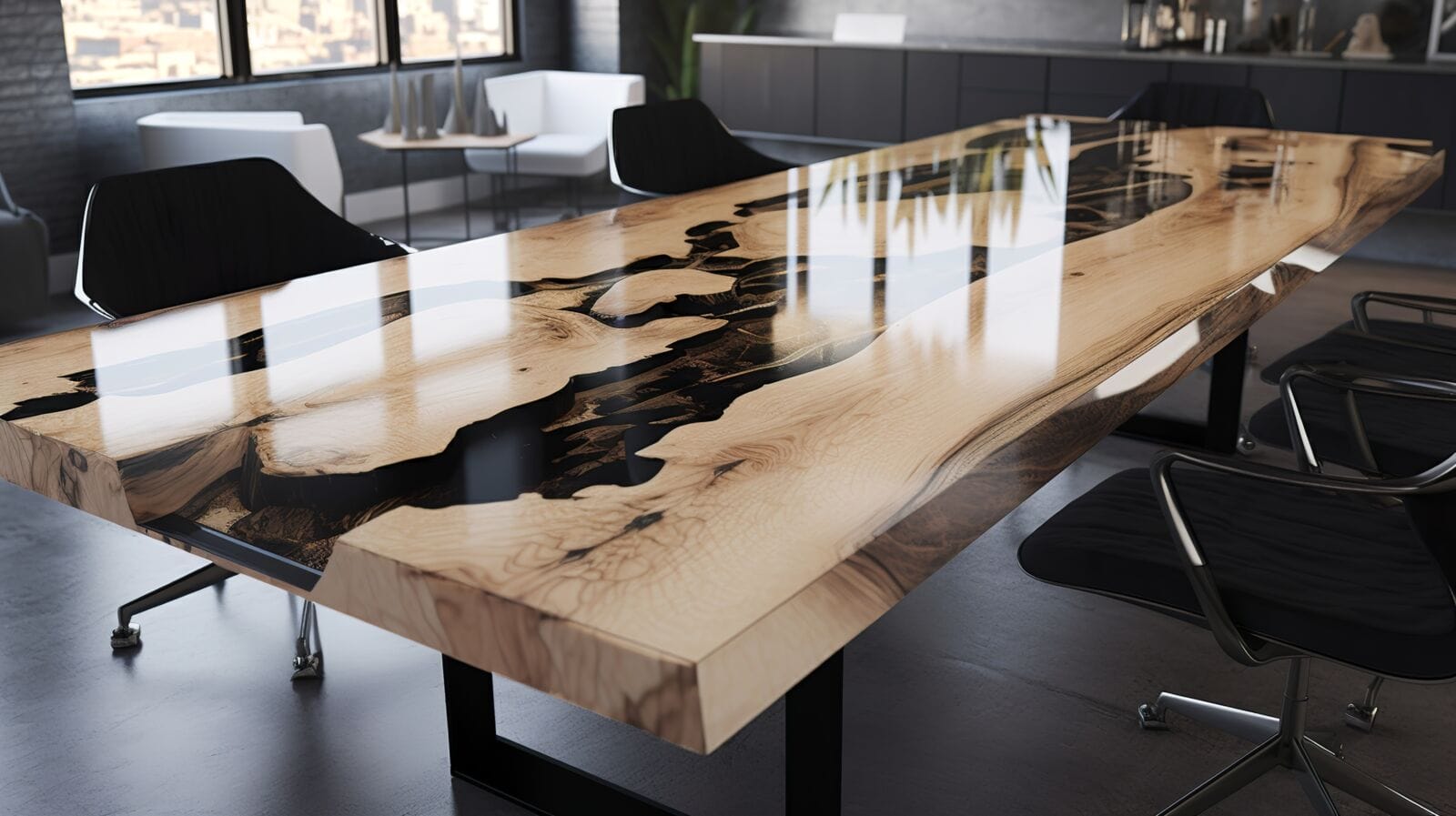
Epoxy resin desks combine solid wood slabs with cast polymer resin to produce work surfaces with defined structural, visual, and functional properties that differ from standard MDF, particleboard, or veneer office furniture. Selecting the correct epoxy desk requires evaluation of surface dimensions, wood species, resin type, base structure, and topcoat hardness against the specific functional demands of the intended workspace. Epoxy desks by Maxiwoods are produced in configurations covering single-user computer workstations, executive desk formats, and standing desk bases, with customizable wood species, resin colors, and surface dimensions. The decision process differs between home office installations and corporate office environments based on load requirements, surface durability standards, aesthetic integration, and budget parameters specific to each context.
Surface Dimensions and Workspace Requirements
Desk surface dimensions must match the specific equipment configuration and available floor space in the target room. Single-monitor computer workstations require a minimum surface length of 140 centimeters and depth of 70 centimeters to accommodate a monitor, keyboard, mouse, and document space without crowding. Dual-monitor setups require surface lengths between 180 and 220 centimeters to position both screens within ergonomic viewing distance while maintaining lateral workspace for peripheral equipment. Home office installations in rooms with limited floor area should prioritize desks with wall-mounted base configurations or compact L-shaped formats that use corner space efficiently. Corporate office workstations in open-plan environments require standardized dimensions across multiple units, making surface length, depth, and height consistency a primary specification criterion when ordering multiple epoxy desks for a single installation.
Wood Species Selection
Structural and Visual Properties by Species
Wood species selection affects surface weight, grain pattern visibility, color range, and long-term dimensional stability under office humidity conditions. Walnut produces dark brown surfaces with fine, straight grain patterns and high natural density, achieving a Janka hardness rating of 1,010 lbf that resists surface denting under normal office use. Oak provides medium brown tones with pronounced ray fleck patterns visible in quarter-sawn cuts, with a Janka hardness of 1,290 lbf making it suitable for high-contact work surfaces. Ash delivers pale cream to light brown coloration with pronounced grain contrast and a Janka hardness of 1,320 lbf, providing a lighter visual weight than walnut or oak for office environments with white or neutral interior schemes. Elm produces irregular interlocked grain patterns with brown and gray tonal variation, requiring more extensive void filling with resin due to its naturally porous structure, which increases resin coverage across the surface area.
Moisture Content Requirements
Wood used in epoxy desk production must maintain moisture content below 8 percent at the time of resin application to prevent off-gassing during curing, which causes surface bubbles and adhesion failures between wood and resin. Desks installed in climate-controlled office environments with relative humidity between 40 and 60 percent remain dimensionally stable after installation, while pieces placed near HVAC vents or exterior walls with significant temperature fluctuation may develop minor surface movement that affects resin bond integrity over time.
Resin Type and Surface Hardness
Epoxy resin formulations used in desk production vary in viscosity, cure time, maximum pour depth, and final surface hardness. Casting resins with low viscosity below 500 cP flow into fine wood grain details and small voids but require multiple pour layers for depths exceeding 5 centimeters, with 48-hour cure intervals between layers. Table-top coating resins with higher viscosity between 1,000 and 3,000 cP are applied as final surface layers at thicknesses of 3 to 6 millimeters, providing a self-leveling finish with Shore D hardness between 78 and 85. Desks intended for corporate office use require an additional polyurethane topcoat applied over cured epoxy at a minimum dry film thickness of 80 to 100 microns to provide resistance to alcohol-based cleaning products used in daily office sanitation routines.
Base Structure and Height Adjustment
Desk base selection determines load capacity, height adjustability, and visual weight of the finished piece. Fixed-height steel bases with welded construction support epoxy slab surfaces weighing between 40 and 120 kilograms, with four-point contact configurations distributing load evenly across the floor surface. Electric height-adjustable bases using dual-motor lift systems allow surface height adjustment between 62 and 127 centimeters, accommodating seated and standing work positions for users between 155 and 200 centimeters tall. Base finish options include matte black powder coat, brushed stainless steel, and raw steel with clear lacquer, each providing different visual contrast against wood and resin surface colors.
Selecting Epoxy Desks for Corporate Multi-Desk Installations
Corporate installations requiring multiple matching epoxy desks across open-plan offices or private workstations must specify consistent wood species, slab thickness, resin color, and base type across all units to maintain visual uniformity. Procurement teams should request material samples and finish swatches before placing bulk orders to verify color matching between individual slabs, since natural wood grain variation means no two pieces are identical even when produced from the same species. Conference room table specifications follow different criteria from individual workstation desks, requiring larger surface areas, higher load ratings, and base systems engineered for spans exceeding 240 centimeters. Businesses specifying epoxy resin surfaces for group meeting environments can review available formats and dimension options at https://maxiwoods.com/collections/epoxy-conference-tables, including configurations suited to boardrooms, training rooms, and collaborative workspace installations.