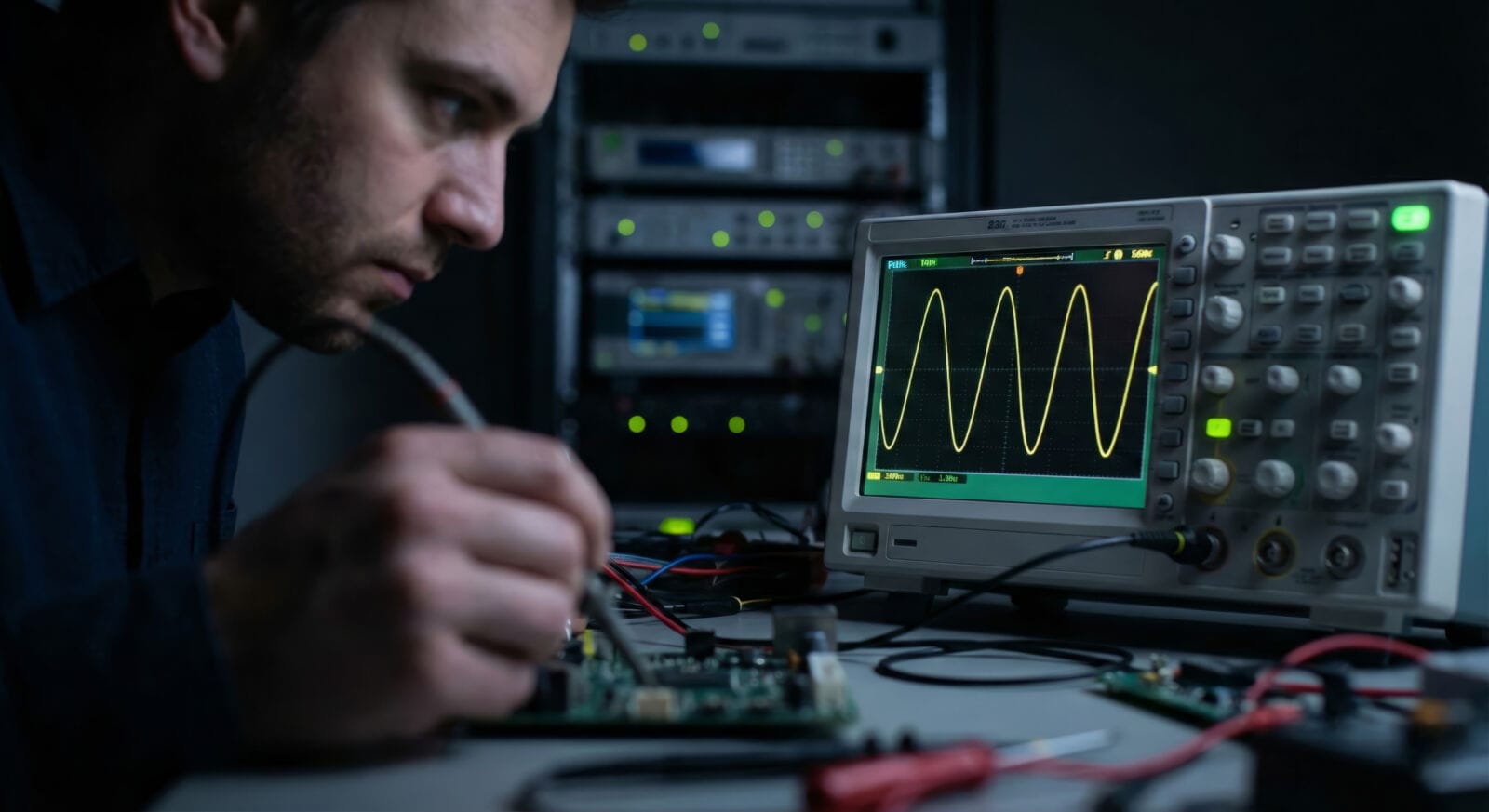
Selecting the perfect oscilloscope is a vital step for any technician or engineer looking to capture and understand intricate electronic data. When dealing with modern high-speed circuits, a basic model might miss the tiny, rapid glitches that can cause a whole system to fail. This article explores the most important factors to keep in mind when investing in an oscilloscope for your laboratory or workshop.
Determining the Necessary Bandwidth for Your Signals
When your bandwidth is too low, the device will smooth out the sharp edges of your waveforms, leading to incorrect readings and missed data. It is a good rule of thumb to choose a model that has a bandwidth that is at least five times higher than the fastest signal you plan to measure. This five-times rule ensures that you get the high-frequency components that give digital signals their distinct square shape.
Evaluating the Sample Rate for Detailed Capturing
To reconstruct a complex wave accurately on the screen, the device needs to collect a massive amount of data points in a very short time. If the sample rate is too sluggish, you may experience aliasing, where the displayed wave looks completely different from the real one. Look for a machine that offers a high real-time sampling rate to capture those elusive one-time transient events that occur in a flash.
Choosing the Right Number of Channels for Your Tasks
Most standard oscilloscopes come with either two or four channels, allowing you to compare input and output signals on the same screen. If you are working on complex mixed-signal designs, consider a model that includes extra digital channels for checking logic states. Having channels gives you a much better view of how different components in your circuit interact with one another during operation.
Understanding the Importance of Record Length and Memory
A long record length is very useful when you need to capture a fast signal over a relatively long period of time without losing any detail. If your memory is too small, the device might be forced to lower its sampling rate to fit the whole window, which ruins the accuracy of your zoom. With plenty of memory, you can scroll back through your data to find the exact moment a specific error or glitch occurred.
Checking the Waveform Update Rate for Hidden Glitches
Electronic bugs happen randomly, meaning they might occur while the oscilloscope is busy processing the previous screen of data. A device with a fast update rate spends less dead time between captures, increasing your chances of spotting a rare and annoying system crash. This feature makes the screen feel much more responsive and provides a more lifelike view of how your circuit is behaving.
Selecting the Correct Probes for Accurate Measurements
You must ensure that the probes you use are rated for the same bandwidth as your oscilloscope to avoid bottlenecking your data. There are many different types of probes, such as passive ones for general tasks or active ones for measuring very delicate, high-speed signals. Using a high-quality, well-calibrated probe ensures that the information reaching the screen is an exact match for what is happening on your board.
Reviewing Built-In Analysis and Decoding Tools
Many modern oscilloscopes come with powerful software that can automatically decode I2C, SPI, or CAN bus. Instead of manually counting pulses on the screen, the device can show you the actual data packets and hex codes being sent between chips. Some models also offer advanced mathematical functions, like Fast Fourier Transform, which lets you see the frequency content of your signal in a whole new way.
Selecting the Best Tool for Signal Mastery
Finding the perfect balance of features for your testing needs is the key to mastering signal analysis in any professional setting. Whether you are decoding data packets or hunting for tiny electrical spikes, the right hardware makes the task much simpler and more reliable. Remember to look beyond the basic price tag and consider how the specific tools and probes will improve your daily engineering efficiency.