
Key Takeaways
- Match cleaning frequency to traffic, surface use, visibility, and facility risk.
- Separate daily, weekly, monthly, and periodic work so that important tasks do not get lost.
- Use room-specific checklists, clear task ownership, and inspections to improve consistency.
- Build safety steps, supply requirements, and reporting procedures into every routine.
- Review the schedule regularly as occupancy, weather, business hours, and facility use change.
A commercial cleaning schedule should do more than list chores. It should help a facility stay safe, presentable, comfortable, and ready for employees, customers, patients, students, or visitors throughout the day. For Colorado organizations that need help building a dependable routine, Sunshine Building Maintenance, Inc. provides commercial cleaning services for commercial, healthcare, education, and industrial environments. Its Lakewood-based team brings long-term janitorial experience along with carpet cleaning, hard-floor maintenance, day and night service, and post-construction cleanup, all of which are relevant when a facility needs a practical scope of work.
A vague instruction such as “clean the office” leaves too much open to interpretation. A working system identifies each space, the required result, the right frequency, the person responsible, and the way completed work will be checked. Without that structure, an office may look fine at opening time but develop overflowing restroom trash, dirty entry glass, and untidy break rooms by mid-afternoon.
1. Map Every Area in the Facility
Start with a floor plan or a room-by-room inventory. Divide the building into manageable zones so no area becomes invisible between shifts. Typical zones include reception areas, entryways, workstations, private offices, conference rooms, restrooms, kitchens, hallways, stairwells, storage rooms, utility areas, and any warehouse, production, or treatment spaces.
For each zone, note the floor material, furniture, sensitive electronics, access restrictions, water sources, and equipment that requires special handling. This basic map makes it easier to assign tasks, estimate time, stock carts correctly, and identify areas where cleaning must happen outside normal operating hours.
2. Rate Each Area by Use and Risk
Not every room needs the same level of attention. Rate every zone as low, medium, or high priority based on daily foot traffic, number of users, shared-contact surfaces, food or moisture exposure, health and safety concerns, and customer visibility. High-priority areas often include restrooms, lobbies, shared kitchens, elevators, and frequently used meeting spaces.
Also consider what affects the building beyond visible soil. Dust, moisture, poorly maintained carpets, and cleaning-product use can influence indoor conditions, so a schedule should include ventilation-related cleaning and prompt spill response. The EPA’s guidance on indoor air quality reinforces the value of controlling pollutant sources and maintaining appropriate ventilation.
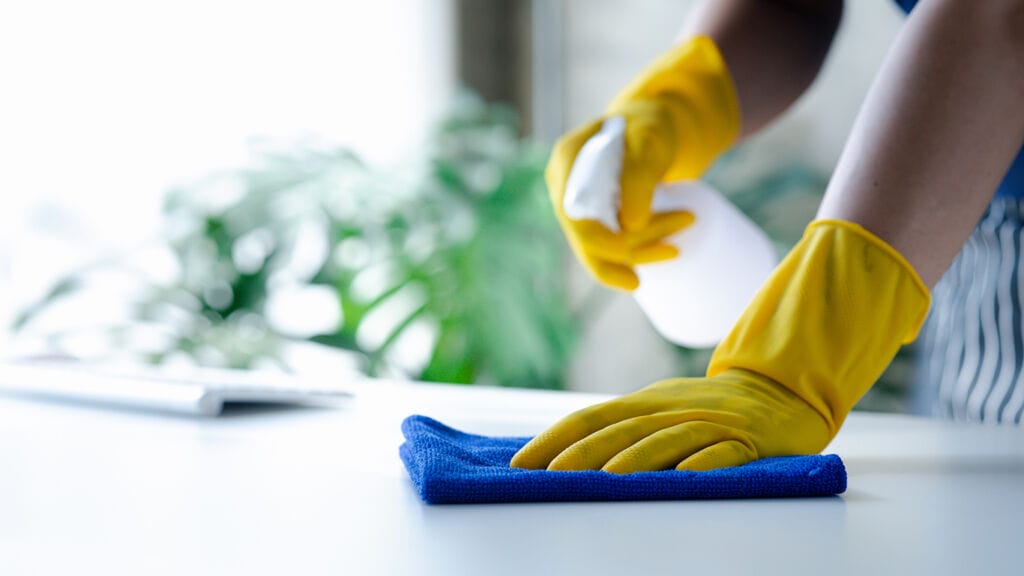
3. Separate Work by Frequency
Daily Tasks
- Remove trash and recycling, replace liners, and address visible spills.
- Clean and restock restrooms, including soap, paper products, and sanitary supplies.
- Clean high-touch points such as door handles, faucets, elevator buttons, shared phones, and copier panels.
- Wipe food-contact surfaces, tables, sinks, and appliance handles in break rooms.
- Vacuum entry mats and high-traffic carpet, then sweep or mop hard-floor entryways.
- Spot-clean glass, doors, walls, and reception surfaces during business hours.
Weekly and Monthly Tasks
- Weekly: Dust furniture, ledges, sills, baseboards, and interior glass. Detail conference rooms, shared equipment, appliance exteriors, and areas beneath movable furniture.
- Monthly: Dust vents, light fixtures, ceiling corners, blinds, and high surfaces. Inspect floor finish, detail upholstery where appropriate, and clean appliance interiors on an established rotation.
- Periodic: Plan carpet extraction, hard-floor refinishing, exterior or high-reach window cleaning, and post-construction detailing before deterioration becomes difficult or costly to correct.
4. Build Room-Specific Checklists
Each room should have a short checklist written in clear action language. In restrooms, list toilets, urinals, sinks, mirrors, partitions, floors, dispensers, flush handles, stall locks, and restocking. High-traffic restrooms may require several inspections per day rather than one end-of-shift service.
For break rooms and kitchens, distinguish food-safe surface work from general cleaning. Include counters, tables, sinks, refrigerator handles, microwaves, faucets, waste removal, and a policy for abandoned food. At workstations, identify which desks or devices staff may clean and which require user approval. Shared keyboards, phones, touchscreens, and conference equipment deserve special attention in hybrid workplaces.
Entryways and common areas need frequent visual checks. Focus on glass, door handles, mats, floors, reception counters, and elevator controls. Increase mat vacuuming and wet-floor response during snowy, rainy, or dusty conditions to protect both appearance and slip resistance.
5. Put Safety Rules Into Every Task
A reliable schedule includes the correct product, tools, personal protective equipment, dilution instructions, required contact time, and disposal method. Never mix chemicals. Keep products labeled and stored securely, make Safety Data Sheets accessible, and use wet-floor signs, cord management, and electrical precautions whenever needed.
Training matters as much as the checklist. Workers should understand labels, ventilation needs, emergency procedures, and the limits of the products they use. Employers can use OSHA’s hazard communication requirements as a reference when organizing chemical information, employee training, and safe handling procedures.
6. Assign Owners, Times, and Quality Standards
Give every task an owner, a target completion time, and a standard that can be observed. “Disinfect faucet handles and refill soap dispenser” is more useful than “clean restroom.” Use checkboxes, initials, timestamps, and notes for locked rooms, damaged surfaces, missing supplies, or repair needs.
Choose a format people will actually use. Paper checklists can work well in a small facility with a simple layout. Spreadsheets, mobile apps, and QR-code systems are often better for multi-shift buildings because they can capture photos, alerts, inspection results, and real-time updates.
7. Inspect, Gather Feedback, and Adjust
Schedule quick daily walkthroughs and more detailed weekly or monthly inspections. Score priority areas for appearance, odor, floor condition, restocking, safety, and completion quality. Track repeat complaints by location and time, since recurring issues usually point to an unrealistic frequency, poor access to supplies, or an unclear task standard.
Ask the cleaning team what takes too long, which tools are ineffective, and where access problems occur. Then update the schedule when occupancy, layout, weather, operating hours, or facility use change.
LEARN MORE: Arizona earns 19 Michelin Guide selections in inaugural Southwest Guide
Common Questions
How often should a commercial building be cleaned?
Frequency depends on facility type, traffic, occupancy, risk, and budget. Restrooms, entryways, food areas, high-touch surfaces, and high-traffic floors commonly need daily care, while low-use offices may need less frequent detail work.
What is the difference between cleaning and disinfecting?
Cleaning removes soil, dust, and debris. Disinfecting uses an appropriate product on a suitable surface to reduce harmful microorganisms. Both should follow the product label and the surface manufacturer’s instructions.
When should a business seek professional support?
Consider outside support for large facilities, multiple shifts, specialized floors, strict sanitation expectations, construction dust, or limited in-house staffing. Compare providers by training, safety practices, scope, communication, insurance, and inspection methods, not price alone.
Turn the Schedule Into a Routine
The best cleaning schedule reflects the real building, not a generic checklist. Map the facility, prioritize risk and traffic, assign clear responsibilities, add safety controls, and review results every month. That approach creates cleaner, safer, more welcoming spaces while keeping labor focused on the work that matters most.