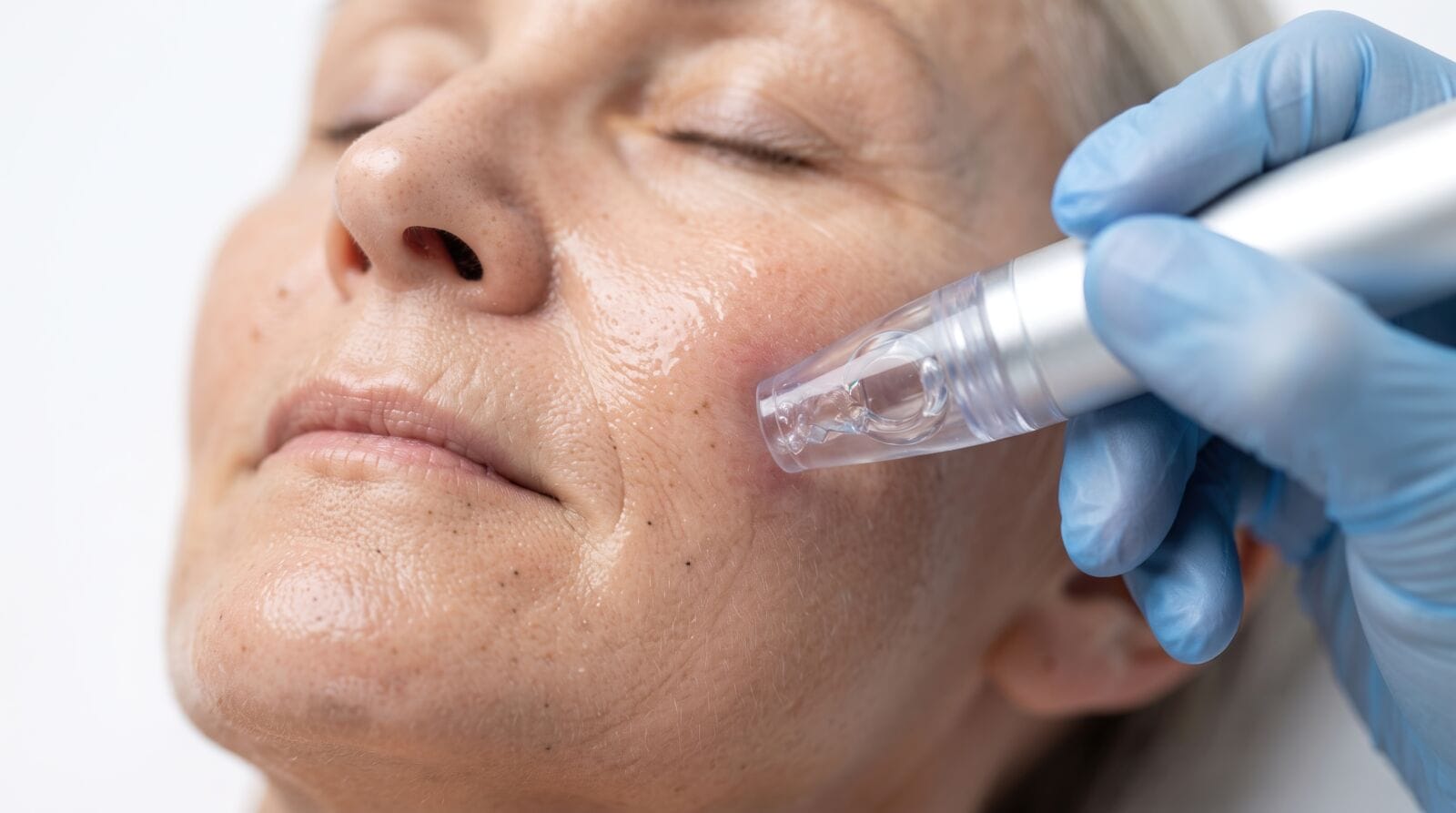
Arizona’s climate is brutal on skin. Low humidity, intense UV exposure, and hard water combine to accelerate dehydration, dullness, and clogged pores — which is one reason the Phoenix metro area has become one of the fastest-growing med spa and facial-treatment markets in the country. Among the treatments driving that growth, one category stands out for both client demand and operator economics: the hydro dermabrasion machine.
This guide is written for two audiences at once: spa owners evaluating whether hydro dermabrasion deserves a place on their treatment menu, and clients deciding whether the treatment itself is worth booking. Both groups tend to ask the same questions — so we’ll answer them together.
What Is Hydro Dermabrasion, Exactly?
Hydro dermabrasion (also marketed as aqua peeling, hydra-facial-style treatment, or wet dermabrasion) combines three steps in a single session:
Gentle exfoliation — a spiral or flat treatment tip physically lifts away dead skin cells, similar to classic microdermabrasion but far less abrasive.
Hydraulic cleansing — a water- or serum-based solution is infused and suctioned through the same tip, flushing out sebum, blackheads, and debris from pores without manual extraction.
Serum delivery — nourishing actives (hyaluronic acid, salicylic acid, vitamin C, or antioxidants) are pushed into freshly prepped skin at the end of the circuit.
The result is what clients typically describe as “glowing skin with zero downtime.” There’s no crystalline spray, no aggressive vacuum, and no post-treatment redness that lasts past lunch — which is precisely why it pairs so well with Arizona’s outdoor lifestyle. A client can book a session at lunch and head back to a hike at Camelback Mountain the same afternoon.
Why the Category Is Booming in Spa Menus
From an operator’s perspective, hydro dermabrasion has three economic properties that make it unusually attractive:
High frequency, low friction. Because it’s comfortable and needs no recovery time, clients return every 4–6 weeks instead of once or twice a year.
Broad eligibility. Unlike aggressive resurfacing, it’s suitable for most skin types, including sensitive and darker Fitzpatrick skin tones that are common in the Southwest.
Modular upsells. Most professional units are multi-functional — one base machine supports hydra-peel tips, RF, ultrasound, oxygen spray, or cold hammer handpieces, meaning one device can anchor several menu items.
The equipment market has responded. Today you can find hydro dermabrasion systems at nearly every price point, from entry-level 6-in-1 units to full 8-in-1 professional towers that replace an entire treatment room’s worth of single-purpose devices.
What to Look for in a Professional Hydro Dermabrasion Machine
Before any spa owner signs a purchase order, we recommend checking five things:
Tip quality and availability. Proprietary tips that are expensive or back-ordered will eat your margin. Confirm consumable pricing up front.
Suction control granularity. Client comfort depends on adjustable vacuum levels; fixed-suction budget units tend to cause bruising or discomfort.
True multi-functionality. Verify that each additional handpiece is independently useful, not a gimmick. A well-built 8-in-1 unit should cover cleansing, exfoliation, infusion, RF skin tightening, and cooling relief in one workflow.
Warranty and parts support. A machine that earns revenue daily cannot sit broken for three weeks awaiting overseas parts.
Training resources. The treatment is technique-sensitive; suppliers that include protocol guides and training video access deliver better outcomes for your clients.
Two Configurations Worth Comparing
To make this concrete, let’s compare two representative professional systems that cover the two most common buyer profiles — the compact-salon buyer and the full-service med spa buyer.
For compact salons and treatment-room efficiency
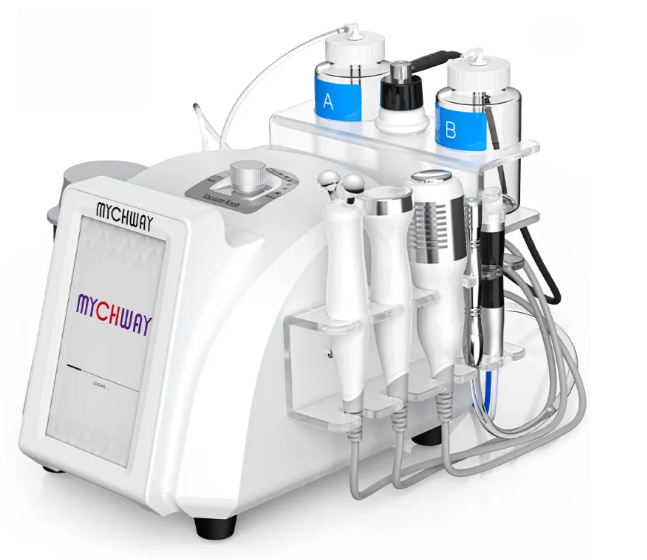
The myChway FC-68S1 Hydro Dermabrasion System is built around the core wet-abrasion circuit: aqua peeling, deep cleansing, and serum infusion, supplemented by auxiliary handpieces for broader facial protocols. Its strengths are a straightforward operator workflow and a compact footprint — a sensible fit for solo estheticians, destination spas in resort towns like Scottsdale and Sedona, or studios where one room must serve multiple treatment types.
For full-service med spas
The 8-in-1 Professional Hydro Dermabrasion Machine targets busier practices that want a single tower to anchor an entire facial menu. The expanded handpiece set supports deeper protocols — combining hydro cleansing with skin-rejuvenation modalities so practitioners can build tiered treatments (express glow, signature facial, premium anti-aging) from one device. For spas running 10+ facial sessions per day, consolidating to one platform reduces both equipment clutter and per-treatment consumable complexity.
In short: if your volume is moderate and your space is tight, the aqua-peeling-focused configuration is the better value; if hydro facials are (or will become) your menu’s centerpiece, the professional tower configuration pays for itself faster.
For Clients: What a Session Actually Feels Like
If you’re on the client side of this decision, here’s what to expect:
Duration: 30–45 minutes, including cleansing and finishing serum.
Sensation: a cool, wet “pounding” feeling as the tip passes over the skin — most clients find it relaxing rather than uncomfortable.
Visible results: immediate glow and softened blackheads after one session; texture and tone improvements accumulate over a course of 3–6 sessions.
Safety notes: it is not a treatment for active severe acne flare-ups, rosacea flare, or broken skin — a competent provider will triage first. Always confirm your provider uses medical-grade, individually sanitized tips.
Frequently Asked Questions
Is hydro dermabrasion better than microdermabrasion?
For most clients, yes — it exfoliates with water and serum instead of crystals or aggressive vacuum, so it’s gentler and simultaneously hydrates. Microdermabrasion still has a place for thicker, sun-damaged skin, which is one more reason Arizona clinics often offer both.
How often should I get a hydro facial?
Every 4–6 weeks for maintenance; weekly sessions for the first month are common when addressing congestion or dullness.
Can it be combined with other treatments?
Yes. Hydro dermabrasion is the standard “prep” step before LED therapy, RF tightening, and light peels. Avoid combining with ablative laser resurfacing in the same session.
How much does a professional hydro dermabrasion machine cost?
Prices vary widely by configuration. Entry-level 6-in-1 units typically start around a few hundred dollars, while full 8-in-1 professional towers range from roughly 1,000to1,000to3,000 depending on handpiece count, suction precision, and warranty coverage. For a spa charging 120–120–180 per session, most owners recover the investment within 20–40 paid treatments.
Does hydro dermabrasion hurt, and is there downtime?
No — most clients describe the sensation as a cool, wet massage. There is no downtime: you can apply makeup, exercise, and return to normal activities immediately. Mild temporary pinkness may appear on very sensitive skin but usually fades within an hour.
Can I use it at home, or is it strictly a salon treatment?
Home-use facial cleansing devices exist, but they do not replicate the suction strength, tip precision, or sterile consumable circuit of professional equipment. For meaningful results — especially for congestion, blackheads, and texture — professional sessions are significantly more effective, and the treatments described in this article are designed for trained estheticians.
Final Take
Hydro dermabrasion sits in a rare sweet spot: clients love it because it’s comfortable and immediately rewarding, and operators love it because it’s repeatable, broadly eligible, and consolidates multiple devices into one platform. For Arizona’s climate and its booming wellness market, it’s one of the few treatment categories where client demand, operational economics, and climate logic all point in the same direction. Whether you’re building a treatment menu or choosing your next facial appointment, the category deserves a serious look.