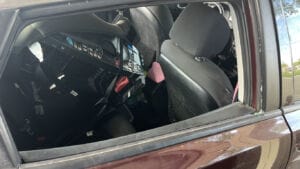
Life doesn’t announce its turning points. One minute, the world is stable and predictable; the next, it is fractured by the screech of tires or an unexpected fall. In the wake of a catastrophic injury, like one resulting from a Downey car accident, time itself seems to warp, slowing to the rhythm of a heart monitor and speeding through sleepless nights. The immediate focus is singular: survival. A family’s entire existence shrinks to the confines of a hospital room, their conversations dominated by medical jargon and hushed prayers. The long-term implications—the financial devastation, the emotional scarring, the bureaucratic battles ahead—are an unimaginable fog. Everything that once mattered is eclipsed by the raw, urgent need to keep a loved one here. This new reality is all-consuming, a crisis that leaves no room for anything but the present moment. In this crucible of fear and uncertainty, families are at their most vulnerable, completely unprepared for the complex journey that has just begun.
LOCAL NEWS: 10 things you may not know are manufactured in Arizona
INDUSTRY INSIGHTS: Want more news like this? Get our free newsletter here
The Labyrinth of a Claim: First Steps and Overwhelming Demands
Just as the family begins to find a fragile rhythm in their new reality, a second front opens. The administrative onslaught begins with a trickle and quickly becomes a flood. Phones ring with calls from insurance adjusters, and the mailbox fills with a dizzying array of forms, requests for statements, and authorization documents from hospitals and specialists. Suddenly, a family already stretched to its emotional and physical limits is expected to become expert record-keepers.
Immediate administrative demands often include:
- Fielding persistent calls from multiple insurance adjusters seeking recorded statements.
- Completing complex and often confusing medical authorization and claim forms under tight deadlines.
- Gathering and organizing an overwhelming volume of bills, medical records, and official reports.
- Tracking every single expense related to the injury, from prescriptions to travel for appointments.
- Recounting the traumatic details of the accident repeatedly for various official purposes.
They are tasked with documenting every conversation, preserving every receipt, and recalling traumatic details with perfect clarity. This process is not designed for people in crisis. It demands a level of organization and emotional detachment that is simply impossible when one’s focus is on a loved one’s pain and recovery. This bureaucratic labyrinth adds a profound layer of stress, transforming a personal tragedy into a relentless and confusing administrative burden that feels both invasive and cruelly timed.
The Adversarial System: Why “Help” from Insurers Can Fall Short
Into this chaos, the insurance adjuster often presents as a voice of calm and assistance, offering to “take care of everything.” However, families must understand the fundamental dynamic at play. Insurance carriers are for-profit corporations with a primary fiduciary duty to their shareholders, not to the injured party. Their business model is built on a simple principle: collect more in premiums than is paid out in claims. The adjuster’s role, therefore, is to resolve the claim for the lowest possible amount. They may request a recorded statement, hoping to capture comments that could later be used to assign partial blame or downplay the injury’s severity. They might also extend a quick settlement offer that seems substantial at first glance but fails to account for future surgeries, long-term therapy, or a lifetime of lost earning potential. With skilled car accident representation LA families can avoid this severe and immediate disadvantage in a high-stakes personal injury claim.
Finding a Navigator: The Role of Specialized Legal Guidance
This is precisely where professional legal guidance becomes a lifeline. An experienced attorney steps in to serve as a shield and a strategist, immediately halting the direct communication from insurance companies and taking on the entire administrative burden. This simple act allows the family to redirect all their energy toward healing. Beyond managing paperwork, a skilled legal advocate understands how to build a case that reflects the true and total cost of the injury.
They work with medical experts, life-care planners, and economists to calculate not just current bills, but the projected costs of future care, necessary home modifications, and diminished earning capacity. They meticulously gather evidence and negotiate from a position of strength. The value of local expertise cannot be overstated; a skilled accident attorney Pasadena will be intimately familiar with the local court system, respected medical specialists, and opposing counsel, leveraging this knowledge to construct the most compelling case possible for their client.
Conclusion
The path to recovery after a severe injury is a dual journey. One path is intensely personal, paved with physical therapy, emotional healing, and the difficult work of adapting to a new normal. The other is a complex legal and financial marathon that no family should have to run alone. Entrusting this second journey to a dedicated professional is not an act of aggression; it is an act of preservation. It is about acknowledging that a family’s primary job is to support one another, not to master the intricacies of tort law or fight with claims adjusters. By securing expert guidance, a family reclaims its most valuable resource: the focus and energy needed to rebuild their lives.