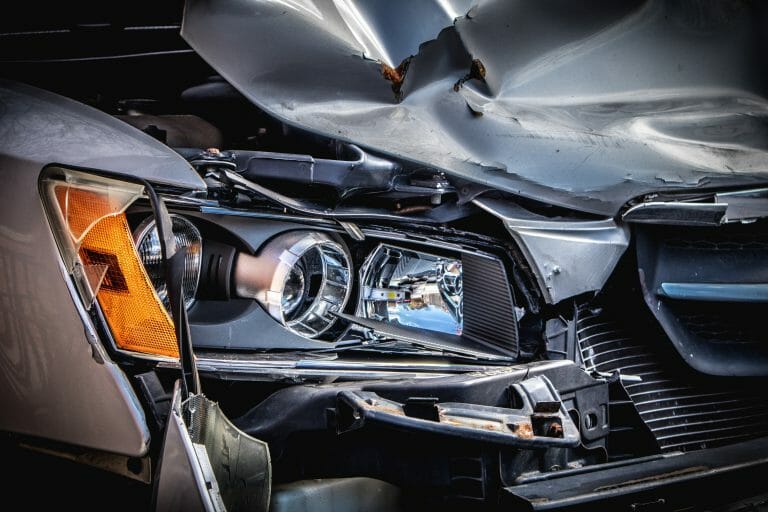
When people think about traffic accidents, they usually focus on injuries, damaged cars, or the shock of the moment. What often gets overlooked is the financial impact that follows. A single accident can create a chain of expenses that affects not only the people involved but also businesses, insurance companies, and even local governments.
In this article, we’ll look at how traffic accidents and personal injury claims create economic pressure at different levels, from individual households to the broader economy.
1. Immediate Financial Costs for Victims
The first economic impact of a traffic accident is usually felt by the people directly involved. Right after a crash, victims often face several expenses at the same time. Medical treatment is usually the biggest one. Emergency room visits, scans, medication, and follow-up care can quickly add up. Even when injuries seem small at first, doctor visits and therapy sessions may still be needed.
Anthony J. Vecchio, Esq. New Jersey DUI & Criminal Defense Attorney at Law Office of Anthony J. Vecchio, LLC, explains, “After an accident, the financial strain often begins long before any legal questions are resolved. Medical costs, repair bills, and other immediate expenses can quickly place pressure on the individuals involved.”
Vehicle damage is another major cost. Cars today are expensive to repair because of advanced sensors, cameras, and electronics. Even a moderate collision can lead to repair bills in the thousands. In many cases, people also need a rental vehicle while their car is being fixed, which adds another expense.
Recent repair data shows how these costs have increased over time. The average final repair cost after a non-fault accident has risen from about $4,100 in 2019 to more than $5,200 in 2025.
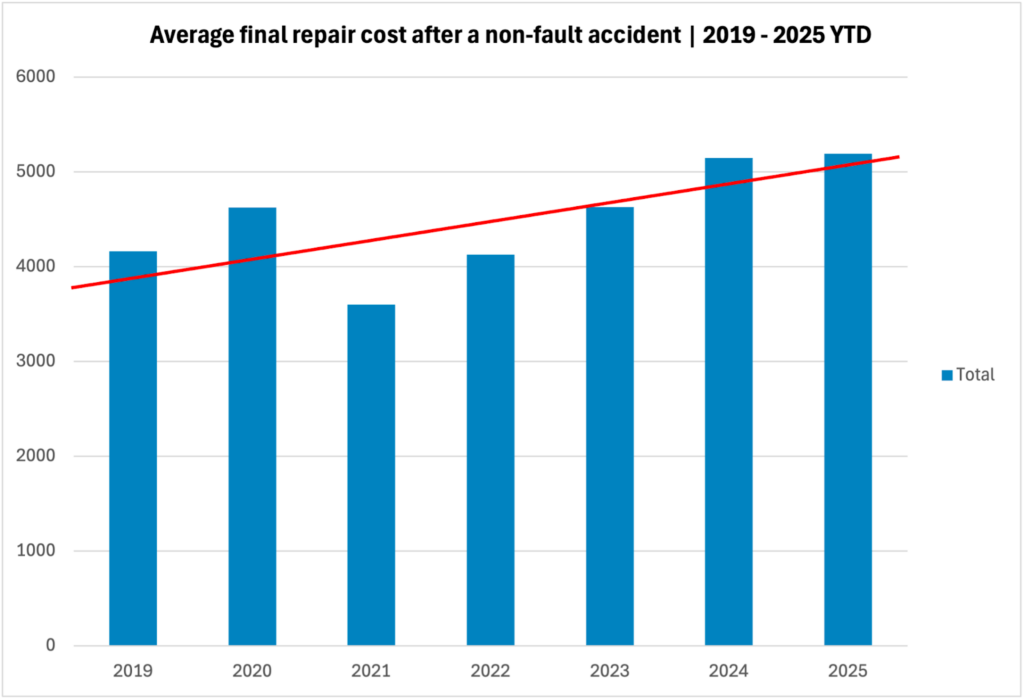
This steady increase shows how modern vehicles require more complex and costly repairs after collisions.
On top of that, injuries may force someone to miss work for days or even weeks. When lost wages combine with medical bills and repair costs, the financial pressure can build quickly. For many households, the economic impact of a single accident starts almost immediately and can take months to fully recover from.
2. Long-Term Medical and Rehabilitation Expenses
The financial impact of a traffic accident often continues long after the vehicles are repaired. Many injuries require ongoing treatment, and those costs can stretch for months or even years. Physical therapy, follow-up doctor visits, medications, and rehabilitation programs all add to the overall expense.
Ken Fiedler, Founder of Fiedler Law, adds, “In many accident cases, the long-term medical costs become clearer only after the initial treatment phase. Ongoing care and rehabilitation can significantly increase the overall financial impact on victims and their families.”
Some injuries also reduce a person’s ability to work. Back injuries, head trauma, and fractures can make it difficult to return to normal routines right away. In more serious cases, people may have to reduce their working hours or even change careers completely. This creates a second layer of financial pressure because income drops while medical expenses continue.
Families are often affected as well. A spouse or relative may need to take time off work to help with recovery or attend medical appointments. Transportation costs for treatments and specialist visits can also increase the financial burden.
Because these costs develop slowly, they are sometimes underestimated in the early stages of a claim. What seems like a manageable injury in the first few weeks may turn into long-term care needs later. This is why the economic effect of accidents doesn’t stop with the initial hospital visit.
In an interview, Justin Schnitzer, Founder & Managing Partner at The Law Office of Justin Schnitzer, shares, “The financial consequences of an accident often unfold over time. Ongoing medical care, reduced earning capacity, and related expenses can all affect a person’s financial stability long after the crash itself.”
3. Rising Insurance Costs Across the System
Traffic accidents also affect the wider insurance system. When insurers handle large numbers of claims every year, those costs are eventually reflected in insurance premiums. In simple terms, the more accidents there are, the more money insurance companies must pay out in repairs, medical costs, and settlements.
Robert Cottle, Las Vegas Pedestrian Accident Lawyers at The Cottle Firm, shares, “Accidents don’t just impact the individuals involved. The financial consequences often ripple through the insurance system, influencing how risks are evaluated and how policies are priced.”
Over time, those payouts influence how policies are calculated. Insurance companies study accident trends, claim amounts, and repair costs to estimate future risk. If claims increase, premiums often rise as well.
Recent insurance pricing trends also reflect this pressure. National auto insurance rates have increased sharply in recent years. For example, rate changes rose by about 11.57% in 2023 and peaked around 17.13% in 2024, before slowing to roughly 7.56% in 2025.
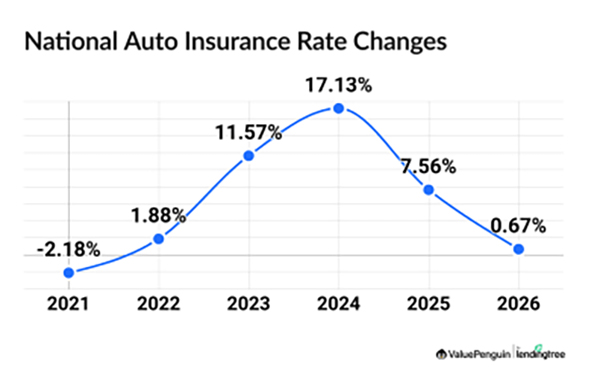
These increases are closely tied to rising repair costs, medical expenses, and the growing number of accident-related claims.
These numbers highlight how accidents affect more than just the people directly involved. Insurance companies must balance these massive payouts across millions of policyholders. As a result, even drivers who were never in an accident may see higher premiums over time.
4. Productivity Loss for Businesses and Workers
Traffic accidents also affect workplaces and businesses. When someone is injured in a crash, they may need days or weeks away from work to recover. For employees, this means lost wages. For companies, it can mean disrupted schedules, delayed projects, and lower productivity.
Stephen J. Bardol, Esq, Managing Attorney of Bardol Law Firm, adds, “When accidents lead to injuries, the effects often extend beyond the individuals involved. Time away from work and ongoing recovery can create financial and operational challenges for both employees and the organizations they work for.”
In some industries, especially transportation, logistics, and delivery services, accidents can have an even bigger impact. A damaged vehicle may take days or weeks to repair, which interrupts operations. Companies may need to rent replacement vehicles or shift workloads to other employees.
Small businesses often feel this impact the most. If a key worker is injured and unable to return quickly, the company may struggle to maintain normal operations. Hiring temporary staff or adjusting schedules can increase operating costs.
There are also indirect losses. Missed deadlines, delayed deliveries, and reduced service capacity can affect customer relationships. Over time, these disruptions add up and influence the financial performance of businesses.
According to Bill Sanders, from Fast People Search, “When incidents affect businesses or communities, accurate information becomes important for understanding the broader impact. Clear records help organizations and individuals evaluate how events influence operations and responsibilities.”
5. Legal and Administrative Costs of Personal Injury Claims
Another major economic impact of traffic accidents comes from the legal process. When injuries are involved, many cases lead to insurance disputes or personal injury claims. These situations require time, legal expertise, and administrative resources to resolve.
Lawyers, investigators, insurance adjusters, and court systems all become part of the process. Legal fees, case preparation, expert witnesses, and settlement negotiations add additional costs to the overall financial impact of an accident. Timothy Allen, Sr. Corporate Investigator at Oberheiden P.C., adds, “Even if your cases do not go to court, insurance companies still spend significant time reviewing medical reports, accident evidence, and compensation requests. That’s why legal help is a must.”
A well-known example shows how serious these cases can become. In 2014, comedian Tracy Morgan was severely injured in a highway crash involving a truck operated by Walmart.
The accident led to a high-profile lawsuit and a large settlement. The case also brought national attention to driver fatigue and safety policies in commercial trucking.
Situations like this show how traffic accidents can extend far beyond the crash itself. Legal claims, investigations, and settlements can take months or even years to resolve, adding another layer to the overall economic impact of road accidents.
6. Government and Public Infrastructure Costs
Traffic accidents also place a financial burden on governments and public services. When a crash happens, several public systems are involved almost immediately. Emergency responders, including police, firefighters, and paramedics, are usually the first to arrive at the scene. Their time, equipment, and resources all come with costs.
After the immediate response, there are often additional expenses. Roads may need to be cleaned or repaired, especially if the accident caused debris, oil spills, or structural damage to barriers and signs. In some cases, traffic signals, guardrails, or streetlights must be replaced.
Hospitals and public healthcare systems may also absorb part of the financial impact. When victims receive emergency treatment, especially if they do not have adequate insurance coverage, some of those costs may fall on publicly funded healthcare systems.
Bill Sanders, from QuickPeopleLookup, explains, “When incidents involve multiple public services, clear documentation becomes essential. Accurate records help agencies understand what resources were used and how events affected the broader community.”
Investigating accidents also requires time and resources. Police departments must document the scene, prepare reports, and sometimes conduct deeper investigations. All of these activities involve personnel hours and administrative costs.
7. Broader Economic Ripple Effects
The economic impact of traffic accidents doesn’t stop with the people involved or the organizations handling the claims. Accidents can also affect the wider economy in ways that are less visible but still significant.
When individuals face large medical bills or vehicle repair costs, they often reduce spending in other areas. Money that might have been used for travel, shopping, or local services instead goes toward recovery and repairs. This shift can affect small businesses and local economies.
Lindsay Redd, News Director, Local Accident Reports’ Arizona crash data, says, “Traffic accidents create ripple effects that extend beyond individual injuries. Lost productivity, insurance costs, medical expenses, and litigation impact local economies significantly. By compiling and publishing localized crash data, Local Accident Reports contribute to greater economic awareness around traffic safety. Businesses and policymakers can analyze trends and respond strategically. Data transparency plays a key role in understanding broader financial consequences.”
Large numbers of accidents across a country can create noticeable economic pressure. Lost productivity, higher insurance costs, and increased healthcare spending all combine to influence the broader economy.
Wrapping Up
Traffic accidents affect much more than the people involved in the crash. The financial impact spreads across families, businesses, insurance companies, and public services. Medical bills, vehicle repairs, lost work time, and legal claims all add pressure that can last for months or even years.
When many accidents happen across a country, these costs grow into a larger economic issue. That’s why road safety matters beyond personal safety. Fewer accidents mean lower financial stress for households, lower insurance costs, and fewer burdens on public systems.