For 17-year-old Shilo Karakkattu, scam calls weren’t an abstract threat — they were weekly disruptions in his grandparents’ Eastmark home.
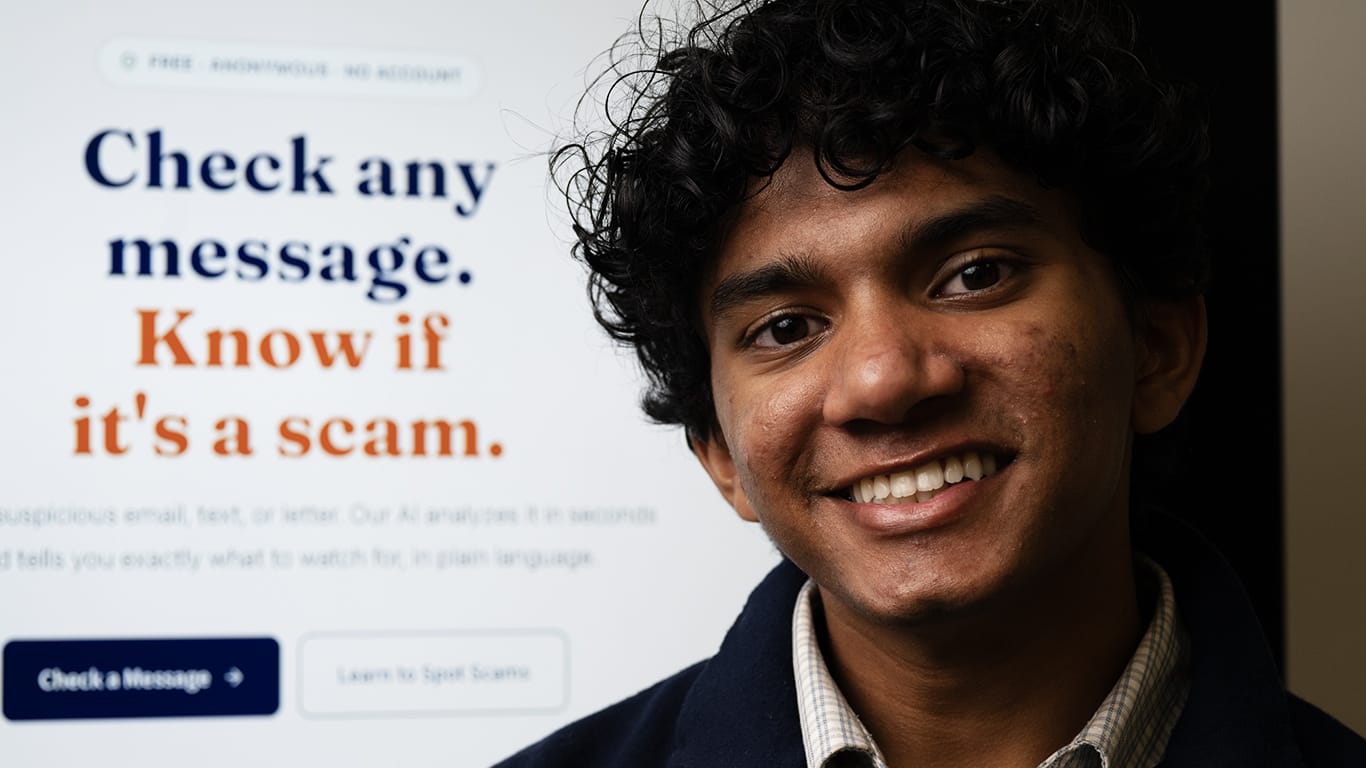
After watching them navigate everything from fake Medicare calls to fraudsters posing as government agencies, the BASIS Mesa junior built ScamSafe, an AI‑powered website that helps seniors detect scams.
“They’ll get a call that sounds so convincing,” Karakkattu said. “They’re so urgent to call me and say, ‘How do we send these people money?’
“Even I get calls saying I’m on Medicare. I’m definitely not. I’m 17.”
DEEPER DIVE: Read all the Ranking Arizona Top 10 lists here
INDUSTRY INSIGHTS: Want more news like this? Get our free newsletter here
ScamSafe analyzes suspicious messages, screenshots and phone calls. It’s intentionally simple, with large text options, multiple languages, and a clean interface designed for older adults.
The site can identify common scam types, flag red‑flag language, and explain why a message is suspicious. Karakkattu trained the model himself.
“I try to keep everything very simplistic,” he said, demonstrating the tool. “They can talk and describe what they saw, or upload a screenshot, and it’ll analyze the message. Everything is anonymous — no records saved.”
Karakkattu’s interest in STEM goes far beyond ScamSafe. A junior at BASIS Mesa, he recently placed first in his category at the Arizona Science Fair for an environmental engineering project. He spent last summer working at the Autism Discovery and Treatment Foundation research lab in Phoenix — an experience that shaped his long‑term goals.
“I would 100% want to do that for the rest of my life,” he said. “When you look at the impact of a doctor compared to the impact of a researcher who’s manufacturing the medicine.”
His dream is to build a company like TGen — a research institute currently helping millions.
Karakkattu’s drive is rooted in family. His parents — a nurse practitioner and an accountant — work long hours, so he is the primary helper for his grandparents, who moved from Philadelphia to Arizona a few years ago. He helps with everything from post-surgery care to arthritis flare‑ups to the everyday tech frustrations that sparked ScamSafe.
“I don’t mind it. My grandparents are very good people,” he said with a smile.
His older brother, Shaun, a Vanderbilt graduate and Forbes 30 Under 30 honoree for Arizona, has also influenced his path toward global initiatives. Shilo worked on UN-related projects and will travel to Mongolia this summer to present a policy brief under Tomorrow in Focus, which “uses AI to turn critical initiatives into visual experiences that spark action beyond the echo chamber.”
For now, ScamSafe is his focus. He’s already begun outreach with local and national organizations, including R.O.S.E. (Resources/Outreach to Safeguard the Elderly) and NAPSA (National Adult Protective Services Association), to expand its reach. He’s constantly updating the tool, refining the AI model, and adding features based on community feedback.
“When I die, I want my impact on the world to be great,” he said. “I want to help as many people as I can.”