
Consistency in complex chemical operations is crucial for maintaining product quality, ensuring workplace safety, and adhering to stringent regulatory compliance. As chemical manufacturing evolves, effective quality control (QC) and rigorous audits are becoming increasingly critical for ensuring that processes meet the evolving demands of the industry. When organizations partner with an experienced chemical plant operations consultant, they can benefit from specialized expertise that streamlines processes and reduces risks, ensuring high levels of operational reliability and compliance.
Despite technological advances, the intricate nature of chemical processes poses unique challenges—raw material variability, equipment wear, and regulatory pressures all impact the final product. Comprehensive QC frameworks, combined with consistent audit schedules, help safeguard outcomes and foster a proactive safety culture throughout all levels of an organization.
Effective audit and control systems not only limit financial costs and recalls but also protect a company’s reputation and relationships with customers and regulators. By creating an environment that facilitates the early detection and correction of errors, chemical manufacturers can maintain operational excellence and foster customer trust. In today’s regulatory environment, leveraging the integrated perspective of chemical management consulting firms can reveal opportunities for continuous improvement across complex production settings.
DEEPER DIVE: Top 10 Arizona ZIP codes people are moving to in 2025
LOCAL NEWS: 100 best places to work and live in Arizona for 2025
Understanding Quality Control in Chemical Manufacturing
Quality control in chemical manufacturing refers to the set of processes and activities used to ensure that every product meets clearly defined quality criteria. This discipline involves the systematic sampling and testing of raw materials, as well as in-process checks and rigorous evaluation of finished products. The primary objective is to identify deviations from specifications promptly—before any substandard product advances in the value chain.
Engaging in chemical management consulting can strengthen these quality control efforts by optimizing compliance strategies, improving material handling protocols, and aligning production practices with regulatory and environmental standards.
QC starts from the supplier level, with raw material certifications and traceability. Batch records are maintained meticulously so that each production step can be reviewed in the event of a deviation or recall. Modern QC systems often employ real-time monitoring and statistical process controls, increasing the speed and reliability of detecting process variations.
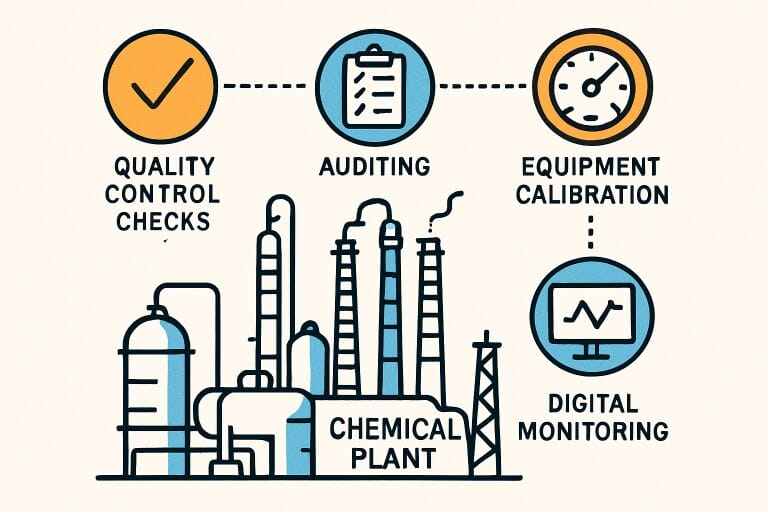
The Role of Audits in Maintaining Standards
Internal and external audits are key for evaluating the effectiveness and completeness of quality control systems. These audits assess compliance with both internal SOPs and regulatory requirements, providing an independent review that can uncover inefficiencies, inconsistencies, or nonconforming practices.
Auditing also fosters a culture of continuous improvement, as findings are converted into actionable recommendations and corrective actions. Frequent and systematic audits create accountability and support a dynamic process for addressing any shifts in industry standards or regulatory landscapes.
Key Components of Effective Quality Control
Standard Operating Procedures (SOPs)
SOPs are detailed, written instructions outlining every key step in chemical operations. By standardizing tasks, SOPs minimize the risk of human error, support high-quality reproducibility, and provide a framework for employee training and audits.
Equipment Calibration
Proper calibration schedules ensure that all instruments and equipment perform within defined tolerances. Maintaining calibration prevents measurement drift—one of the leading causes of process variation and product defects in chemical environments.
Data Integrity
Accurate, complete, and tamper-proof electronic records are vital for tracing products throughout their lifecycle. Data integrity safeguards compliance, aids in troubleshooting, and creates a defensible position in regulatory and legal settings.
Challenges in Ensuring Consistency
Chemical plants face several sources of inconsistency, including variability in raw material supply, aging infrastructure, equipment failures, and inevitable human error. Addressing these issues requires a proactive stance: preventive maintenance strategies, recurring workforce training, and robust real-time monitoring systems all become indispensable for minimizing operational risks.
Balancing production efficiency with safety and compliance obligations can stretch resources. Leadership must invest in both human and technological capital to ensure that immediate pressures do not override long-term quality and safety goals.
Implementing Advanced Technologies
Recent advances in industrial digitalization are transforming how chemical manufacturers monitor and control their processes. The Industrial Internet of Things (IIoT), for example, integrates data from machinery, sensors, and control systems, allowing real-time analysis for early detection and rapid corrective action.
These technologies enable not only immediate response to deviations but also predictive maintenance and process optimization, anticipated through machine learning and big data analytics. Such integration leads to fewer disruptions, lower costs, and improved consistency from batch to batch.
Final Thoughts
Consistency in complex chemical operations can only be achieved by harmonizing robust quality control mechanisms with regular and comprehensive audits. By dedicating resources to well-defined SOPs, routine calibration, and strong data integrity—and by embracing advanced monitoring technologies—chemical manufacturers cultivate a resilient quality culture. Partnering with experts and keeping pace with industry innovations, as demonstrated by leading chemical plant operations consultants and chemical management consulting services, positions organizations at the forefront of operational excellence and compliance.