
New inventions often begin as broad wishes: a machine that understands anything, a tool that creates every format, or an assistant for every department. The danger arrives when a prototype inherits that breadth. A business team evaluating RouterBase should use its model access to answer one narrow question before building a permanent platform.
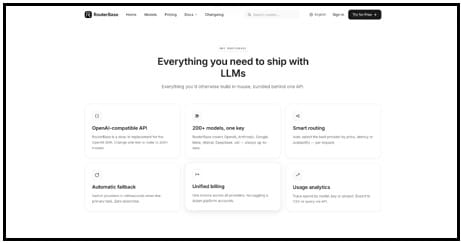
RouterBase offers an OpenAI-compatible path to more than 200 chat, image, video, and audio models. That variety makes experiments easier to start. It also makes it easy to change models, add media, and polish demos before anyone has defined what evidence would justify the feature. A five-day test puts the decision back in front of the tools.
One Business Question Prevents Prototype Feature Sprawl
The best prototype question names a user, an action, and a measurable improvement. “Can an agent turn a broker’s property notes into an acceptable first draft in under three minutes?” is testable. “Can we use generative AI in marketing?” is an invitation to collect demos.
Write the Stop Rule Before Testing Models
Set a pass threshold and a stop rule before opening the catalog. The threshold could require 40 of 50 drafts to pass a named editor’s checklist without factual correction. The stop rule could end the test if cost exceeds a fixed ceiling or if a critical disclosure is omitted twice. Both rules should reflect a business consequence, not a general feeling about output quality.
This step keeps a polished outlier from rescuing a weak batch. It also makes rejection useful. If the trial fails on one recurring issue, the team can decide whether to revise the workflow, choose a different model, or abandon the feature without arguing over personal taste.
Choose Inputs That Represent Real Operating Friction
A prototype needs a small but honest test set. Include ordinary cases, messy cases, and a few items that should be refused or escalated. Remove private customer data unless the experiment has an approved handling plan. Keep the inputs fixed while comparing routes, or the score will describe different work rather than different performance.
The Five Day Prototype Workflow Forces a Decision
The schedule is short on purpose. It gives the team enough time to define, build, test, and review one path without allowing a demonstration to become shadow production. Each day ends with an artifact another person can inspect.

Day One Locks the Question and Test Set
Name the feature owner, reviewer, users, source inputs, acceptance checklist, cost ceiling, and stop rule. Create a separate project key and apply a total credit cap that matches the experiment. The cap protects the budget even if a loop or enthusiastic tester sends more work than planned.
Do not promise a production date. The first artifact is a one-page test contract, not a roadmap. Everyone should be able to say what the prototype will not attempt. If video does not help answer the question, leave it out even though the platform supports it.
Day Two Builds the Thinnest Complete Path
Use the Playground to understand the approved model’s inputs and output before writing the smallest application path. Point the existing OpenAI-compatible client at the gateway, keep the API key on the server, and save the task or request identifier with each result. The path should include the real reviewer handoff, because a notebook output is not a business workflow.
RouterBase can reduce SDK changes during this stage. Avoid adding automatic provider switching, complex prompt management, or several modalities unless the question requires them. A thin path is easier to audit and easier to discard.
Day Three Runs Every Fixed Input Once
Process the test set without quietly replacing hard cases. Record model, request ID, credits, completion state, and output. The reviewer then marks pass, correctable, or fail and selects a specific reason. “Not good” is too vague; “invented a property feature” or “missed the required disclaimer” tells the team what broke.
When using Router Base, platform logs can help reconcile failed tasks and consumed credits. The product record should still carry the business result. A technically completed generation can fail the editorial checklist, and that distinction must survive the demo.
Days Four and Five Repeat Then Decide
Make one justified change on day four: revise the instruction, replace the model, or repair the handoff. Run the same set again. Do not change all three, because the team will not know which move affected the result. On day five, compare both runs with the original threshold and choose continue, redesign, or stop.
A continue decision should name the next risk to test, not unlock a full feature backlog. A redesign decision should state which part of the workflow changes. A stop decision should preserve the evidence so another team does not restart the same experiment from memory six months later.
Score Evidence That Survives the Demo Meeting
| Measure | Useful evidence | Misleading substitute |
| Acceptance | Named reviewer and reason code | Team applause for one output |
| Time | Request through approved result | Model response alone |
| Cost | Credits per accepted result | Cheapest listed model price |
| Reliability | Completed, failed, and retried tasks | A clean live demonstration |
| Risk | Critical errors by named category | Average quality score |
Cost per accepted result is especially useful. A cheaper model that needs heavy correction may cost more in staff time. A stronger model may be wasteful for low-risk drafts. The experiment should reveal where human work remains and whether the feature changes the total process, not merely the API bill.
Keep the Technical and Business Records Linked
Usage analytics can group spend by model, key, or project. Pair that view with the acceptance record from the application. The gateway knows what was called and charged; the reviewer knows whether the result helped. The link between those facts is what lets a manager compare options without turning the review into a debate about favorite models.
Promote Only the Controls the Test Proved
If the prototype continues, carry forward the approved input schema, model or route, credit cap, rejection reasons, reviewer, and fallback behavior that were actually exercised. Do not promote temporary files, hard-coded keys, private sample data, or assumptions about dashboard retention. Production work deserves server-side secrets and owned storage from the start.
Source: Gemini.com
A Small Test Can Support a Large Decision
RouterBase is most useful in this process as a way to reduce integration friction while keeping model choice testable. It should not become a reason to expand the question. The prototype succeeds when leaders can see the accepted outputs, failures, elapsed time, and cost together and make a clear choice.
Five days will not prove every production condition. It can prevent months of feature sprawl built around an attractive demo. Lock one business question, cap the experiment, run fixed inputs, change one variable, and decide against a written rule. That discipline is what turns model access into evidence for invention.