On the engineers who do not just build AI systems but make them trustworthy enough to depend on
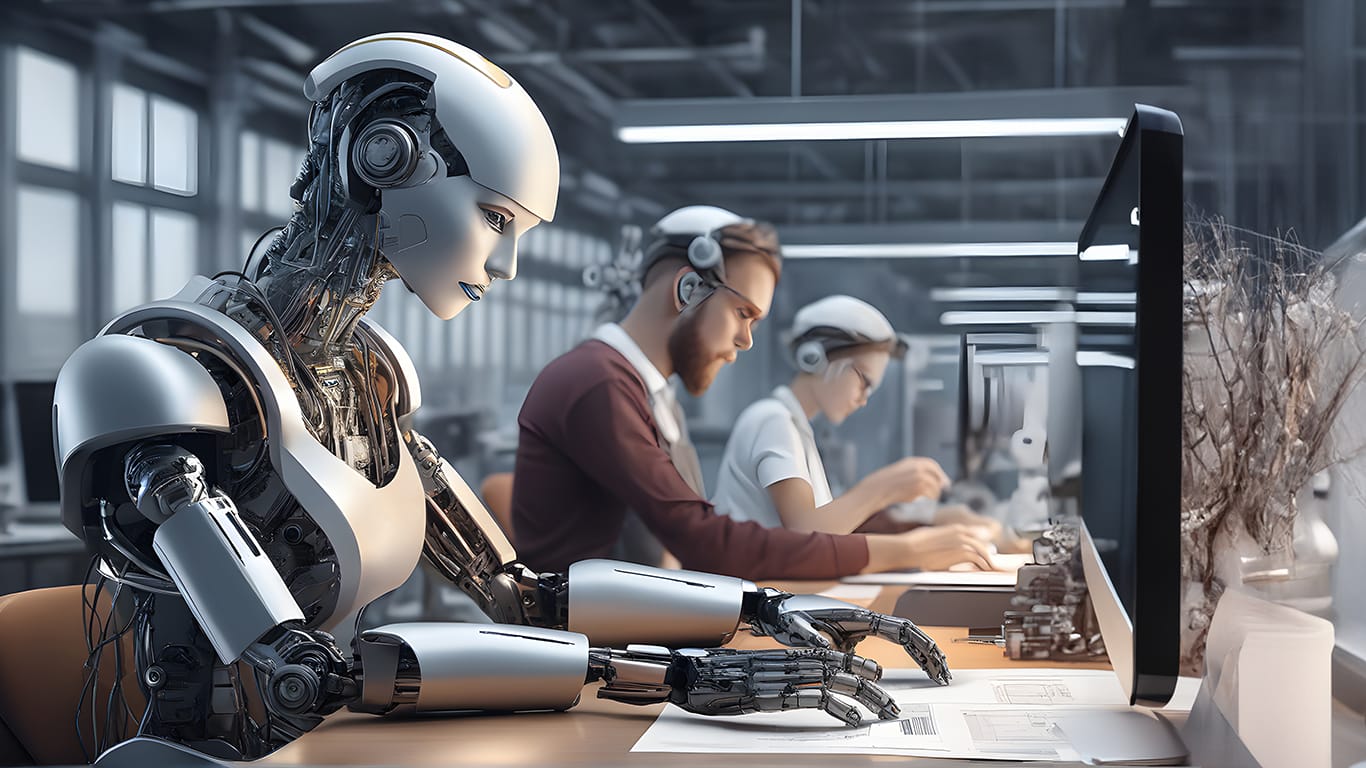
There is a version of the artificial intelligence story that focuses almost entirely on models: how large they are, how capable they are, and how quickly they improve. That version of the story is real and important. But it leaves out the layer of engineering that ultimately determines whether any of it works in the environments where organizations depend on it. Between a capable AI model and a production system that an enterprise can trust at scale sits an enormous amount of engineering work: automation frameworks, validation pipelines, cloud infrastructure, security controls, reliability testing environments, monitoring systems, and the engineers responsible for building and maintaining them. That work is less visible than the models it supports. It is not less consequential.
It is also where Trueye Tafese currently operates. The engineers who can function effectively at this intersection, who understand AI systems deeply enough to improve the reliability infrastructure surrounding them and who can do so at enterprise scale, remain uncommon. The domain demands simultaneous fluency in cloud architecture, software validation methodologies, AI systems behavior, cybersecurity principles, and large-scale automation engineering. That combination is not produced by conventional technical career paths, and the number of practitioners capable of operating credibly across all of it remains relatively small. It is precisely that scarcity that makes such engineers increasingly valuable to organizations whose operations depend on AI systems they can trust.
Industry observers who track the deployment of artificial intelligence increasingly note that reliability engineering for AI systems may become one of the defining technical challenges of the decade. Building powerful models is difficult. Building systems that consistently deliver reliable outcomes in production environments is often more difficult. Modern organizations are integrating AI into customer support operations, software development workflows, cybersecurity monitoring systems, enterprise search platforms, recommendation engines, logistics operations, and decision-support tools. As adoption expands, the question facing organizations is no longer whether an AI model can perform a task. The question is whether the surrounding infrastructure can ensure that the model performs that task accurately, securely, consistently, and reliably under real-world conditions.
This distinction between AI capability and AI dependability is becoming increasingly important. A model may perform exceptionally well in a controlled environment and still fail when exposed to production workloads, unexpected user behavior, infrastructure disruptions, integration failures, or evolving business requirements. Solving these challenges requires engineers capable of building automated validation systems, reliability frameworks, monitoring environments, regression testing pipelines, and quality assurance mechanisms that continuously evaluate system performance as technologies evolve. Industry leaders increasingly recognize that trust in AI depends not only on what models can do, but on the engineering systems that ensure they continue doing it correctly.
Much of Tafese’s recent work has focused on precisely these challenges. Her work involves the design, validation, automation, and reliability assurance of systems operating within large-scale cloud environments where software quality directly affects operational performance. In such environments, automation is not merely a productivity tool. It becomes a foundational component of trust. Automated validation frameworks enable organizations to identify defects before deployment, reduce operational risk, accelerate release cycles, and maintain confidence in systems that must perform continuously at enterprise scale. As AI becomes increasingly embedded in critical business operations, engineers capable of designing these reliability frameworks occupy an increasingly strategic role within the technology ecosystem.
In conversations with Tafese about her current work, what emerges is an engineering orientation that has been visible throughout her career, now expressed at a different level of scale and institutional consequence. Long before joining Amazon, she had established a reputation for approaching infrastructure-level technical problems with the same consistency of focus she brings to enterprise AI environments today.
Her most widely adopted innovation remains the DF-RPS 2-in-1 3D Printer and Laser PCB Plotter, a manufacturing platform whose significance has continued to grow since its introduction in 2020. The machine addressed a structural gap in engineering education and hardware prototyping infrastructure across Ethiopia and the broader African region, delivering 3D printing and laser-based PCB plotting capability within a single unified platform that required no hardware reconfiguration between modes. Where conventional dual-function manufacturing systems relied on interchangeable tool heads, creating workflow interruption, positional misalignment risk, and maintenance complexity in the workshop environments where they were most needed, Tafese built a system in which both manufacturing functions operate through integrated firmware-level control on a single custom-fabricated platform. The result was a manufacturing architecture that had not previously existed at a cost point and with a design philosophy relevant to African educational and industrial deployment.
While the machine’s educational impact has received substantial attention, its industrial significance may ultimately prove just as important. Organizations that have adopted the platform describe it as more than a fabrication tool, using it to produce mechanical and electronic components such as gears, robotic arms, custom drone frames, printed circuit boards, sensor adapters, and prototype assemblies. Users report that the platform reduces prototyping costs, shortens development timelines, and decreases dependence on external manufacturing services that are often expensive, slow, or difficult to access. Several adopters have described it as one of the first systems specifically designed around African manufacturing realities while still delivering capabilities typically associated with significantly more expensive equipment. In practical terms, the machine enabled institutions and innovators to move from design to physical production more quickly and with greater independence, accelerating innovation cycles in environments where fabrication constraints had historically slowed technological development.
Before both Amazon and the manufacturing platform, Tafese’s career had already demonstrated a pattern of solving practical technical problems through emerging technologies. At Orange Digital Center, she developed an AI-powered waste sorting system using TensorFlow Lite and a custom-trained image-classification model capable of identifying plastic waste in real time. The project demonstrated how lightweight artificial intelligence systems could be deployed outside traditional research environments to address practical operational challenges. At a time when much of the AI industry remained focused primarily on model development itself, the project emphasized implementation, showing how machine learning could be integrated into real-world workflows to improve efficiency, automate classification tasks, and support environmental sustainability objectives.
Her work in telecommunications was similarly focused on infrastructure and operational effectiveness. At Safaricom Telecommunications, one of East Africa’s largest and most influential technology companies, she contributed to software requirements development and built device tracking systems supporting enterprise-scale infrastructure management. These efforts required understanding how complex systems function under operational conditions rather than merely how they perform under ideal circumstances. The same systems-oriented thinking would later become a defining characteristic of her work across AI, cybersecurity, and reliability engineering.
Her cybersecurity research has included reverse engineering malware binaries to analyze system behavior, identify malicious functionality, and understand threat patterns. This work requires a level of technical fluency that spans software architecture, operating system interactions, security analysis, and systems behavior simultaneously. Few engineers develop meaningful expertise across cybersecurity, AI systems, manufacturing technologies, and enterprise-scale reliability engineering. Fewer still produce tangible contributions in each of those domains.
What the arc of Tafese’s career reflects is not merely breadth. Breadth alone is common enough. What is less common is the pattern underlying it. Across telecommunications systems, AI applications, cybersecurity analysis, manufacturing infrastructure, automation frameworks, and enterprise reliability environments, her work has consistently focused on the operational gap between what existing technologies were designed to do and what the environments in which they were deployed actually required. That is a specific engineering orientation, and it is the orientation that tends to produce solutions with durable practical consequences rather than solutions that are technically impressive but disconnected from real-world needs.
Engineers capable of operating meaningfully across AI systems, cloud infrastructure, cybersecurity, manufacturing technologies, and enterprise-scale reliability environments remain uncommon. The depth required within each domain individually is substantial enough that most practitioners spend their careers developing expertise in one or two while maintaining only working familiarity with the others. Demonstrating meaningful contributions across all of them, supported by adoption, implementation, and measurable impact, places an engineer within a considerably smaller category. It is the category of professionals who do not simply solve visible problems but possess the systems-level perspective necessary to identify and solve the problems that sit underneath them.
As artificial intelligence continues its transition from experimental technology to operational infrastructure, the engineers who matter most will not necessarily be those who build the largest models. They will be the engineers capable of making advanced technologies reliable enough to trust, scalable enough to deploy, and practical enough to use in the environments where organizations actually operate. Trueye Tafese has spent her career solving exactly those kinds of problems. Whether through AI-enabled systems, enterprise reliability engineering, cybersecurity analysis, telecommunications infrastructure, or manufacturing innovation, her work has consistently focused on transforming technical capability into dependable real-world performance. That is not a trajectory that emerges by chance. It is the product of a particular kind of engineering intelligence applied repeatedly, across domains, in environments where the problems were real and the consequences of solving them mattered.
Her growing influence within the cybersecurity community has also been reflected through competitive research and conference participation. In 2025, Tafese authored a research paper titled “CVE-Based Educational Labs: Enhancing Practical Skills in Cybersecurity,” which was selected for presentation at the U.S. Cyber Command’s Cyber Research and Education Conference (Cyber RECon-25). The research addressed a persistent challenge in cybersecurity education: the gap between theoretical instruction and the practical skills required to identify, exploit, analyze, and remediate real-world vulnerabilities. Rather than relying on simulated examples detached from operational environments, Tafese proposed laboratory exercises built around actual Common Vulnerabilities and Exposures (CVEs), allowing learners to engage directly with documented security weaknesses that have affected production systems. The work reflected the same engineering philosophy visible throughout her career: technical capability becomes valuable only when it can be applied reliably in real-world conditions. Selection for presentation at a conference organized under the auspices of U.S. Cyber Command placed the research before cybersecurity practitioners, researchers, educators, and defense professionals concerned with strengthening the nation’s cyber workforce and improving operational readiness.
Tafese’s capacity to design infrastructure that closes the gap between theoretical knowledge and operational readiness has recently extended into national-level defense initiatives in the United States. Through the U.S. Cyber Command’s highly selective CyberRECon Academic Engagement Program, she originated and developed research addressing a critical vulnerability in cybersecurity workforce development. Her project, titled “CVE-Based Educational Labs,” departed from the hypothetical scenarios typical of academic training. Instead, she architected structured laboratory environments built around actual Common Vulnerabilities and Exposures (CVEs), forcing practitioners to exploit, analyze, and remediate documented vulnerabilities that exist within real production systems.
The significance of this work lies in its methodology. By grounding cybersecurity training in empirically validated threat data, Tafese applied the same systems-level rigor to human infrastructure that she applies to software architecture. Submitted under the DEFENDER category, this research was evaluated directly by military mentors and Subject Matter Experts with active national security responsibilities and was formally presented at the CyberRECon 2025 Symposium. The United States Cyber Command’s selection of this research represents an independent determination by the nation’s premier cyber operations command that her work addresses meaningful operational defense challenges.
This expertise has increasingly placed her at the center of critical industry discourse, notably through her presentation at the Rochester Security Summit in 2024, where she addressed emerging technical solutions alongside leading researchers and practitioners. Whether she is building physical manufacturing platforms, securing enterprise AI, or engineering threat-response training for national defense programs, her underlying engineering philosophy remains identical: technologies and training protocols must be built for the operational realities in which they will actually be deployed.