
Choosing an AI implementation partner starts with figuring out what a firm can actually deliver before signing a contract. A confident pitch may come from a team with years of hands-on experience, or from a firm that simply knows how to sell its services. That distinction can be difficult to spot in a proposal. It becomes easier to see when you dig into the firm’s past projects: what went wrong, who actually did the work, how problems were handled, and what happened after launch.
It also helps to understand how much the infrastructure has changed. AI implementation is more demanding than it was even 18 months ago, and rack power density illustrates just how quickly things have moved. Rack power density measures the amount of electricity consumed by a single rack of AI hardware. According to a 2026 datacenter power curve report from AI Industry Reviews, the figure was roughly 25 kW per rack in 2022. By 2025, it had climbed past 130 kW, with some 2026 configurations projected to approach 240 kW. US datacenter power demand is expected to rise from 31 GW in 2025 to 66 GW by 2027. That scale of change has taken place across just four product cycles, a pace that took enterprise hardware decades to achieve.
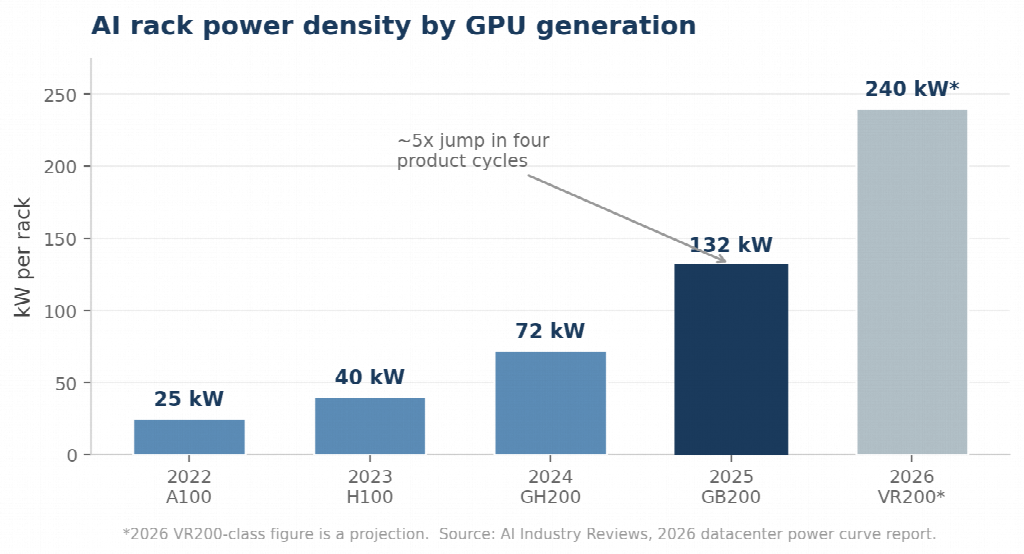
These details affect the cost, timeline, and architecture of the system your partner builds, so they are worth asking about early. Ask how the firm accounts for compute costs and provisioning lead times, and pay attention to whether they can give you actual numbers. A partner with hands-on experience should be able to explain the costs and timelines behind its approach. If the answer stays vague, that tells you something too.
That same difference between substance and sales language shows up in a firm’s track record. Almost every agency says it has worked across industries, but that tells you very little. Look for two or three past projects that closely resemble yours, with enough detail to understand the client’s situation, what the firm delivered, and where things stood six months later. It is also important to know what you are actually hiring the firm to do. Some firms develop AI strategies and recommendations, while others design, build, and deploy working systems. Those are very different services, and many projects run into trouble when the client expects one and the firm delivers the other.
Pay attention to how a firm scopes the work before you sign. A proposal that makes every assumption look favorable deserves a closer look. A serious partner will raise the difficult issues early, whether that means data that still needs work or a compute bill that is higher than expected. That kind of transparency gives you a much clearer picture of what the project will actually require.
“The firms worth hiring are the ones who bring up compute costs and the messy after-launch work while they’re still trying to win you, not after the contract locks you in.”
Two other questions can tell you a lot about how a firm operates. Ask who will actually work on the project, because the people selling the engagement are often different from the team delivering it. Then ask what happens if the engineer who knows your deployment leaves. You want to understand how much of the system depends on one person.
Model dependency is another important area to cover. If the system relies heavily on one provider’s API, ask how easily the architecture could adapt to a different model or vendor and what that change would cost. A capable partner should be able to explain the trade-offs and the work involved in making that switch.
Save one of the most important questions for last: what happens after launch? AI systems can perform well at first and then lose accuracy as models change and inputs evolve. Ask what the firm will monitor, maintain, and improve over the first six months and beyond. A partner that has a clear post-launch plan will be able to explain how the system will be supported as conditions change. The quality of AI implementation work varies widely, so these questions are worth asking directly. The answers will give you a much clearer picture of how a firm works before you sign.