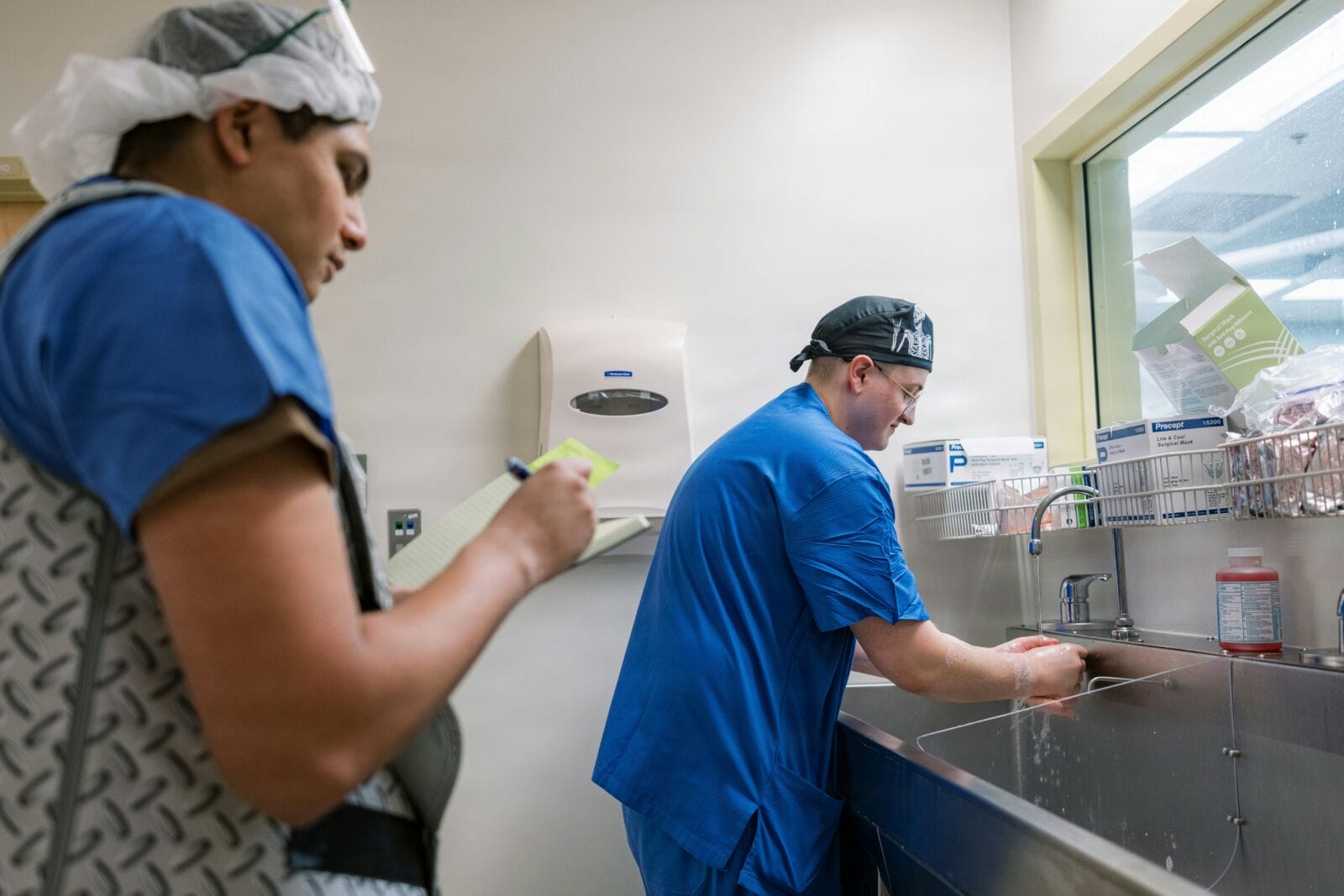
There’s a number that should stop every business owner and homeowner in their tracks: $225.8 billion. That’s what the CDC Foundation estimates absenteeism and lost productivity cost U.S. employers every single year — and a shocking share of it traces back to something almost embarrassingly simple: the cleanliness of the spaces where we spend our days.
At Green Hands Cleaning Services Corp, a New York-based professional cleaning company, we’ve spent years watching the gap widen between what people think cleaning does and what the research proves it does. The science is no longer subtle. Cleanliness isn’t a cosmetic preference or a personality trait — it’s a measurable economic, cognitive, and physiological force. And the data behind it is stranger, more surprising, and more financially significant than most people realize.
Here’s what the research actually says — and why it should change how you think about every desk, kitchen counter, and doorknob in your life.
Your Desk Is 400 Times Dirtier Than a Toilet Seat (An Arizona Scientist Proved It)
Let’s start with a finding that came out of Arizona’s own backyard. Dr. Charles Gerba, a microbiologist at the University of Arizona famously nicknamed “Dr. Germ,” conducted landmark research swabbing office environments across the country. His conclusion made international headlines: the average office desk harbors roughly 400 times more bacteria than the average toilet seat.
Read that again. The toilet — the object we treat as the gold standard of “gross” — is, statistically, one of the cleaner surfaces in a typical building. Why? Because we actually clean it. Desks, keyboards, and phones? Almost never.
Gerba’s team found:
- Office phones carry an average of 25,000 microbes per square inch
- Keyboards, computer mice, and desktop surfaces rank among the most contaminated objects in any workplace
- The average office coffee mug, when wiped with a communal sponge, can carry fecal bacteria
And it gets worse during flu season. Research shows that when one sick employee comes to work, viruses can spread to more than 50% of commonly touched surfaces in a building within just four hours. A single contaminated doorknob or break-room coffee pot becomes a distribution network.
The takeaway isn’t panic — it’s perspective. The surfaces we ignore are precisely the surfaces doing the most damage, which is why structured, scheduled professional cleaning consistently outperforms the “wipe it when it looks dirty” approach.

The Absenteeism Equation: Where Cleaning Becomes a Financial Instrument
Now let’s follow the money.
The CDC Foundation puts the annual cost of productivity losses linked to absenteeism at $225.8 billion — roughly $1,685 per employee, per year. The flu alone costs U.S. businesses an estimated $16.3 billion annually in lost earnings and productivity, according to research published in the journal Vaccine.
Here’s where it gets interesting: cleaning demonstrably moves that number.
A widely cited workplace hygiene intervention study found that implementing a targeted cleaning and disinfection program — focusing on high-touch points like phones, desks, and door handles — reduced the probability of catching a common illness at work by as much as 80%, and reduced absenteeism significantly. Separate ISSA (the worldwide cleaning industry association) research estimates that improved workplace cleaning can reduce sick days by up to 46%.
Run the math on even a 20-person office. If professional cleaning prevents just two sick days per employee per year, at an average fully loaded cost of $200–$350 per lost workday, you’re looking at $8,000–$14,000 in recovered productivity annually — often more than the cleaning program itself costs. Cleaning stops being an expense line and starts behaving like an investment with a measurable return.
That’s before you factor in the softer metrics. A Staples workplace survey found that 94% of workers report feeling more productive in a clean workspace, and 77% say they produce higher-quality work in a clean environment. HLW International’s research on workplace conditions estimated productivity gains of approximately 5% attributable to cleaner work environments — which, scaled across a payroll, is an enormous number hiding in plain sight.
DEEPER DIVE: Here are Arizona’s Most Admired Companies of 2026
This Is Your Brain on Clutter: The Princeton and UCLA Findings
The economic case is compelling. The neurological case might be even more so.
Researchers at the Princeton University Neuroscience Institute used fMRI imaging to study how the brain responds to organized versus disorganized environments. Their finding: visual clutter actively competes for your brain’s attention, degrading your ability to focus and process information. Multiple visible stimuli fight for neural representation in your visual cortex — meaning that pile of papers on your desk isn’t just sitting there. It’s taxing you, continuously, whether you consciously notice it or not.
Then there’s the cortisol data. UCLA’s Center on Everyday Lives of Families conducted a remarkable multi-year study of American households, documented in the book Life at Home in the Twenty-First Century. Researchers found that women who described their homes as “cluttered” or full of “unfinished projects” had elevated levels of cortisol — the body’s primary stress hormone — throughout the day, following patterns associated with chronic stress, depressed mood, and poorer health outcomes. Their cortisol failed to decline naturally in the evening the way it did for women who described their homes as restful and restorative.
In plain English: a messy home doesn’t just look stressful. It biochemically stresses you. Your environment is writing chemistry into your bloodstream.
A related study published in Personality and Social Psychology Bulletin reinforced the finding — people who described their living spaces as cluttered were more likely to show depressed mood and fatigue over the course of the day, while those who described their homes as “restorative” showed the opposite pattern.
The Indoor Air Problem Nobody Talks About
Here’s a statistic from the EPA that reframes everything: Americans spend approximately 90% of their time indoors, where concentrations of some pollutants are often 2 to 5 times higher than outdoor levels — and occasionally far worse.
Dust is not inert. Household dust is a cocktail of skin cells, dust mite allergens, pet dander, pollen, and tracked-in particulates. The average home accumulates roughly 40 pounds of dust per year, and dust mites — a leading trigger of asthma and allergic rhinitis — thrive in bedding, carpets, and upholstery. The Asthma and Allergy Foundation of America notes that dust mite allergens are among the most common indoor triggers for the 25 million Americans living with asthma.
Routine surface wiping doesn’t touch this problem. It requires the kind of systematic, top-to-bottom work — baseboards, vents, under furniture, mattress-level fabric surfaces — that defines a genuine deep clean. This is exactly the category where professional service earns its keep: the deep cleaning specialists at Green Hands routinely find that a first deep clean removes contaminant loads that years of regular tidying never addressed. Clients frequently report the difference not visually, but physically — easier breathing, fewer allergy symptoms, better sleep.
Speaking of sleep: the National Sleep Foundation’s bedroom poll found that people who make their beds every morning are 19% more likely to report sleeping well, and roughly 75% of people say they sleep better on fresh, clean sheets. Your bedroom’s cleanliness is quite literally a sleep-quality variable.
The Happiness Arbitrage: Why Buying Back Your Time Beats Buying Things
Perhaps the most fascinating research of all comes from a 2017 study published in the Proceedings of the National Academy of Sciences by researchers at Harvard Business School and the University of British Columbia. Across surveys of more than 6,000 people in four countries, they found that people who spend money on time-saving services — like house cleaning — report significantly greater life satisfaction than those who don’t.
Critically, the effect held regardless of income level. It wasn’t a luxury effect. It was a time effect.
In a follow-up experiment, participants given $40 to spend on a time-saving purchase reported greater end-of-day happiness than when the same participants spent $40 on a material purchase. The researchers’ conclusion: “time famine” — the chronic feeling of having too much to do and too little time — is one of the great hidden stressors of modern life, and outsourcing disliked chores is one of the most reliable ways to fight it.
Consider the scale of the chore burden: the American Time Use Survey shows the average American spends nearly six hours per week on cleaning and household maintenance — over 300 hours per year. That’s the equivalent of almost eight full 40-hour workweeks annually spent scrubbing, vacuuming, and wiping. For a professional billing their time at $50/hour, that’s $15,000+ worth of hours spent on a task that a service performs faster, better, and with commercial-grade equipment.
The happiness researchers gave this phenomenon a name that deserves wider use: buying time. And of all the time-saving services studied, house cleaning delivered among the most consistent well-being returns — because it eliminates not only the labor, but the ambient guilt of the undone task. Anyone curious what that looks like in practice can explore service options at https://www.greenhandscleaningservices.com/booking-page and price out exactly what reclaiming those 300 hours costs.
The First Impression Economy: Clean Spaces and the Bottom Line
One final data set, for the entrepreneurs and property professionals reading this.
Cleanliness is a revenue variable in ways most operators underestimate:
- Hospitality and short-term rentals: Analyses of Airbnb review data consistently show cleanliness is one of the most-mentioned factors in guest reviews, and listings with poor cleanliness scores see measurable drops in booking rates and nightly pricing power. A single “dirty” complaint in reviews can suppress bookings for months.
- Retail and commercial: Consumer surveys have found that around 95% of shoppers say exterior appearance influences where they choose to shop, and a majority report they would not return to a business with dirty restrooms.
- Real estate: The National Association of Realtors reports that deep cleaning is among the highest-ROI, lowest-cost actions sellers can take before listing, with agents consistently ranking cleanliness and decluttering among the top factors influencing buyer perception — and staging research suggests clean, decluttered homes sell faster and closer to asking price.
- Employee retention: Facility management surveys have found a meaningful share of employees say the cleanliness of their workplace affects their opinion of their employer — a factor few leadership teams ever measure, but every employee notices daily.
For commercial operators, this is the case for treating cleaning as brand infrastructure rather than janitorial overhead — a philosophy detailed at https://www.greenhandscleaningservices.com/services/commercial-cleaning-new-york-city.
The Bottom Line
Strip away the mops and buckets, and here’s what the evidence actually shows: cleaning is a health intervention (up to 80% reduction in workplace illness transmission), a cognitive enhancer (Princeton’s attention research), a stress regulator (UCLA’s cortisol findings), a productivity multiplier (94% of workers report the effect), and a happiness purchase with peer-reviewed backing from Harvard and PNAS.
The dirtiest secret in the $90+ billion U.S. cleaning industry isn’t hiding under anyone’s couch. It’s this: most people still think of cleaning as an aesthetic choice, when three decades of science have quietly reclassified it as one of the highest-leverage investments available for your health, your focus, your finances, and your time.
Dr. Germ swabbed the desks. Princeton scanned the brains. Harvard ran the happiness numbers. The verdict is unanimous — and it’s sitting right there on your keyboard, 400 times over.
About Green Hands Cleaning Services Corp
Green Hands Cleaning Services Corp is a professional cleaning company serving New York City, including Queens, Brooklyn, and Manhattan. The company provides residential and commercial cleaning services including house and apartment cleaning, deep cleaning, move-in/move-out cleaning, office and commercial cleaning, post-construction cleaning, Airbnb turnover cleaning, and disinfection services. Known for reliable, detail-driven service backed by trained, insured professionals, Green Hands helps homeowners, renters, landlords, hosts, and businesses across NYC reclaim their time and enjoy healthier, cleaner spaces.
Green Hands Cleaning Services Corp
22-16 79th St, East Elmhurst, NY 11370, United States greenhandscleaningservices.com
+1 212-812-9418