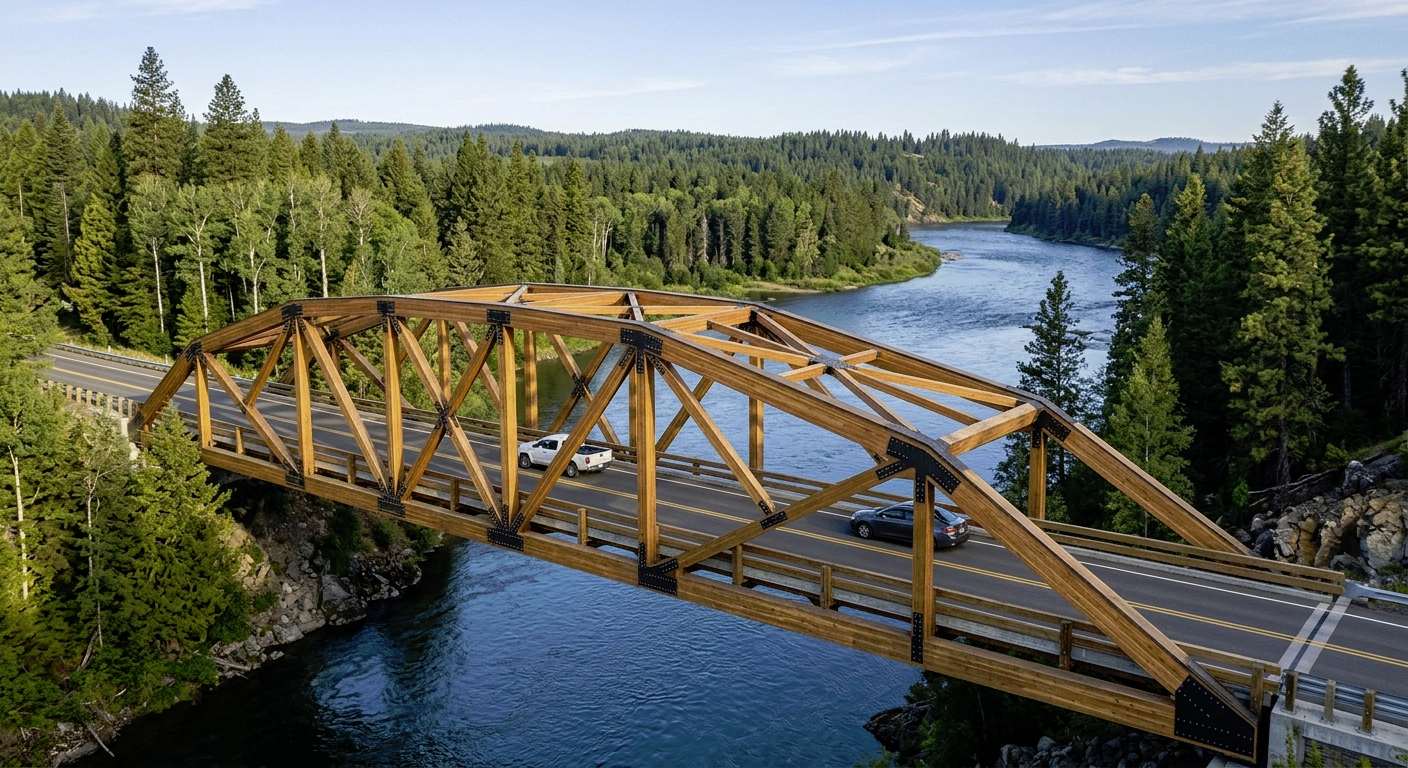
Modern transportation networks encompass 4.1 million miles of roads in the US alone, and rely on resilient, sustainable materials that can handle heavy highway loads without constant structural intervention. While steel and concrete historically dominated civil infrastructure projects, advanced structural timber solutions are redefining how engineers construct functional roadways. Heavy vehicular traffic demands structural integrity, load distribution capacity, and minimal maintenance over decades of operation.
Today, engineered timber meets rigorous transport specifications while reducing long-term lifecycle costs for municipalities and rural highway networks. Understanding these load capabilities and structural advantages reveals why wood remains a primary material choice for modern vehicular crossings.
Structural Capacity and Modern Engineering Standards
Modern timber highway crossings are built to strict specifications, utilizing advanced heavy timber and mass timber products that meet standard bridge load requirements. Structural glulam and stress-laminated timber decks allow these structures to support fully loaded tractor-trailers and heavy maintenance vehicles under standard highway classifications.
Through engineered design and stress-lamination techniques, individual timber components distribute point loads across a broad surface area. This load-sharing capability prevents localized sagging and structural fatigue, allowing wood structures to perform alongside traditional materials under dense traffic conditions. Engineers calculate stiffness, shear resistance, and bending capacity using rigorous finite element modeling to ensure compliance with transportation design standards.
Across North America, there are around 500 structural bridge installations built annually that leverage glulam and stress-laminated designs to support continuous rural traffic. These projects highlight the material’s structural integrity and ability to maintain critical supply lines.
Designers routinely specify customized structural crossings for high-use public parks, residential subdivisions, and heavy commercial access routes. For projects requiring specialized bridge designs, those planning a custom crossing can explore the work of York Bridge Concepts to better understand the available options. By utilizing high-grade Southern Yellow Pine or Douglas Fir treated for exterior exposure, these structures resist environmental degradation while bearing sustained loads over multi-decade operational cycles.
Environmental Durability and Corrosion Resistance
Unlike steel and concrete, structural timber naturally resists damage from deicing salts, coastal saltwater, and acid rain. Coastal environments and severe winter climates accelerate deterioration in reinforced concrete through rebar oxidation, leading to spalling and costly repair schedules. Structural wood maintains its structural integrity without corroding under continuous exposure to aggressive chemical treatments and moisture cycles.
Modern pressure treatments inject EPA-approved preservatives deep into the wood fibers, blocking rot, fungal growth, and insect infestation. This includes:
- Oil-borne preservatives provide deep fiber penetration that repels water and prevents structural degradation over decades of continuous exposure
- Copper-based treatments offer clean, low-odor surface protection ideal for sensitive aquatic environments and public access zones
- Galvanized or stainless steel structural hardware isolates connection points, preventing corrosion between metal fasteners and timber members
With proper deck drainage and protective wear surfaces, pressure-treated structural timber can provide a service life that matches or exceeds traditional building materials in harsh climates.
Economic Advantages in Installation and Maintenance
Constructing a vehicular bridge often involves significant site preparation, heavy machinery rental, and extended roadway closures. Timber bridges mitigate many of these logistical challenges through pre-assembly and lower overall structural weight. Because heavy timber panels can be prefabricated off-site, installation requires smaller cranes and less foundation work than heavier concrete equivalents.
The reduced weight of engineered timber panels lowers transportation costs to the job site and simplifies foundation engineering. In rural or remote areas where access for heavy machinery is limited, lightweight assembly saves time and reduces overall site disturbance.
According to economic analyses of regional infrastructure, timber bridge options can deliver a 30 to 50 percent reduction in initial capital costs compared to traditional cast-in-place concrete structures. This financial efficiency allows county engineers and private developers to stretch capital budgets across multiple infrastructure assets without sacrificing safety or load capacity.
Beyond initial capital savings, modular construction principles keep long-term maintenance costs predictable. Individual timber members can be inspected, treated, or replaced without requiring complete structural demolition, ensuring continuous highway service and lower life-cycle expenditures. And with material costs rising, frugality in any form is valuable.
Integrating Structural Functionality with Site Aesthetics
Transportation infrastructure impacts the visual character of surrounding communities and natural environments. Engineered timber bridges offer a distinct aesthetic quality that blends naturally into parks, historic districts, and scenic corridors where industrial concrete structures might disrupt the landscape.
Developers and municipalities frequently select timber vehicular crossings to maintain an inviting atmosphere without sacrificing heavy-vehicle access. Custom architectural finishes, decorative handrails, and varied span designs allow engineers to tailor each structure to local site conditions.
Choosing engineered wood allows transportation planning teams to meet modern load standards while supporting long-term environmental and financial sustainability objectives. Read more of our coverage of construction projects and design options for further information and advice.