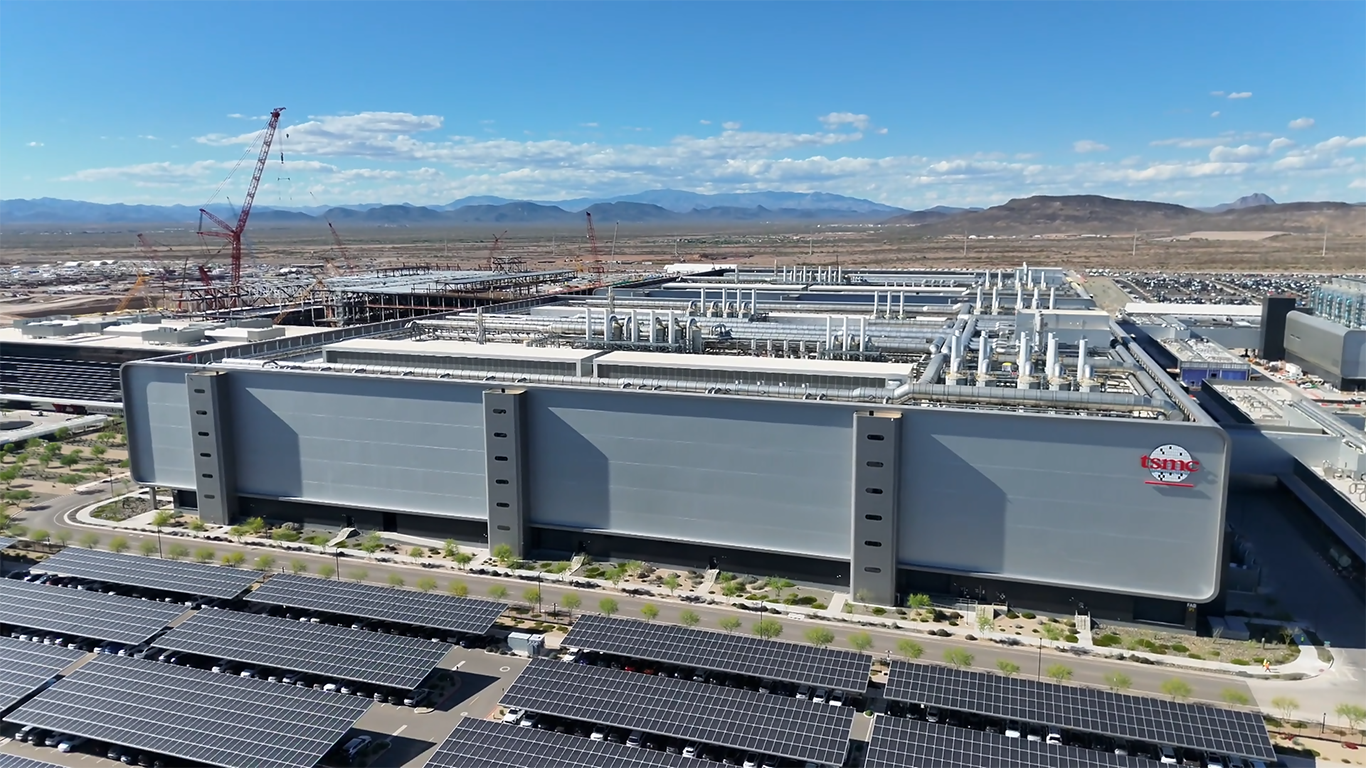
Arizona’s growing role in the global semiconductor industry received another boost this week as Taiwan Semiconductor Manufacturing Company (TSMC) reported powerful financial and revenue results and confirmed continued expansion plans tied to its Arizona operations.
The world’s largest contract chipmaker announced first-quarter 2026 revenue of NT$1.13 trillion (about $35.9 billion), representing a 35% increase compared with the same period last year. Net income reached NT$572.48 billion, up more than 58% year-over-year, reflecting surging global demand for advanced semiconductor technologies used in artificial intelligence, high-performance computing and next-generation consumer devices.
MORE NEWS: Managing Arizona’s most precious resource: TSMC Arizona’s thoughtful plan for managing water use
LEARN MORE: TSMC Arizona preparing workers for a chips future
TSMC’s profitability also remained exceptionally strong, with gross margins of 66.2% and operating margins exceeding 58% during the quarter.
Company executives say that momentum is being driven largely by demand for its most advanced chip technologies.
“Our business in the first quarter was supported by strong demand for our leading-edge process technologies,” said Wendell Huang, senior vice president and chief financial officer at TSMC.
Advanced manufacturing nodes — including 3-nanometer, 5-nanometer and 7-nanometer technologies — accounted for 74% of total wafer revenue during the quarter, underscoring the growing importance of high-performance chips used in AI data centers, smartphones, automotive systems and connected devices.
That demand is expected to continue.
TSMC forecasts second-quarter revenue between $39 billion and $40.2 billion, signaling another strong period for the semiconductor giant.
For Arizona, those numbers are more than just corporate earnings. They reflect the expanding role the state is playing in the future of global semiconductor manufacturing.
TSMC Chairman and CEO CC Wei confirmed that the company is increasing investments worldwide to meet surging demand for advanced chips — particularly those used in artificial intelligence.
“To meet the strong demand in AI applications, we are stepping up our capital investments to increase our 3-nanometer capacity,” Wei said during the company’s earnings call.
Those plans include significant activity in Arizona.
Wei confirmed that TSMC’s second semiconductor fabrication plant in Phoenix will utilize 3-nanometer technology, one of the most advanced manufacturing processes in the world.
Construction of the second facility is already complete, with volume production expected to begin in the second half of 2027.
The Arizona investment is part of a broader strategy to expand advanced semiconductor manufacturing capacity closer to major U.S. technology companies.
According to Wei, TSMC’s leadership sees Arizona as a long-term hub for its operations.
“We acquired the second land because we need it,” Wei said. “We want to build more fabs in Arizona to meet the multi-year demand from our leading-edge U.S. customers.”
The company has already gained valuable experience operating in the state, which has increased confidence in accelerating development timelines.
“We are working very hard to speed it up,” Wei said. “We have already gotten a lot of experience in Arizona, and now we have much more confidence that we can make good progress.”
The expansion could have enormous implications for Arizona’s economy.
TSMC’s semiconductor fabrication plants are expected to attract a broad ecosystem of suppliers, advanced manufacturing firms and technology companies — reinforcing Arizona’s emergence as one of the most important semiconductor hubs in the United States.
With AI demand surging and U.S. chip production becoming a national priority, TSMC’s Arizona operations are increasingly positioned at the center of the next wave of global technology innovation.