
Some technologies quietly shape entire industries – and you only notice them when they fail. In advanced manufacturing, medical systems, and precision research, light sources must be stable, predictable, and powerful. When engineers need performance they can trust, they often turn to one class of devices that consistently delivers.
A big reason is the unique behavior of 1064 nm laser diodes. Operating in the near-infrared range, they combine deep penetration, low scattering, and efficient absorption in key materials. That balance allows them to work reliably even under demanding operating conditions, from medical labs to industrial floors.
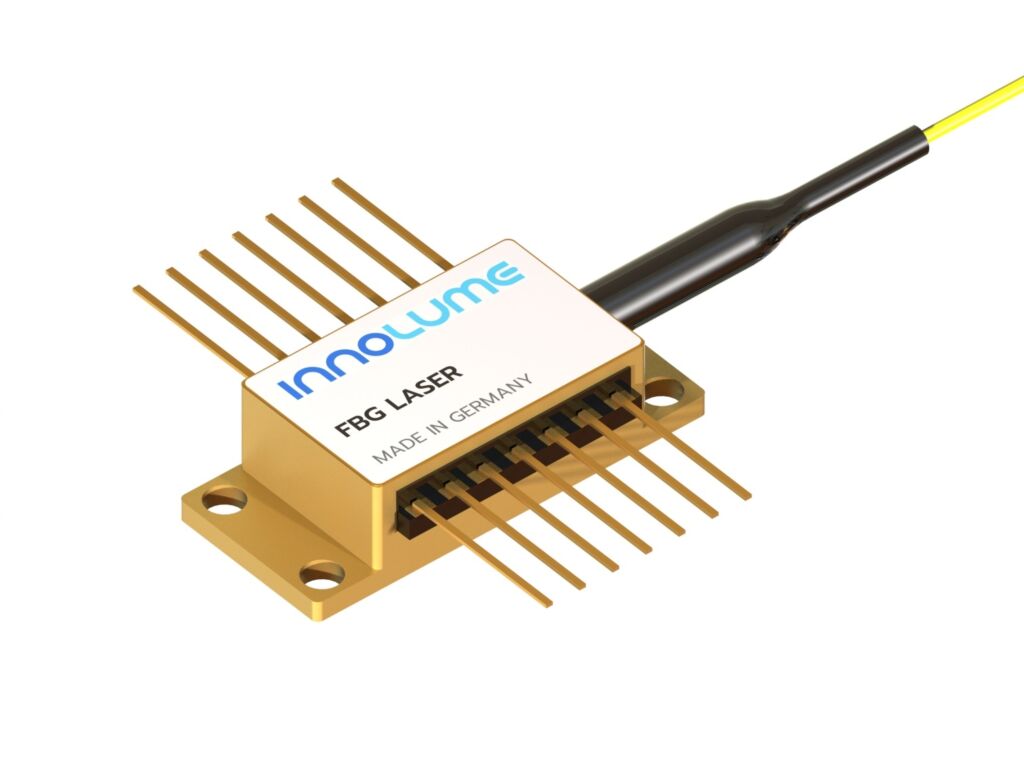
What exactly is a 1064 nm laser diode?
In simple terms, it’s a semiconductor device that generates coherent NIR light. But its wavelength makes the difference. The 1064 nm window offers strong interaction with metals, biological tissues, and optical components, while still maintaining thermal and spectral stability. This is why the same wavelength appears across spectroscopy tools, fiber-based modules, and pumping systems for solid-state lasers.
Types of 1064 nm light sources – and where they shine
Not all 1064 nm diodes serve the same purpose. Engineers select architectures optimized for specific tasks.
Fabry-Perot (FP) diodes use a resonator with two mirrors to amplify emission at a target wavelength. They are reliable pumping sources for fiber lasers, optical sensors, metrology, medical, and material processing applications.
Distributed-feedback (DFB) diodes incorporate a periodic grating for single-mode operation, enabling dense spectral multiplexing, high-resolution spectroscopy, OCT, and LiDAR systems where wavelength stability is critical.
Pulsed diodes emit ultrashort bursts with high peak power, supporting time-resolved spectroscopy, telecom, medical lasers, and high-energy processing, while maintaining precise wavelength control.
Key specifications engineers watch
Beyond theory, performance shows up in the numbers. Modern devices offer single-mode, multimode, continuous-wave and pulsed options; optical power up to 1 W (SM) and 15 W (MM); linewidths below 0.5/5 nm for FP and down to ~5 MHz for DFB; operating temperatures up to 70 °C; and compact form factors such as TO-can, C-mount, fiber-coupled or butterfly packages. Together, these specs make integration easier and systems more reliable.
Why the 1064 nm wavelength stands out
This wavelength delivers high efficiency, deep penetration, narrow spectral width, flexible modulation (down to picosecond regimes), and excellent compatibility with fiber and solid-state laser pumping. In practice, that means better signal quality, lower energy costs, and cleaner results across industrial, biomedical, and research environments.
Choosing a partner that understands the details
Innolume designs 1064 nm laser diodes for real-world workloads: thermally stable, energy-efficient, and available in configurations tailored to integration. Multiple housings and optical options help teams prototype faster and scale with confidence.
If precision, durability, and spectral control matter in your next project, don’t wait. Contact Innolume’s experts today and turn reliable 1064 nm performance into your competitive advantage.