
Every year, like clockwork, it happens. Someone from HR sends a calendar invite titled “Team Photo Day” and a quiet groan ripples through the office. Executives shuffle into a makeshift studio in the conference room. They adjust ties that haven’t been worn since the last photo day. They force smiles under fluorescent lights. And six weeks later, a batch of stiff, forgettable headshots lands in everyone’s inbox.
In Arizona, a growing number of executive teams have decided they’re done with this routine. Not because they don’t care about professional image. Because they care too much to keep doing it this way.
The Annual Photo Day Problem Nobody Wants to Admit
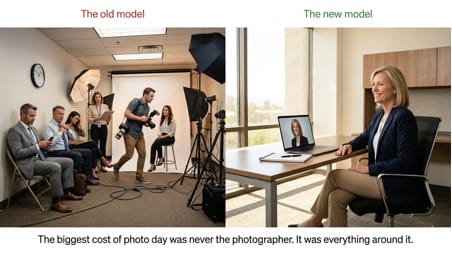
Here’s what most people miss about the traditional corporate photo shoot: the biggest cost isn’t the photographer’s invoice. It’s everything around it.
Consider a midsize company in Scottsdale with 40 executives and senior leaders. Coordinating schedules across departments takes weeks. The shoot itself pulls people away from revenue-generating work for half a day, sometimes longer. Then there’s the wardrobe anxiety, the retouching delays, and the inevitable handful of people who were traveling or out sick and now need a separate session.
One operations director at a Phoenix fintech firm told me her team spent more time coordinating last year’s photo day than they did on their Q3 planning offsite. That’s not an exaggeration. That’s a resource allocation problem disguised as a routine HR task.
And the results? Often underwhelming. Group photo days tend to prioritize speed over quality. The photographer is racing through 40 sittings in four hours. Lighting gets inconsistent. Energy drops after lunch. The last ten people photographed always look slightly worse than the first ten. Everyone knows it. Nobody says it.
What’s Replacing the Old Model
The shift happening across Arizona’s business community isn’t just about ditching photographers. It’s about rethinking what professional visual identity means in 2026.
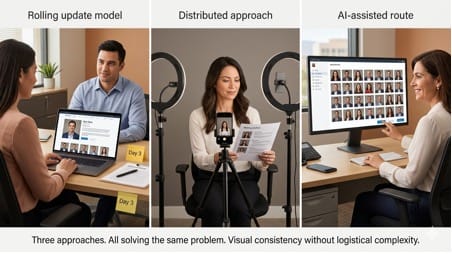
Three distinct approaches are gaining traction.
The rolling update model. Instead of one annual event, companies are building headshot updates into their onboarding and quarterly review cycles. New hire on Monday? Headshot by Wednesday. Promotion with a title change? Updated photo within the week. This keeps the company’s public face current without the logistical nightmare of a single coordinated day.
The distributed approach. With hybrid and remote teams now the norm (especially among Arizona’s booming tech corridor between Phoenix, Tempe, and Tucson), some organizations have stopped trying to get everyone in the same room. They provide brand guidelines, approved backgrounds, lighting specs, and let individuals handle their own shoots on their own timelines.
The AI-assisted route. This is the one generating the most conversation. Tools like a professional AI headshot generator allow teams to produce consistent, polished headshots from regular photos without booking a studio, hiring a photographer, or coordinating a single calendar invite. For companies managing corporate team headshots across multiple locations, the appeal is obvious: visual consistency without logistical complexity.
Why Arizona Specifically?
This trend isn’t exclusive to Arizona, but the state’s business environment makes it a natural testing ground.
Arizona has seen a surge of corporate relocations and expansions over the past three years. Companies arriving from California, in particular, tend to bring leaner operational philosophies. They question legacy processes. “We’ve always done it this way” isn’t a satisfying answer when you’re scaling a team from 50 to 200 in eighteen months.
The state’s geographic spread matters too. A company headquartered in Scottsdale with satellite teams in Flagstaff and Tucson faces a genuine coordination challenge. Flying people in for photos or sending a photographer on a multi-city tour gets expensive fast. The math simply stops working.
There’s also a cultural factor. Arizona’s executive community skews younger and more tech-forward than many people expect. The startup scene in Tempe and Mesa has produced a generation of leaders who are comfortable with AI tools and skeptical of processes that exist purely out of tradition.
The Credibility Factor Nobody’s Talking About
Here’s the thing nobody mentions in these conversations: your headshot isn’t just a photo. It’s a trust signal.
When a potential investor pulls up your leadership team page, they’re making split-second judgments. Mismatched photo styles, outdated images, and inconsistent quality don’t just look unprofessional. They raise questions about how the organization runs internally.
This matters more than most executives realize. Research consistently shows that visual presentation affects perceived competence. For leaders who are fundraising, pursuing partnerships, or building public profiles, understanding how to look credible to investors through professional imagery isn’t vanity. It’s strategy.
One venture-backed SaaS company in Chandler told me they updated their entire leadership team’s headshots before a Series B roadshow. Not because investors asked. Because their existing photos were two years old, shot on three different occasions, with three different backgrounds. The inconsistency quietly undermined the “unified team” narrative they were pitching.
They completed the update in a single afternoon. No photographer. No studio. No calendar Tetris.

What to Consider Before Making the Switch
If you’re an executive or HR leader weighing this shift, a few things worth thinking through.
Brand consistency still matters. Whatever method you choose, establish clear guidelines. Background colors, cropping ratios, dress code expectations, and lighting standards should be documented. The method of capture matters less than the consistency of output.
Not every role needs the same approach. Your CEO’s headshot carries different weight than an entry-level team member’s photo. Some organizations use professional photography for C-suite leaders and AI tools for the broader team. That’s a perfectly reasonable hybrid model.
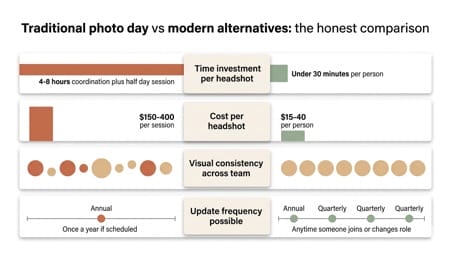
Update frequency is the real win. The biggest advantage of moving away from annual photo day isn’t cost savings (though those are real). It’s currency. A headshot that’s updated quarterly will always outperform one that’s refreshed once a year. People change. Hairstyles change. Roles change. Your professional image should keep pace.
Don’t ignore the internal reaction. Some team members genuinely enjoy photo day. It’s social. It’s a break from routine. If you eliminate it entirely, consider what replaces that moment of team connection. The operational decision is straightforward. The cultural piece requires more thought.
The Bigger Picture
What’s happening with executive headshots in Arizona is really a smaller story inside a much larger one. Companies everywhere are auditing their legacy processes and asking a simple question: does this still make sense?
For decades, the annual photo shoot was the only viable option. Coordinate everyone, hire a professional, get it done in a day, live with the results for twelve months. That model worked when teams were smaller, offices were centralized, and updating a website required calling a developer.
None of those conditions exist anymore.
The organizations that adapt fastest aren’t the ones with the biggest budgets. They’re the ones willing to question a process that everyone else accepts as inevitable. Photo day was never sacred. It was just familiar.
And in a state that keeps attracting companies precisely because it rewards speed and pragmatism over tradition, “familiar” isn’t enough of a reason to keep doing anything.