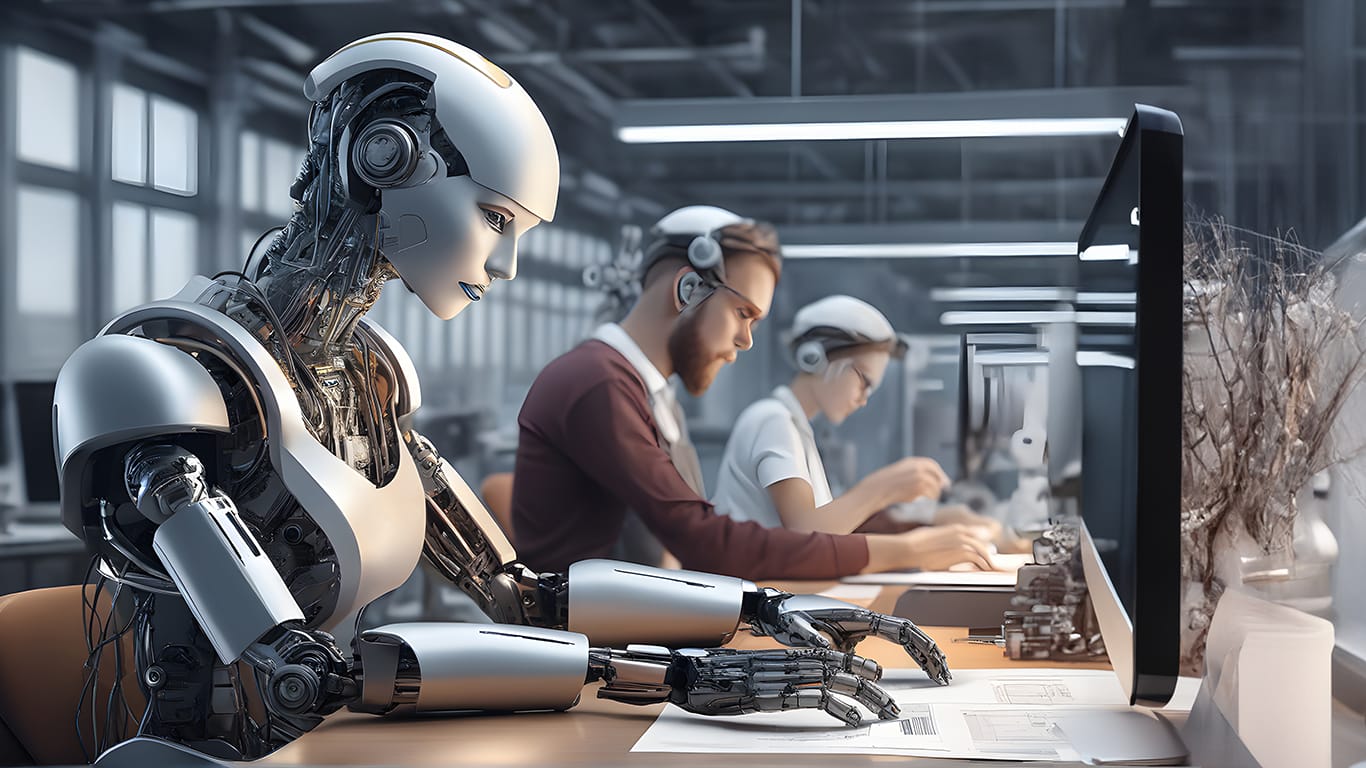
Artificial intelligence is rapidly transforming the modern workplace. From automated customer support systems and AI-generated content to advanced data analysis and predictive decision-making, businesses across industries are integrating AI into daily operations. While this technological shift is improving efficiency and productivity, it has also raised an important question: if machines can perform so many tasks, what human skills will remain truly valuable in the future?
One of the clearest answers is communication.
As AI continues to automate technical and repetitive work, human communication skills are becoming more important rather than less. The ability to connect with people, understand emotions, build trust, negotiate effectively, and communicate across cultures remains something technology cannot fully replicate.
In an increasingly digital world, genuine human interaction has become a competitive advantage.
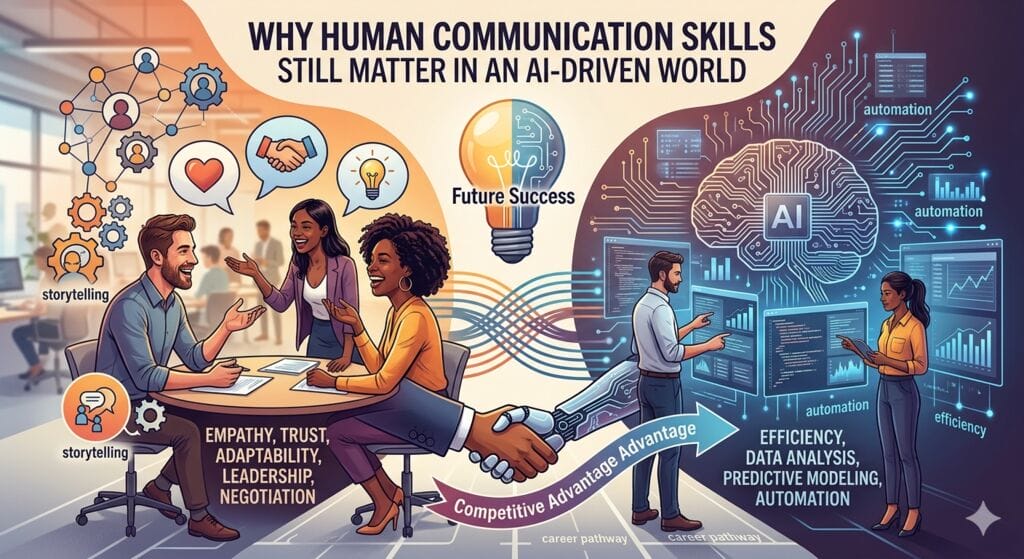
AI Can Process Information, But Humans Build Relationships
Artificial intelligence can analyze data at extraordinary speed. It can generate reports, summarize documents, write emails, translate languages, and even simulate conversations. However, communication is not simply about exchanging words or information.
Real communication involves:
- empathy,
- emotional awareness,
- listening,
- context,
- cultural understanding,
- relationship-building,
- and trust.
For example, a business negotiation involves far more than sharing facts. Tone, timing, confidence, emotional intelligence, and cultural sensitivity all influence outcomes. A skilled communicator can read emotions, adjust their approach, calm tensions, and create meaningful connections in ways AI still cannot fully achieve.
In customer service, leadership, education, healthcare, sales, consulting, and management, human interaction remains central to success.
The Workplace Is Becoming More Human-Centered
Ironically, the rise of AI may increase the importance of human-centered skills. As technical tasks become automated, employers are placing greater value on employees who can:
- collaborate effectively,
- communicate clearly,
- manage relationships,
- lead teams,
- and work across cultures.
Companies increasingly operate globally, with remote teams spread across different countries and time zones. Communication challenges often become one of the biggest obstacles to productivity in such environments.
Professionals who can express ideas clearly, listen actively, and navigate multicultural interactions help organizations function more effectively.
This is one reason why language learning and cross-cultural communication are gaining importance globally.
Language Skills Strengthen Human Communication
Learning a foreign language does far more than improve vocabulary. It develops adaptability, patience, listening ability, and cultural awareness. Professionals who learn additional languages often become more confident communicators overall.
In today’s global economy, multilingual communication has become increasingly valuable. Businesses regularly interact with international clients, remote employees, and overseas partners. Understanding another language helps professionals connect more naturally and respectfully across cultures.
Germany, for example, continues to attract international students and skilled professionals due to its strong economy and industrial ecosystem. As a result, many learners are exploring structured programs such as German online language courses to improve both communication skills and global career readiness.
Language learning encourages people to step outside their comfort zones and engage with different ways of thinking. This naturally improves communication confidence and emotional intelligence.
AI Still Struggles With Emotional Intelligence
AI tools can mimic conversation patterns, but they do not genuinely experience emotions. They cannot truly understand human pain, motivation, uncertainty, or emotional complexity in the same way people do.
In many situations, emotional intelligence matters more than technical accuracy.
For example:
- a teacher motivating a struggling student,
- a manager resolving workplace conflict,
- a doctor reassuring a patient,
- or a leader inspiring a team during uncertainty.
These interactions require empathy and emotional sensitivity.
Employees and customers increasingly value authentic communication. In a world filled with automated responses and AI-generated content, genuine human interaction often stands out more strongly.
Communication Is Critical for Leadership
Strong communication has always been one of the most important leadership skills, and this remains true in the AI era.
Leaders are responsible for:
- motivating teams,
- handling difficult conversations,
- building trust,
- managing uncertainty,
- and aligning people around shared goals.
AI can provide information and recommendations, but leadership still depends heavily on human influence and interpersonal connection.
Organizations often fail not because of poor technology, but because of poor communication:
- unclear expectations,
- lack of trust,
- weak collaboration,
- or unresolved conflicts.
Professionals who communicate effectively are often better positioned for leadership opportunities because they help teams function smoothly.
Remote Work Has Increased the Need for Clear Communication
The growth of remote and hybrid work has changed how professionals interact daily. Without face-to-face communication, misunderstandings can happen more easily. Written communication, virtual meetings, and cross-cultural collaboration have become central to modern work life.
In this environment, communication skills are no longer optional.
Professionals who can communicate clearly and respectfully in digital environments are often more successful at:
- managing remote teams,
- building international partnerships,
- handling clients,
- and maintaining productive relationships.
As businesses continue expanding internationally, multilingual communication is becoming increasingly valuable. French, for instance, remains an important international language across Europe, Canada, Africa, and diplomatic institutions. Many working professionals now prefer flexible learning formats such as Online French classes to improve communication abilities alongside their careers.
Human Creativity and Storytelling Still Matter
Another area where human communication remains powerful is storytelling.
People connect emotionally through stories, experiences, humor, and personal perspectives. AI can generate structured content, but authentic storytelling still depends heavily on human experience and emotional depth.
Businesses rely on storytelling for:
- branding,
- marketing,
- leadership,
- customer engagement,
- and community building.
A compelling speaker, teacher, marketer, or entrepreneur often succeeds because they understand how to emotionally connect with people.
This type of communication remains difficult for AI to replicate authentically.
Communication Builds Trust in a Distrustful Digital World
As AI-generated content becomes more common, people may become increasingly skeptical about what they read and watch online. Trust may become one of the most valuable assets in the future digital economy.
Human communication plays a critical role in building that trust.
Customers prefer brands that feel authentic. Employees prefer leaders who communicate transparently. Students prefer teachers who genuinely engage with them. Clients prefer professionals who understand their concerns personally.
The more automated the world becomes, the more valuable authentic human interaction may become.
The Future Belongs to Balanced Professionals
The future workplace is unlikely to be fully human or fully automated. Instead, success will likely belong to professionals who combine technology with strong human skills.
AI can enhance productivity and efficiency, but communication remains essential for:
- leadership,
- collaboration,
- innovation,
- negotiation,
- relationship-building,
- and emotional connection.
Professionals who continuously improve their communication abilities, cultural awareness, and adaptability are likely to remain highly valuable in the evolving global economy.
In an AI-driven world, technical skills may help professionals stay competitive, but human communication skills are what will continue to make them irreplaceable.