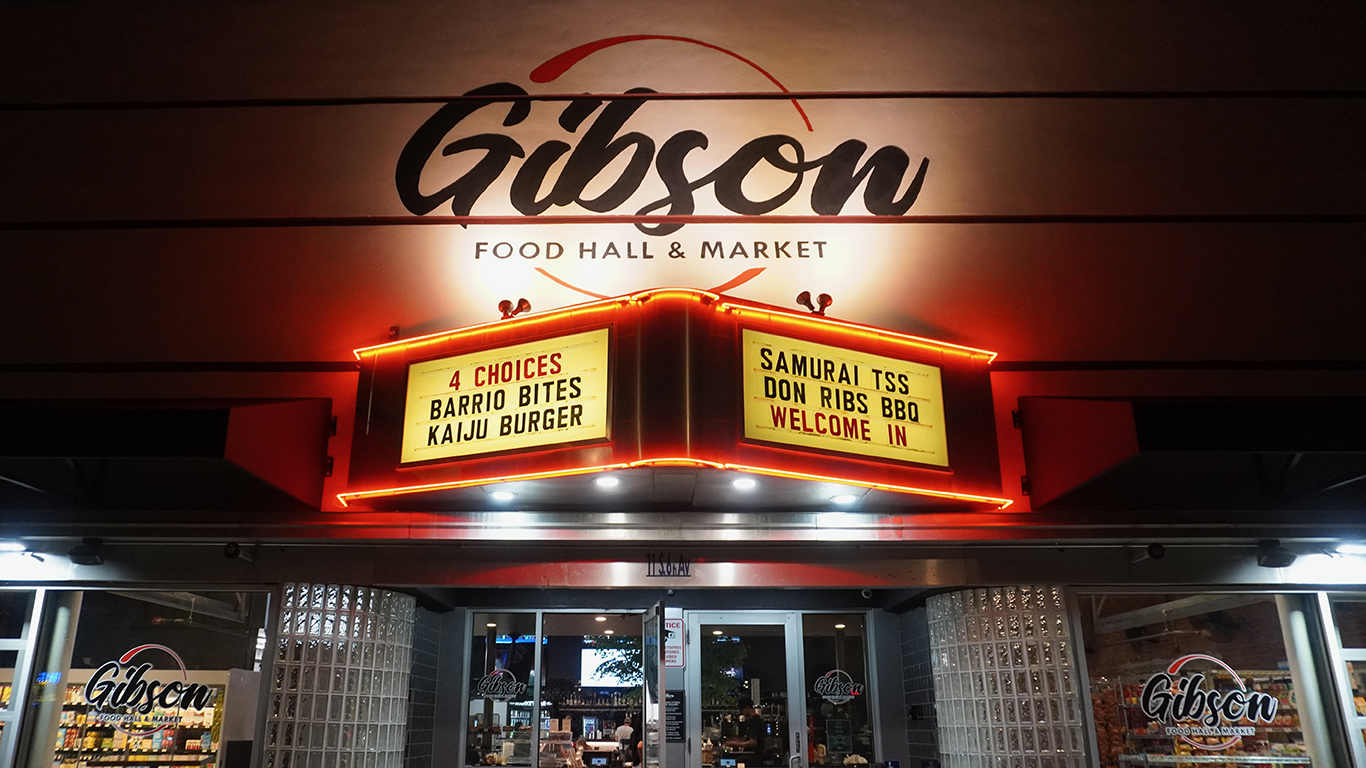
Gibson Food Hall and Market may be one of Downtown Tucson’s newest additions, but its story goes back more than a century.
The building has been reinvented: first a car dealership, then a gym‑equipment factory and a community theater.
DEEPER DIVE: The secret is out about Downtown Tucson’s Emerald 29
Its latest chapter, Johnny Gibson’s Downtown Market, led by owner Nick Wayne Eggman, is rooted in the same spirit of local grit and creativity that shaped its past.
“The building’s over 100 years old. It goes way back,” Eggman said.
In the 1970s and ’80s, the Gibson family transformed the space into a gym‑equipment manufacturing hub.
“Back then, each city had their own kind of local equipment maker,” Eggman said. “He’d supply for gyms, the YMCA, high schools.”
After a stint as Beowolf Alley Theatre, the building became Johnny Gibson’s Downtown Market in 2015 — a full grocery store that helped anchor the area’s revitalization. But by 2024, Eggman and his business partner, John Hardin, saw a shift in what Downtown needed.
“When those owners decided they were done, it was just kind of a natural progression,” Eggman said. “We really had to sit down and think: is the full‑on grocery concept really working for Downtown Tucson?”
Their answer became Gibson Food Hall — a hybrid market and multi‑vendor dining hall.
Instead of a generic food court, Eggman wanted a place where Tucson’s independent food entrepreneurs could grow beyond food trucks and pop‑ups.
“The stars of the show are our food vendors,” he said. “They’re all local people that had successful food trucks, catering companies, and this gives them a brick‑and‑mortar spot downtown to showcase what they do.”
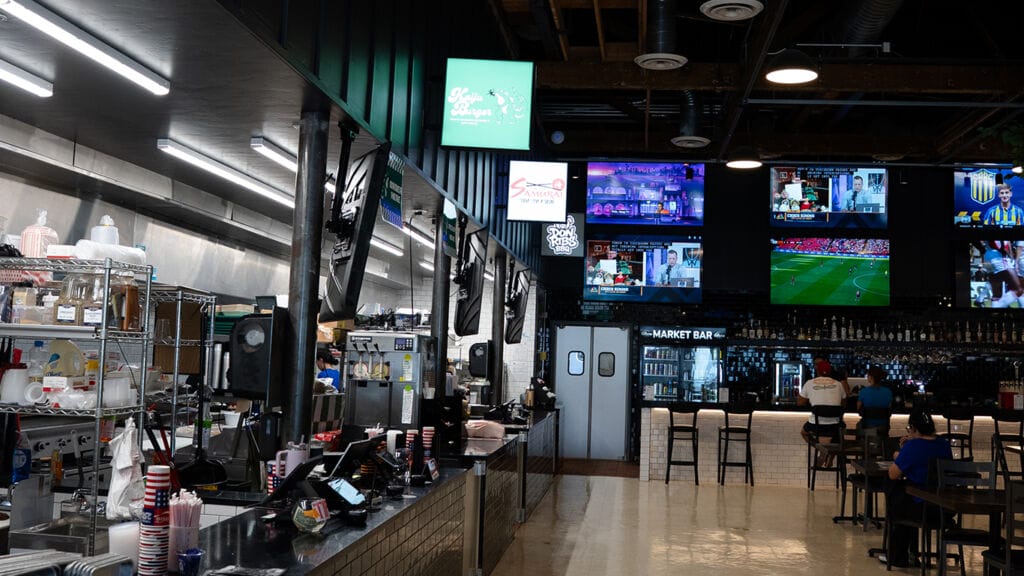
The lineup reflects that philosophy:
Barrio Bites: Street food-inspired barbecue, smoked meats and Latin
Kaiju Burger: bold burgers, crispy fries and comfort food, all inspired by street food, Southwest flavors and local favorites
Samurai Teppan Steak & Sushi: Samurai Teppan brings fresh sushi, teppan-style cooking and bold Japanese flavors together for an elevated dining experience.
Don’s Ribs BBQ: Slow-smoked barbecue with a bold Latin twist. Tender ribs, flavorful smoked meats, and Tucson hospitality come together in every bite.
Eggman said the mix was intentional and Tucson responded immediately.
“We opened July 10 in the dead of summer, which is probably the worst time for business in Arizona,” he said. “The response has been amazing. It really blows my mind every day at lunch. The place is packed.”
The market portion of Gibson Food Hall is small but a curated blend of essentials and unexpected finds.
“We went through the previous market sales and kept what people downtown were really purchasing,” Eggman said. “And then we wanted to work hard at incorporating local vendors and local suppliers into the mix.”
The selection feels distinctly Tucson: pantry staples, grab‑and‑go items, and shelves dotted with local makers, small‑batch goods, and the kind of quirky products that make browsing fun.
The former market once included a mezzanine level with offices and a customer dining area, but the second floor came with challenges.
“There were also a series of complications that came with having a second level for customers,” Eggman said. “There were a few incidents where people would jump over the wall into the office.
“We had another situation where a woman hopped over the fence and walked above the deli, which just had acoustic panels. She fell.”
Today, the mezzanine is closed to the public and used strictly for storage and operations.
Gibson Food Hall is the latest piece of Eggman’s Downtown footprint. He opened Highwire in 2015 — “a little shoebox of a cocktail lounge,” he said — and expanded it into a 6,500‑square‑foot nightlife venue. Next door sits The Grand, a 6,000‑square‑foot event center that opened in 2024.
“In this two‑thirds of a block Downtown, all these businesses are connected physically,” he said. “There are similar threads that operate throughout them.”
It’s a scale Eggman never imagined when he was 30, working in a high‑rise office for a corporation.
“I turned 30, and I was just sitting there,” he said. “I was like, ‘If this is what being an adult is, I really don’t want to do this.’ So, I quit that job. Everyone thought I was crazy.”
He began flipping houses — 203 of them over four and a half years — and used the proceeds to open Highwire. “People probably still continue to think I’m crazy,” he said.
He plans to speak to University of Arizona students about entrepreneurship, hoping to give them a realistic picture.
“What seems to be the glamorous side… everything I just explained sounds amazing, and it is,” he said. “But there’s also a great amount of personal risk and sacrifice.”
Still, Gibson Food Hall feels like the right bet.
“It’s been a big roll of the dice,” he said. “But so far we’re off to a great start.”