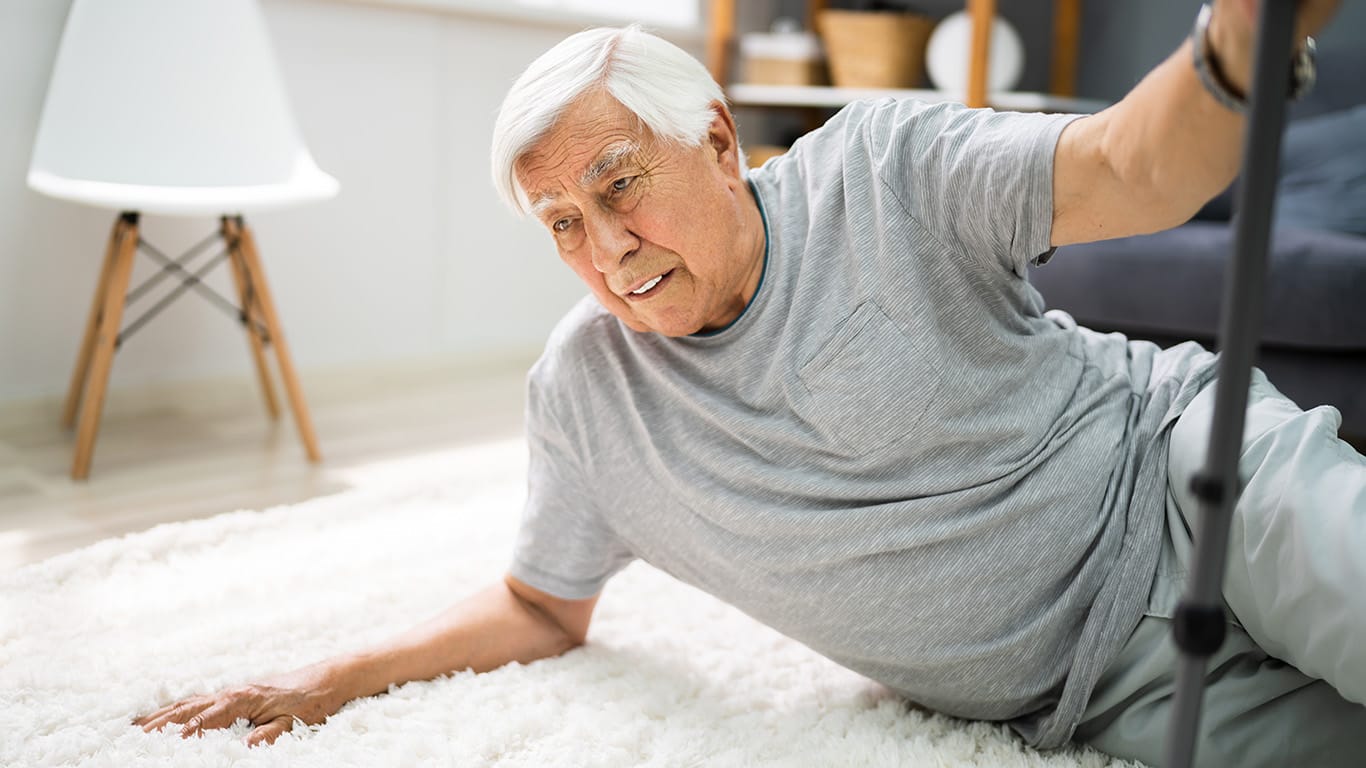
Falls are a common concern for older adults and their families, and happen anywhere, from the bathroom and kitchen to the front porch or staircase. Falls sometimes lead to serious injuries, reduced independence, and developing a fear of falling again.
The good news is that many fall risks can be reduced with small changes to the home, regular health checks, appropriate mobility equipment, and exercises that improve strength and balance. These all work together to give seniors greater safety and independence.
1. Choose the Right Cane or Mobility Aid
The right mobility aid provides valuable stability, but it needs to be properly fitted and used correctly.
A cane that is too tall or too short affects posture and balance. It also increases the risk of tripping. When choosing a cane, consider the user’s height, strength, balance, and everyday needs.
Jeremiah Marquis, mobility equipment expert and partner at Mobility Plus Colorado, explains the importance of ensuring the correct cane length:
“Choosing the proper cane height will provide you with the traction and support you need to walk safely, giving you the confidence to walk without the fear of falling. Remember to round measurements up to the nearest half-inch, and keep a close eye on slouching. Improperly sized canes are one of the most common issues affecting balance in older adults.”
A cane may not always provide enough support for everyone in every situation. Some seniors will benefit more from a walker, rollator, wheelchair, or mobility scooter. A mobility professional or healthcare provider will be able to advise which option provides the appropriate level of support. Remember that different aids are useful in different situations, or with fluctuating needs, so a combination of aids is often appropriate.
2. Improve Stair Safety
Stairs become particularly challenging when balance, strength, vision, or mobility changes.
Start by ensuring every staircase has sturdy handrails that are easy to grip. Keep the steps free from clutter and make sure the area is well lit. Non-slip surfaces provide additional traction.
For some seniors, a stairlift will be a safer alternative. Stairlifts allow a person to travel between floors while seated, reducing the physical demands and fall risk associated with climbing.
Marquis notes:
“For seniors with split-level homes or curved staircases, adapting your home with the right stairlift increases independence, mobility, and safety. Even in a power outage, battery-operated stairlifts will continue to operate up to 40 times so you never get stuck.”
3. Remove Trip Hazards Around the Home
A safer home starts with identifying things that could cause someone to trip.
Loose rugs, electrical cords, clutter, and uneven flooring all create hazards. Remove unnecessary items from walkways and secure cords against walls or floors where possible.
Pay particular attention to frequently used routes. The path from the bedroom to the bathroom, for example, should remain clear at all times.
4. Improve Lighting and Visibility
Poor lighting makes it difficult to identify changes in flooring, obstacles, and steps.
Use bright, evenly distributed lighting in hallways, stairways, bathrooms, bedrooms, and entrances. Keep switches easy to reach. Motion-sensor lights are particularly useful for nighttime trips to the bathroom.
Nightlights also help seniors navigate dark areas safely.
Vision plays an important role in fall prevention. Regular eye examinations identify vision problems that otherwise make everyday hazards harder to see.
5. Make Bathrooms Safer
Bathrooms combine several fall hazards. Smooth surfaces, water, transfers, and awkward movements all make this area particularly risky.
Install grab bars near the toilet and inside or outside the shower or tub. A shower chair or transfer bench reduces the need to stand for long periods on a wet surface.
Non-slip flooring or mats also improve traction. Avoid relying on ordinary bath mats that slide across the floor.
If getting in and out of the bathtub or shower has become difficult, it’s time to consider ways to make the bathroom more accessible. Various pieces of accessibility equipment exist for this purpose, rather than simply asking the senior to be more careful.
6. Work on Strength and Balance
Physical conditioning is one of the most important components of fall prevention for seniors.
Exercises that strengthen the legs and improve balance help older adults maintain stability during everyday activities. Options often include walking, strength training, Tai Chi, or exercises recommended by a physical therapist.
The type and intensity of exercise should match the person’s abilities. Someone with significant weakness or balance problems should not begin a demanding exercise program without appropriate guidance.
7. Review Medications With a Healthcare Professional
Some medications increase fall risk by causing dizziness, drowsiness, confusion, low blood pressure, or changes in balance.
This includes prescription medications as well as over-the-counter products. Taking several medications makes a medication review particularly important.
Do not stop taking a medication on your own. Instead, ask a doctor or pharmacist to review the medications and discuss whether any could be contributing to dizziness or instability.
8. Wear Supportive, Properly Fitting Shoes
Footwear affects both traction and stability.
Choose shoes that fit securely and provide good support. Non-slip soles reduce the risk of slipping on smooth surfaces.
Avoid walking around the home in loose slippers, socks, or footwear that does not stay securely on the feet. Shoes should also be comfortable enough to avoid causing foot pain that then alters the way someone walks.
If foot pain or other foot problems are affecting mobility, discuss them with a healthcare professional.
9. Make Stairways Easier to See
Even when stairs are structurally safe, they can be difficult to judge when lighting or contrast is poor.
Marquis recommends: “Mark the edge of each step contrasting colors to make them easier to see.”
This change is especially useful for seniors with reduced vision, and when combined with good lighting and clear, unobstructed steps.
10. Address Fall Risk Before a Fall Happens
The most effective fall prevention tip for seniors is to take action before a fall occurs.
A healthcare professional will be able to identify individual risk factors and recommend appropriate interventions. This usually includes checking strength and balance, reviewing medications, assessing vision, or recommending physical therapy.
A study on falls prevention in older people notes that adding exercise alone reduced the estimated annual fall rate by 6.9 percent. This increased to 14 percent when exercise was combined with home hazard management and vision improvement.
Family members should also pay attention to changes in mobility. Struggling to stand from a chair, holding onto furniture while walking, avoiding stairs, or becoming increasingly fearful of falling are all signs that additional support is needed.
Take Steps Toward Safer, More Independent Living
Fall prevention is not about restricting an older adult’s independence. It is about making everyday activities safer so seniors can continue doing the things they enjoy.
Some changes are simple, such as improving lighting or removing loose rugs. Others may involve mobility equipment, home modifications, or professional support.
Taking action early makes a meaningful difference. The goal is to help older adults move through their homes and communities with greater confidence, safety, and independence.