There’s a quiet shift happening in how people choose to spend their free time. After years of passive entertainment like streaming, scrolling, and tapping, a growing number of people are turning back to hobbies that require their hands, their patience, and a bit of skill. Not because it’s trendy, but because making something real is genuinely satisfying in a way that a binge-watched series rarely is.
These aren’t just nostalgia trips either. The hobbies making the biggest comeback share a common thread: they’re useful. They produce something you can eat, wear, use, or live with. In an era of rising costs and throwaway culture, that utility hits differently.
Here are five retro hobbies that are very much back and why that makes total sense.
Bread Baking
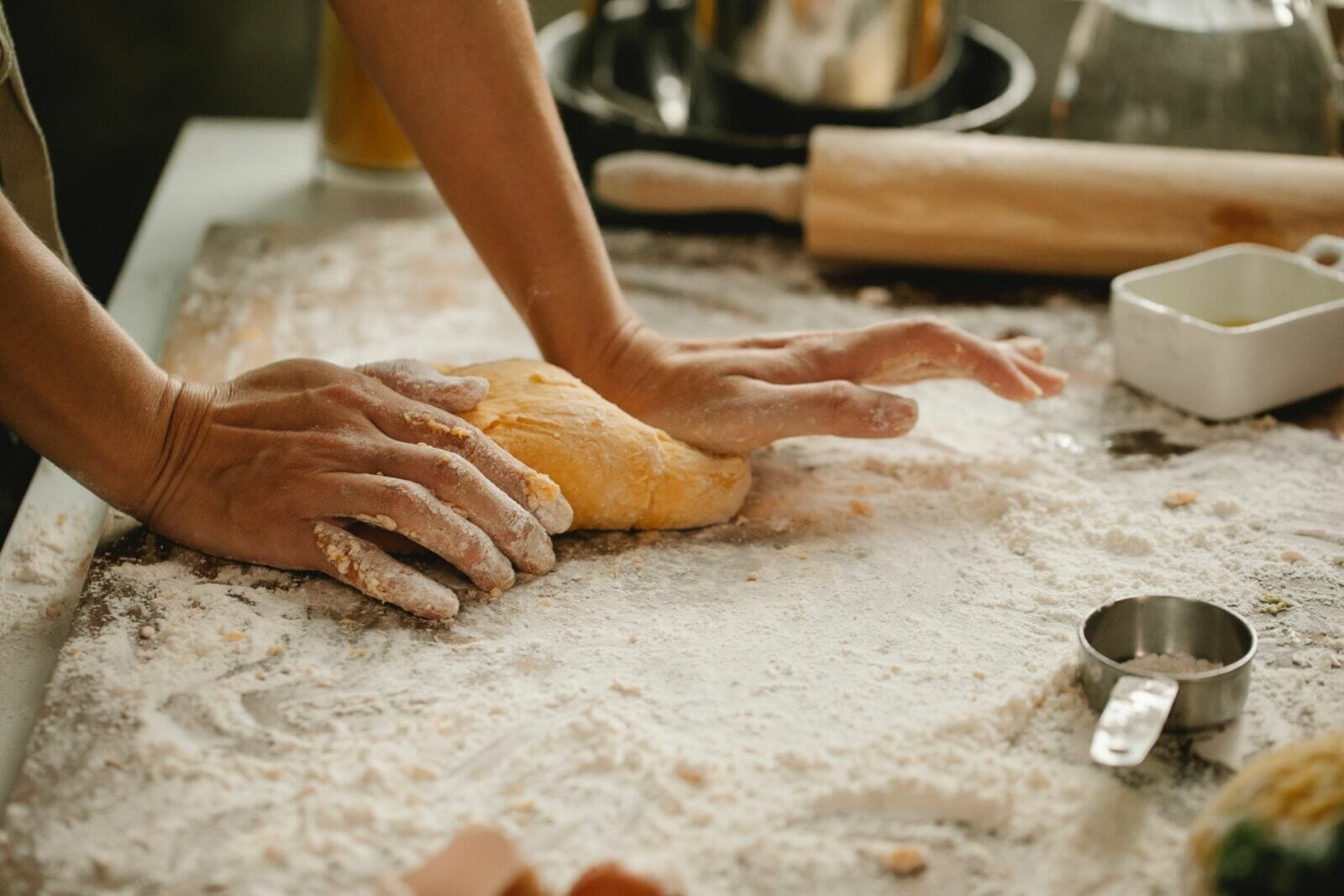
Yes, sourdough had its pandemic moment, and yes, plenty of starters were quietly abandoned by late 2020. But bread baking stuck around for the people who actually got into it, and for good reason. There’s something almost meditative about the process: mixing, waiting, shaping, waiting again. And at the end of it, you have a loaf of bread that costs a fraction of what you’d pay at an artisan bakery.
Modern bread baking has also shed its intimidating reputation. A simple no-knead white loaf requires almost no technique. A focaccia is practically foolproof. Once you understand a few basics (hydration, temperature, time), the whole thing clicks into place, and you realize you’ve been overpaying for bread your whole life.
Candle Making
Candles sit at an interesting intersection of useful and indulgent. You need them (well, it’s nice to have them), and yet a decent one costs an almost offensive amount of money in a boutique shop. Making your own changes the equation completely. A basic candle-making setup (wax, wicks, fragrance oils, and a few molds or jars) costs less than two premium candles and produces twenty.
It’s also one of the lower-barrier crafts to get into. No specialist equipment, no complex technique to master. Most people are surprised by how quickly their first batch comes out looking genuinely good. The hobby has picked up a strong following on social media, but it existed long before that. Grandmothers were doing this in the 1970s, and they weren’t posting it anywhere.
Sewing and Mending
Few hobbies have undergone such a complete image rehabilitation. Sewing was once associated with obligation: school home economics, hemming trousers because you had to. Now it sits at the intersection of sustainability, self-expression, and genuine skill-building.
The “slow fashion” movement has been a big part of this. People are increasingly uncomfortable with disposable clothing, and learning to sew or even just mend is a direct response to that. A broken zipper doesn’t mean a thrown-away jacket. A dress that doesn’t quite fit isn’t destined for the donation pile.
Getting started is easier than most people expect. Entry-level machines are affordable, online tutorials cover virtually any technique, and if an older machine is sitting unused in the back of a closet, it probably just needs a little attention. You can buy sewing parts online for next to nothing and have it running like new. Once you’re set up, the running costs are low and the usefulness is high.
DEEPER DIVE: Read all the Ranking Arizona Top 10 lists here
INDUSTRY INSIGHTS: Want more news like this? Get our free newsletter here
Woodworking and Furniture Repair
There’s a reason “I made this” feels so different when you say it about a bookshelf versus a spreadsheet. Woodworking, whether that’s building something from scratch or restoring a battered piece of furniture, produces something solid and lasting. It’s one of the most satisfying of the useful hobbies precisely because the end result is so tangible.
Furniture repair, in particular, has seen a surge of interest. With the cost of decent furniture climbing and prefabricated alternatives starting to feel thin, more people are buying secondhand and fixing it up. A $30 chair from a thrift store, a weekend of sanding and reupholstering, and you end up with something far better than what you’d get new at the same price. The skills carry over, too. Once you know how to fix a wobbly joint or refinish a surface, you stop throwing things away.
Growing Your Own Food
Gardening has never really gone away, but growing food specifically, rather than flowers or ornamental plants, has surged. Balcony tomatoes, windowsill herbs, and raised beds in small backyards are increasingly common. The reasons aren’t hard to find: food costs have risen sharply, there’s growing interest in knowing where food comes from, and the gap between effort and reward in vegetable growing is surprisingly small.
A packet of seeds costs almost nothing. A few months later, you have more zucchini than you know what to do with. Even something as simple as a pot of basil on a kitchen windowsill starts to recalibrate how you think about food. Growing your own, even a small amount, changes your relationship with what you eat in a way that’s hard to explain until you’ve done it.
So… What Are You Waiting for?
What ties all of these together isn’t nostalgia, exactly. It’s a growing appetite for hobbies that justify themselves beyond entertainment. Hobbies that leave you with something real at the end. In a world where it’s never been easier to consume passively, there’s something quietly radical about choosing to make instead.
Pick one. Start small. You might be surprised how much you enjoy having something to show for your weekend.