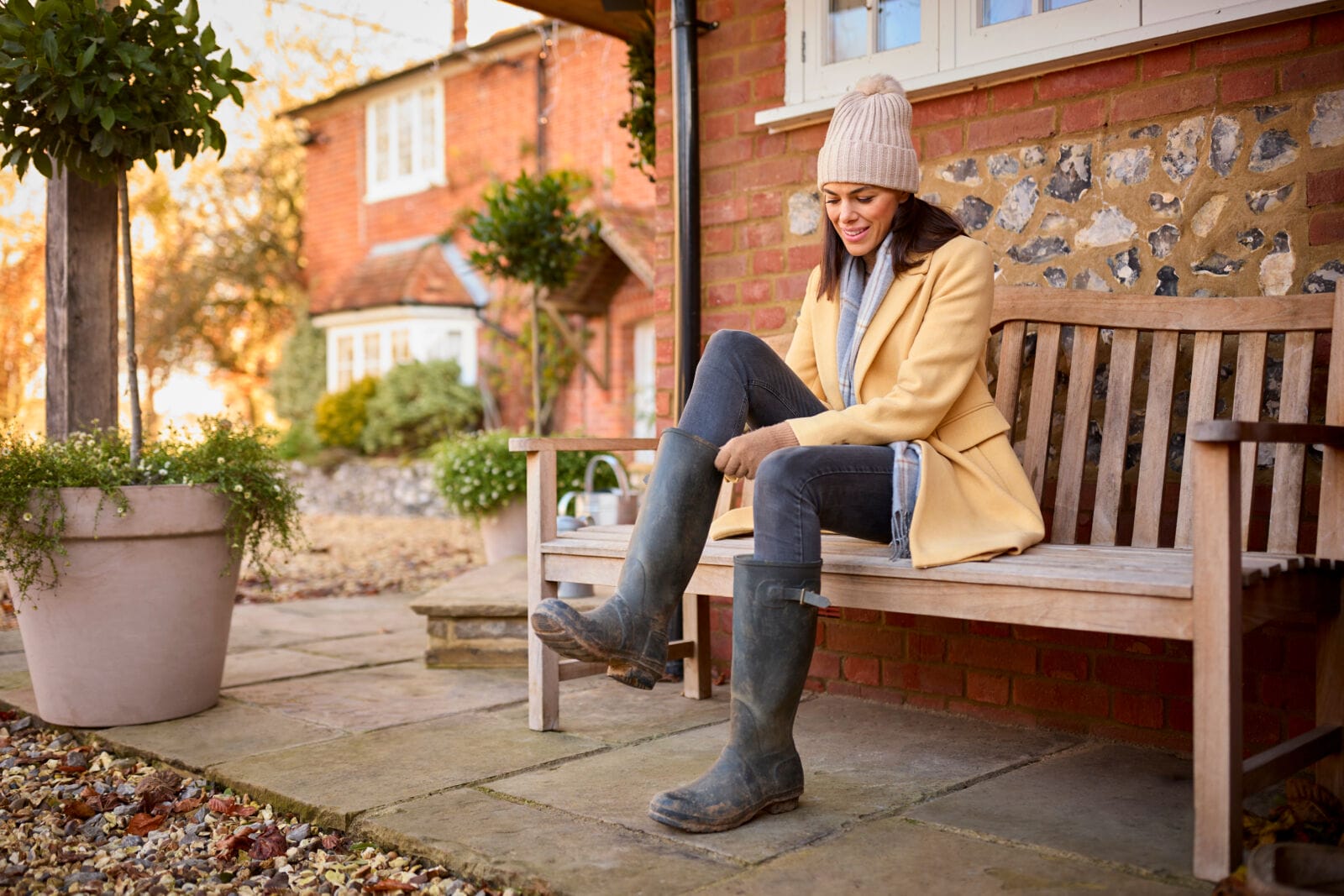
Finding the perfect fit for women’s Wellington boots is essential for ensuring all-day walking comfort, preventing foot pain, and maintaining proper ankle support. Unlike standard leather shoes, rubber wellies do not stretch significantly over time, making correct sizing at the time of purchase vital. In this blog, you will discover five practical tips for sizing your new women’s Wellington boots accurately.
1. Accounting for Thick Winter Socks and Layering Choices
When sizing Wellington boots, always consider the thickness of the socks you plan to wear during cold countryside walks. Selecting specialised women’s wellington boots offers access to designs crafted to fit comfortable outdoor socks smoothly. Trying on wellies with thin everyday dress socks often leads to purchasing a size that feels uncomfortably tight when paired with thick wool or neoprene boot socks.
To achieve ideal internal fit without restricting blood circulation, consider these sock-layering tips:
- Bring technical boot socks: Testing footwear while wearing high-density wool or thermal hiking socks
- Allow circulation space: Ensuring toes can wiggle freely to prevent cold feet caused by restricted blood flow
- Consider half-size rounding: Rounding up to the next full size if you fall between standard footwear sizes
2. Measuring Calf Circumference and Evaluating Leg Heights
Calf fit is just as critical as foot length when choosing wellies, as tight boot shafts restrict movement. Measure the part of your calf using a flexible tape measure while wearing your jeans. Compare your calf measurement against manufacturer size charts to choose between standard or short boot profiles.
That’s why selecting proper leg proportions grants access to side gussets and short calf styles tailored to leg shapes. Adjustable gussets allow you to customise shaft width easily when tucking in heavy winter trousers. Proper calf sizing prevents leg chafing and ensures boots slide on and off effortlessly.
3. Checking Heel Retention and Preventing Blister-Causing Slip
A fitted boot should cup your heel securely without allowing vertical lifting when you step forward. While minor heel lift is normal in pull-on rubber footwear, excessive movement causes blisters. Checking heel retention prevents painful rubbing and maintains stable ankle alignment on uneven ground.
You should also walk around on a firm surface during fitting to evaluate how the boot heel holds your foot. But if your heel slides up significantly, the boot chassis is too large or wide for your foot structure. Keep in mind that secure heel fit protects skin integrity and keeps your stride stable on rough trails.
4. Evaluating Arch Support and Utilising Aftermarket Insoles
Standard flat rubber outsoles can cause arch fatigue during multi-mile countryside walks. Ensure the boot’s built-in arch support matches your foot structure comfortably without causing unnatural pressure. Quality wellies feature contoured removable footbeds that cushion impacts and align ankles properly.
If you require orthotic support, ensure the boot’s factory insoles are removable to adapt your inserts. Removing original footbeds prevents crowding inside the toe box when inserting thick orthotic footbeds. Customising interior support prevents foot fatigue and joint strain during extended outdoor excursions.
5. Testing Boots Indoors on Carpet Before Outdoor Use
Before wearing your new wellies, test them thoroughly indoors on clean carpeted floors for at least 20 minutes. Walking indoors allows you to evaluate fit, heel lift, toe clearance, and calf comfort without dirtying outsoles. Keeping boots pristine preserves your ability to exchange them if sizing adjustments are necessary. Look at these indoor evaluation checks to complete before your first outdoor hike:
- Toe clearance test: Confirming a thumb-width gap exists between your longest toe and the boot tip
- Flexion check: Bending your knees and squatting to ensure boot shafts do not pinch behind your knees
- Trousers tucking check: Verifying your favourite walking jeans tuck smoothly into boot shafts without bunching
Securing the Perfect Welly Fit for Long Walks
Sizing women’s Wellington boots accurately requires accounting for thick socks, measuring calf circumferences, verifying heel retention, assessing arch support, and testing fit indoors. Taking these steps guarantees a comfortable, custom-like fit that prevents foot fatigue. Choosing boots with calf gussets and removable footbeds allows you to tailor your footwear to your body and clothing choices.