Sept. 22 marked Falls Prevention Awareness Day, and the numbers behind it deserve more attention than they get. According to the Centers for Disease Control and Prevention, more than a quarter of adults 65 and older fall each year, but less than half tell their doctor about it. Falls send roughly 4.5 million people to the emergency room annually. And the ripple effects go far beyond the ER visit itself: a single fall can mean lost independence, a move out of a longtime home, or a health decline that never fully reverses.
What strikes me most is the silence around it. Seniors often don’t report falls because they’re embarrassed or worried it will be used as evidence they can’t live on their own anymore. That instinct is understandable. It’s also exactly why so many families miss the warning signs until a fall actually happens.
I’ve walked into hundreds of homes as a caregiver for The Perfect Companion, and the biggest thing I’ve learned is that the hazards are rarely the ones people expect.
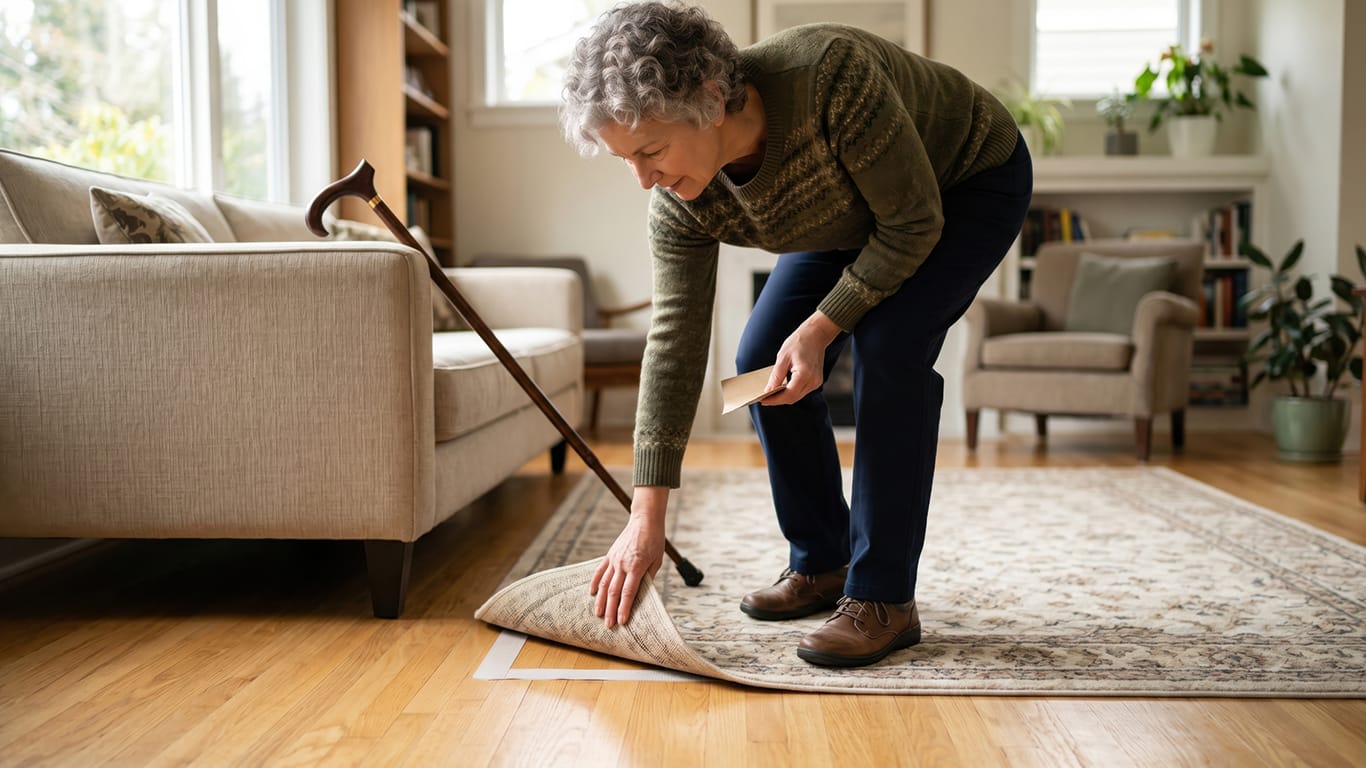
Rugs and runners. Loose area rugs, especially in hallways and at the base of stairs, are one of the most common tripping hazards I see. A rug that’s been in the same spot for 20 years still bunches, slides, and catches a heel. Either remove them or secure them with non-slip backing.
Furniture placement. Coffee tables, ottomans, and floor lamps that have lived in the same corner for decades can become obstacles as balance and vision change. Walk the path someone actually takes from the bedroom to the bathroom at night, and clear it.
Lighting. Dim hallways and staircases are a bigger risk than people realize. Nightlights in bathrooms and hallways, and switches at both the top and bottom of stairs, make a real difference.
Bathrooms. Grab bars near the toilet and in the shower aren’t just for people who’ve already had a fall. A raised toilet seat and a shower chair are inexpensive changes that prevent the fall from happening in the first place. Bath mats should have rubber backing, not just a decorative bottom.
Stairs. Handrails should run the full length on both sides, not just one. Worn or loose carpeting on stairs is a hazard that’s easy to overlook because it happens gradually.
Cords and clutter. Extension cords running across walking paths, pet bowls near doorways, and stacks of mail or magazines on the floor all add up. None of it looks dangerous until someone’s foot catches it.
Footwear. Loose slippers and socks on hardwood or tile are a bigger factor than most families think. Supportive, closed-back shoes worn indoors reduce slips significantly.
Beyond the physical walkthrough, I’d encourage families to have an honest conversation, one that isn’t triggered by a crisis. Ask directly: have you had any close calls? Do you feel steady on the stairs? Has anything changed about how you get in and out of the shower? Most seniors won’t volunteer this information unprompted, but they’ll usually answer honestly if asked.
Fall prevention isn’t about taking away independence. It’s about protecting it. A few afternoons’ worth of changes, a grab bar here, better lighting there, can be the difference between someone staying in the home they love and a hospital visit that upends everything. September is a good reminder to walk through and look with fresh eyes. Don’t wait for the fall to make the changes that could have prevented it.
Author: Leigh Harris-Avril is a senior caregiving expert with The Perfect Companion. Headquartered in Phoenix, Arizona, The Perfect Companion is a private-pay, concierge-level in-home senior care company founded in 2008 by Jon Siegel. The company serves families in the Phoenix, Columbus, Ohio, and Nashville, Tennessee, areas, pairing caregivers with clients through a proprietary psychosocial matching process and a hospitality-first philosophy modeled on the Ritz-Carlton. For more information, visit The Perfect Companion on LinkedIn, Facebook, Instagram or the website.