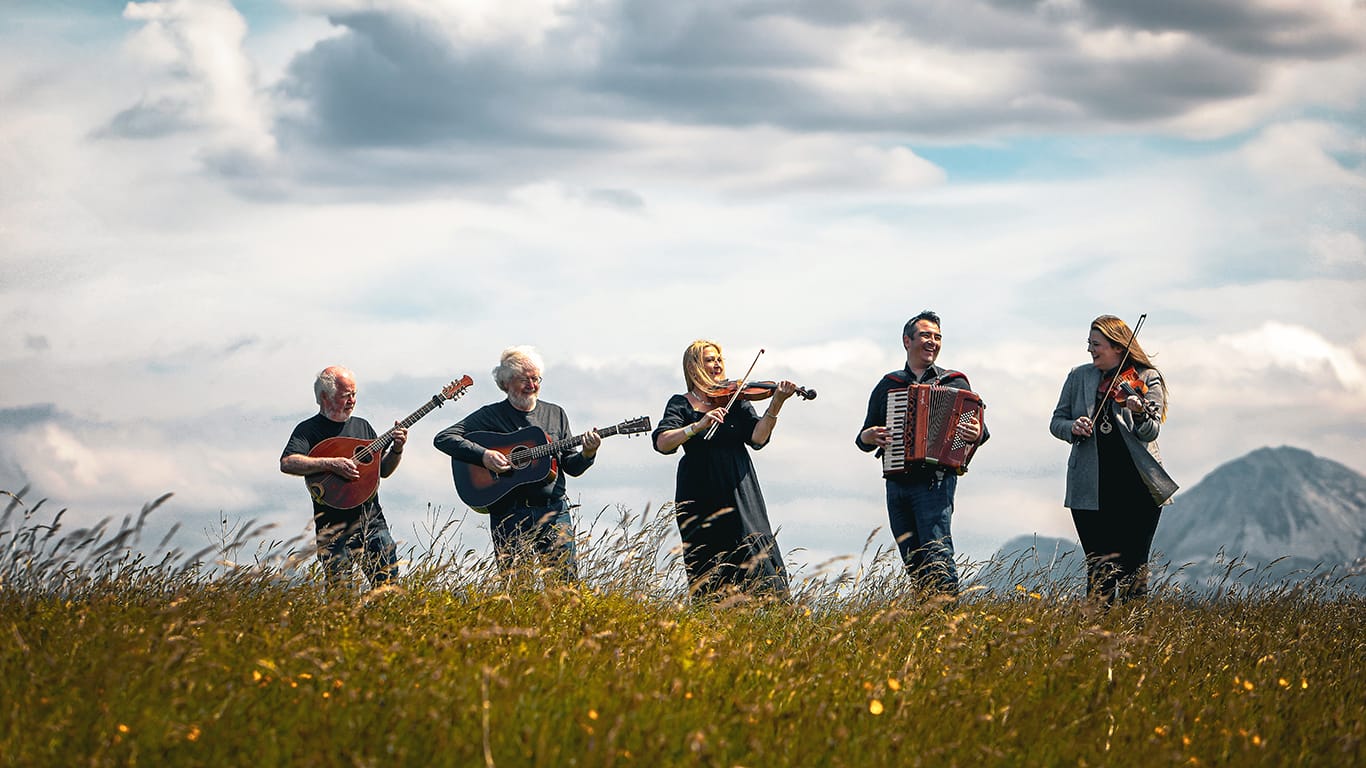
The Irish band Altan has carried its sound far beyond the island’s renowned Donegal cliffs. Celebrating its 40th year, Altan is bringing its fierce fiddle tunes and Gaelic songs to the Fox Tucson Theatre on Tuesday, Oct. 13, and the Musical Instrument Museum on Wednesday, Oct. 14.
“We play traditional music from Donegal without any compromise,” said lead singer and fiddler Mairéad Ní Mhaonaigh during a recent early‑morning interview, apologizing for juggling workshops, travel and a full slate of press.
When Ní Mhaonaigh speaks about the band’s work, she does so with the same clarity that marks her playing.
“I sing in Gaelic, which is my first language, which is a very unusual language,” she said.
“A lot of people are getting interested in it again. We thought it was a dying language. It’s like anything when something precious is being lost. People tend to grab onto it. It’s a very ancient language. It’s a Celtic language.”
DEEPER DIVE: Here are Arizona’s Most Admired Companies of 2026
The language, and therefore the music, has a beautiful tradition of poetry. Writers were greatly admired when they found many adjectives to describe a woman’s beauty, Ní Mhaonaigh added.
“The internal rhyme was as important as the end rhyme in every verse,” she said. “That’s why Gaelic songs are so well thought out. It’s a beautiful tradition and I’m very happy to be one of the people singing in that language.”
That’s one of the reasons audiences — whether in Ireland, Japan, or the American Southwest — respond so strongly.
“People seem to feel proud that this is where they came from,” she said. “It’s the language of my parents and my forefathers.”
Altan’s 14th album, “Donegal” (Compass Records, 2024), continues the group’s long tradition of anchoring its music in the region that shaped them.
Ní Mhaonaigh described it as a project that zooms in on Northwest Donegal the way Cajun musicians might focus on Lafayette. That specificity, she believes, is what gives the music its universality.
“Somebody in Japan recently told me they could nearly smell the turf when we play,” she said with a laugh. “That’s what we want to bring to people — a little sense of where we’re from.”
“Donegal” is part of a career that includes gold and platinum records, a major‑label signing with Virgin Records in 1996, and performances at Carnegie Hall, the Hollywood Bowl, Glastonbury and the Sydney Opera House.
Altan’s reach has long extended beyond traditional circles. They’ve collaborated with Dolly Parton, beginning in 1994 when Parton invited them to Nashville to record “Barbara Allen” for “Heartsongs.” She later called the partnership “a match made in heaven,” praising Altan as “one of the greatest traditional Irish groups.” The band will honor that bond on their upcoming tour by performing “Barbara Allen” at each show.
They’ve also worked with Alison Krauss, John Prine, Ricky Skaggs, and The Chieftains, and earlier this year actor‑musician Steve Martin joined them onstage in New York.
Ní Mhaonaigh founded Altan in the 1980s with her late husband, Belfast flutist Frankie Kennedy. After his death 1994, she continued the band’s mission, guiding it into international prominence.
Altan’s touring schedule remains relentless. After a run of U.S. festivals this year, it will return stateside in October, including stops at Fox Tucson Theatre, before heading to Japan in December and back to Ireland and Scotland in early 2027.
“We’re very grateful to the U.S. for giving us this career,” Ní Mhaonaigh said. “If it wasn’t for the audiences we get in the U.S., we wouldn’t have survived so many years.”
Even after four decades, her passion for music hasn’t dimmed. She still listens to all genres; recently attending a Sigur Rós concert with her daughter.
“When music has integrity and people are playing from the heart, it brings you to another place,” she said.
That’s what she hopes Altan continues to do: carry listeners, for a few hours, to the turf‑scented hills of Donegal.
“I want people to feel like they’ve gone to Ireland with us,” she said. “Irish traditional music really is from the heart.”